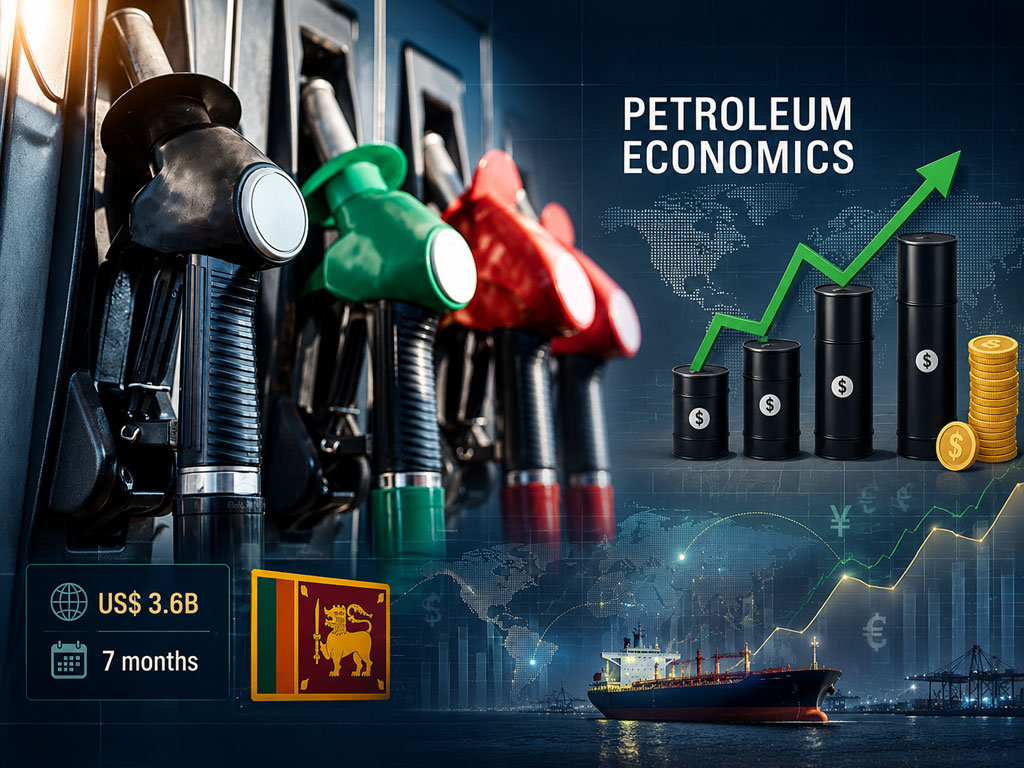
Sri Lanka fuel imports reached US$3.62 billion in the first seven months of 2026, up 59.9%, raising fresh questions over crude oil costs.
Sri Lanka fuel imports reached US$ 3,622 million, or more than US$ 3.6 billion, during the first seven months of 2026, according to the latest Central Bank data.
The figure comes as Sri Lanka continues to face economic pressures and renewed concerns over protecting foreign exchange reserves.
A comparison with the corresponding period in 2025 shows that fuel import spending increased sharply by 59.9%.

Sri Lanka Fuel Imports Rise Sharply in July
In July alone, Sri Lanka spent US$ 453 million on fuel imports.
That figure was slightly lower than the US$ 465 million spent in June. However, on a year-on-year basis, July fuel expenditure was 68% higher than in July 2025.
The main factor behind the higher fuel import bill was the increase in crude oil imports.
The sharp rise raises fresh questions over whether importing more crude oil has actually delivered the expected economic benefits.
One key issue is whether the value added through domestic refining has produced meaningful foreign exchange savings compared with importing refined petroleum products.
If not, the higher crude oil import bill could represent another significant drain on the country’s foreign currency resources.

Energy Crisis or Energy Heist? 7 Suspicious Facts Behind the Coal & Solar Ban
Sri Lanka electricity tariffs face fresh scrutiny as the FSP asks the PUCSL to investigate coal, fuel pricing, solar policy and power costs.
The Morning Telegraph • September 2, 2026 • 5 min readQuestions Over Cost Increases and Energy Planning
Another question concerns the reason behind the 59.9% increase during the first seven months and the 68% year-on-year increase recorded in July.
It remains important to determine whether these increases were mainly caused by higher import volumes, changes in global oil prices, supply contracts or a combination of those factors.
The latest figures underline the need for greater transparency over how Sri Lanka manages fuel imports and energy-related foreign exchange spending.
With fuel remaining one of the country’s major import expenses, a long-term energy management strategy will be critical to reducing unnecessary foreign exchange outflows while ensuring adequate supplies for the economy.