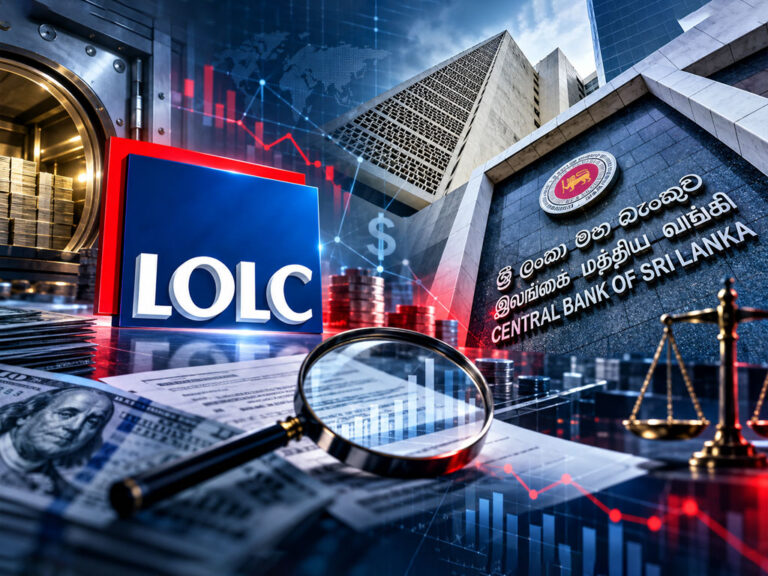
X-Press Pearl compensation dispute draws scrutiny over a US$6.4 billion estimate, a US$1 billion interim payment and allegations before CIABOC.
The X-Press Pearl compensation case has returned to the centre of legal and public debate after a complaint raised questions over money allegedly due to Sri Lanka.
Dr. Chamal Sanjeewa filed the complaint with the Commission to Investigate Allegations of Bribery or Corruption, or CIABOC.
The complaint has drawn fresh attention to the legal proceedings surrounding compensation arising from the X-Press Pearl maritime disaster.
According to a Daily Mirror report cited in the complaint, serious allegations have been made against three Supreme Court judges.
The complaint claims that nearly US$ 999 million, which it says should have been due to the government from the X-Press Pearl shipping company, was lost because of the conduct of the judges concerned.
However, a broader legal issue sits behind the widely discussed US$ 1 billion figure.

X-Press Pearl Compensation: US$1 Billion Was Not the Total
Much of the public discussion has focused on approximately US$ 1 billion, or US$ 999 million.
However, the complaint and the legal narrative cited in the source distinguish that figure from the total compensation estimate.
According to the material presented, a five-member bench estimated the total X-Press Pearl compensation at US$ 6.4 billion.
The roughly US$ 1 billion figure was instead described as an interim payment.
It was reportedly intended to cover basic administrative and maintenance purposes while the broader compensation process continued.
The interim amount was to be paid in four instalments within one year.
The five-member bench ordered the company to pay US$ 250 million by September 24, 2025.
However, according to the complaint, only US$ 1 million has been paid so far.
The complaint further states that petitioners requested contempt of court proceedings over the alleged failure to pay the balance.
It alleges that no action was taken on those requests.
These remain allegations contained in the complaint and have not been independently established.

CIABOC Petitioned to Investigate Supreme Court Judges Over Unrecovered X-Press Pearl Compensation
A complaint asks CIABOC to investigate three Supreme Court judges over alleged failures to recover nearly US$999 million in X-Press Pearl compensation.
The Morning Telegraph • September 1, 2026 • 3 min readQuestions Over the Change in Bench
The most controversial part of the narrative concerns what happened next in the judicial process.
According to the Daily Mirror report referred to in the complaint, Justice Yasantha Kodagoda had been the senior-most judge on the earlier five-member bench.
He was also described as the judge primarily responsible for preparing the ruling.
The complaint alleges that he was later removed from the case without a lawful basis.
It further states that on January 26, 2026, the matter came before a new three-member bench.
According to the complaint, that bench ordered proceedings to be concluded on the same day.
The allegation that a three-member bench effectively challenged the earlier position of a five-member bench and moved toward reducing compensation has generated concern in legal and civil society circles.
However, those claims remain disputed allegations unless established through an appropriate legal process.
The complaint also links the later developments to the Compensation Management Commission appointed by the court.
According to a letter dated March 6, 2026, the Commission reportedly stated that it was unable to continue carrying out its functions.
The complaint argues that this development disrupted even the interim payments that were due to Sri Lanka.
Constitutional Questions and CIABOC Complaint
Dr. Sanjeewa has also questioned whether there is any connection between the implementation of the 22nd Amendment to the Constitution and the alleged loss of compensation.
He argues that an independent investigation is necessary.
The complaint asks whether the conduct in question could amount to misuse of public office under Section 111 of the Anti-Corruption Act No. 9 of 2023.
However, the allegations have not been independently verified.
The judges named in the complaint have not been found guilty of wrongdoing.
That distinction is important because the complaint contains serious accusations about judicial conduct and the handling of one of Sri Lanka’s most significant environmental compensation cases.
At the same time, the financial scale involved makes the matter difficult to ignore.
The key question is whether the US$ 6.4 billion total compensation estimate and the approximately US$ 1 billion interim payment have been affected by procedural or legal decisions in a way that harmed Sri Lanka’s interests.
For now, those questions remain unresolved.
The X-Press Pearl compensation dispute therefore continues to raise legal, financial and constitutional concerns.
What happened to the interim payment, why the composition of the bench changed, and whether any official misconduct occurred are matters that require proper investigation and authoritative legal clarification.
Until then, the allegations should be treated as allegations, not as proven findings.