Sri Lanka Geneva report praises reconciliation efforts but urges faster legal reforms, accountability, debt relief and stronger rights protections.
The Sri Lanka Geneva report has praised the government’s reconciliation approach while urging faster legal reforms, stronger accountability and action on mounting economic pressures.
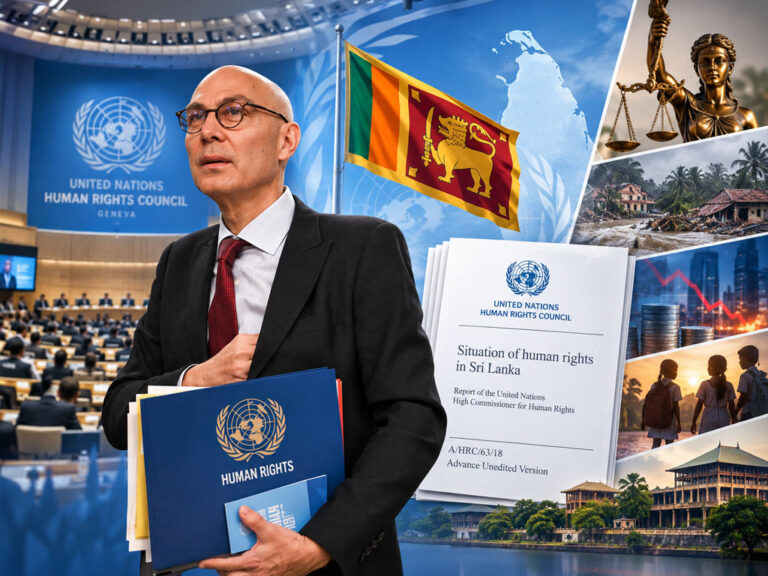
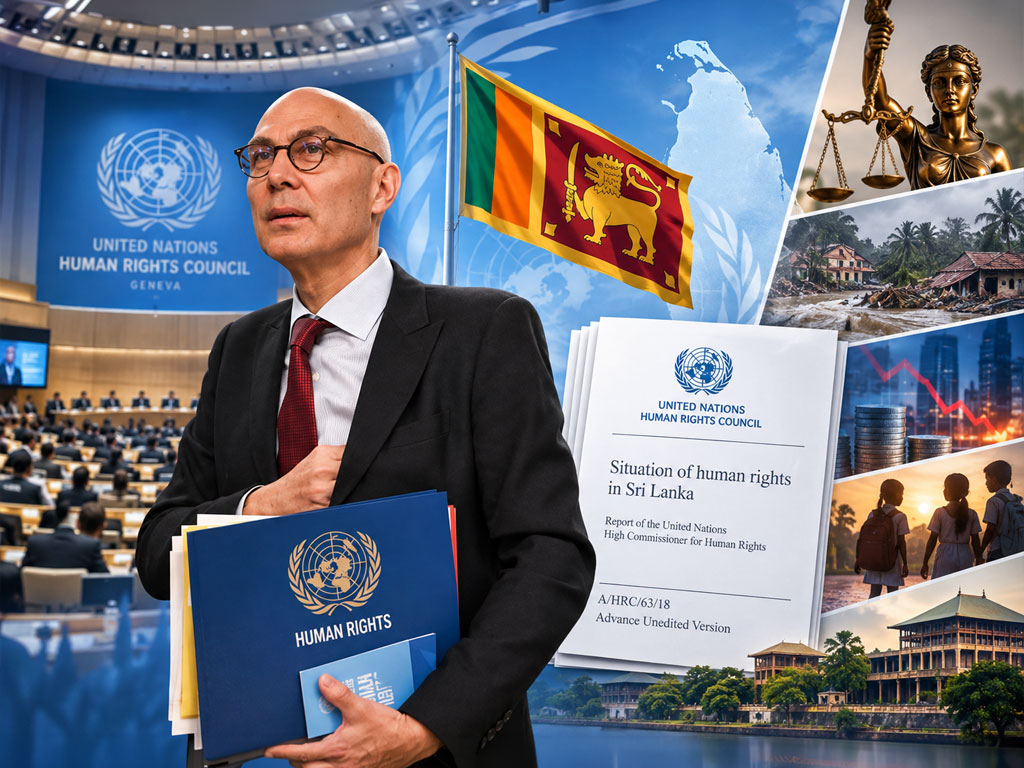
UN High Commissioner for Human Rights Volker Türk released the latest assessment on Sri Lanka’s human rights, rule of law and accountability ahead of the 63rd session of the United Nations Human Rights Council in Geneva.
The report welcomes the National People’s Power government’s approach since taking office, particularly its rejection of ethnic and religious polarization. However, it also examines how quickly those commitments are being converted into institutional and legal reforms.
Türk acknowledges that resolving problems built up over several decades will require sustained attention. At the same time, he notes that recent natural disasters and global economic shocks have diverted government resources and attention.

Sri Lanka Geneva report calls for security law reforms
The report again stresses the need to abolish or substantially amend the Prevention of Terrorism (Temporary Provisions) Act, commonly known as the PTA.
It specifically calls for urgent attention to long-term detainees. The report also raises concerns over surveillance and investigations involving civil activists, particularly in the Northern and Eastern provinces.
While authorities have made some progress in investigations linked to the Easter Sunday attacks and political assassinations, the report says accountability must extend to all parties over serious human rights violations allegedly committed during the conflict period.
It also draws attention to the continued failure to hold provincial council elections. Those elections should have taken place under the 13th Amendment to the Constitution.
Debt burden adds pressure to reform agenda
The report places Sri Lanka’s human rights challenges within a wider economic context.
It notes that Cyclone Dithwa, which struck in late 2025, caused damage and losses exceeding US$3.3 billion. Meanwhile, rising global fuel and fertilizer prices linked to armed conflicts in West Asia have placed further pressure on the domestic economy.
According to the 2026 budget document, nearly half of state revenue must go towards debt interest payments. The report says this sharply limits fiscal space for relief measures.
It therefore calls for stronger targeted social protection networks to ease economic pressure in affected communities, including those in the North and East.
Anti-corruption and online law concerns raised
The Geneva report also notes recent investigations by the Commission to Investigate Allegations of Bribery or Corruption.
It refers to steps involving high-level transactions connected to SriLankan Airlines and coal purchases. However, the report stresses that authorities must conduct such investigations transparently and without bias.
At the same time, it raises concern over the possible impact of the Online Safety Act on freedom of expression.
The report says the government should amend relevant laws to meet international standards. It also calls for consultation with civil society and technical experts when preparing those changes.
Child protection and equal enforcement stressed
The Office of the High Commissioner also highlights the importance of impartial law enforcement in recent child abuse cases that triggered intense public debate and allegations involving senior parties.
It says equal application of the law remains essential to maintaining public confidence in the justice system.
The Sri Lanka Geneva report ultimately sends a two-sided message. It recognizes the government’s reconciliation direction while pressing for faster institutional change, greater accountability and stronger protection of rights.
Türk concludes by reaffirming the Office’s readiness to provide continued international support to Sri Lanka. That support would focus on human rights standards, victim protection and strengthening institutional capacity.