COLOMBO, October 19, 2026 — Police have arrested a Skills Development Officer and seized two firearms and ammunition as the Environment Ministry calls for an investigation into whether an organised network is responsible for attacks on Sri Lanka’s wild elephants.
A government officer has been arrested on suspicion of involvement in the shooting of Kavantissa, the celebrated wild tusker whose death on October 16 saddened Sri Lankans across the country, with investigators recovering two firearms and 24 rounds of ammunition from the suspect’s residence.
The Ministry of Environment said the arrest followed a joint operation by the Walana Central Anti-Corruption Task Force and the Department of Wildlife Conservation.
Police identified the suspect as a Skills Development Officer attached to the Ehetuwewa Divisional Secretariat in Kurunegala District.
A 12-bore shotgun, a cap gun and 24 rounds of ammunition were reportedly recovered during a search of his home.
Investigators have also received information suggesting that the suspect may have previously shot another elephant known as Diana.
The allegations remain under investigation. Police have not established that the seized weapons were used to shoot Kavantissa, and the suspect’s guilt has not been determined by a court.
The arrest comes as the Environment Ministry seeks a broader investigation into whether the repeated shooting of wild elephants is connected to an organised criminal network.

Ministry Calls for Investigation Into Possible Elephant-Killing Network
On October 18, the Secretary to the Ministry of Environment sent a written request to the Inspector General of Police seeking an urgent investigation into the possibility that an organised group is involved in attacks on wild elephants.
The request follows concerns that Kavantissa’s shooting may not have been an isolated incident.
Police are expected to examine whether separate attacks on elephants are connected, whether firearms have been used repeatedly, and whether other individuals may have participated in illegal activities targeting wildlife.
The reference to Diana, another elephant allegedly shot by the suspect, forms part of those inquiries.
No evidence made public so far establishes that the incidents were coordinated or that an organised network exists.
The Ministry has nevertheless called for a comprehensive investigation and reiterated its commitment to enforcing wildlife protection laws.
The arrested officer is expected to be produced before court, while investigators continue examining the circumstances surrounding Kavantissa’s injury.
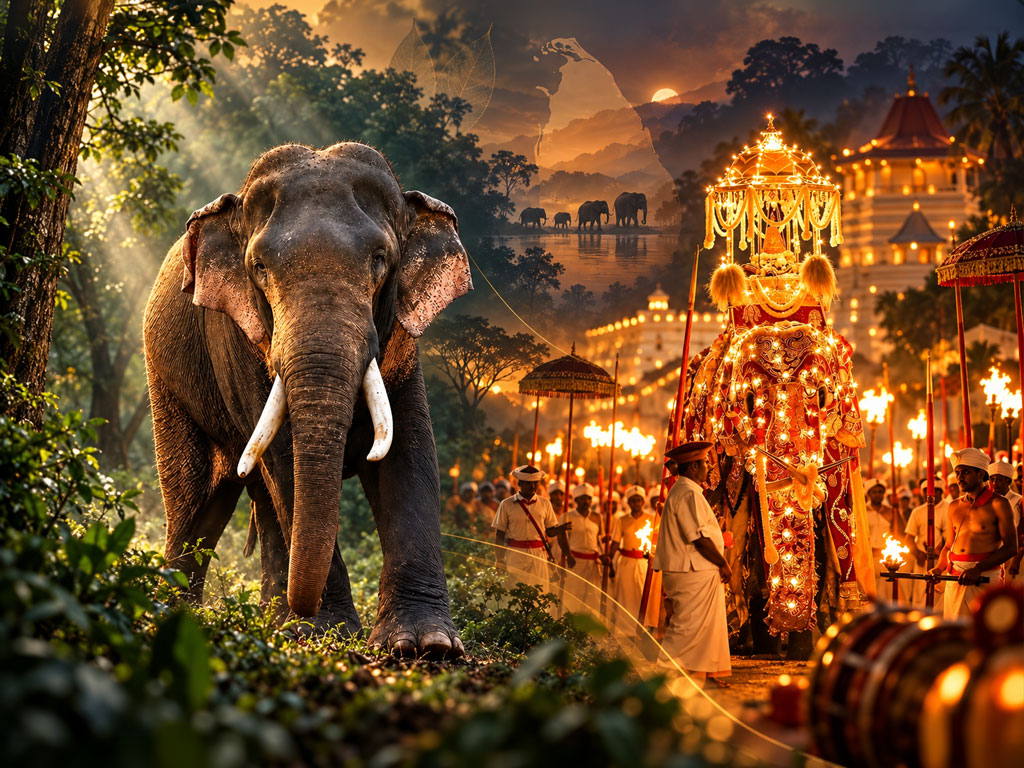
The loss of one of Sri Lanka’s celebrated tuskers has revived a difficult debate over the dangers facing wild elephants, the welfare of captive elephants and the place of these animals in the country’s cultural traditions.
Read MoreKavantissa: A Magnificent Tusker Lost at 50
Kavantissa was among Sri Lanka’s most recognisable wild tuskers, admired for his extraordinary stature and long ivory tusks.
Estimated to have stood nearly 11 feet tall and to have been approximately 50 years old, he spent much of his life roaming the Galgamuwa region of Kurunegala District.
His familiar territory extended across Galgamuwa, Siyambalangamuwa, Nanneriya, Orugala, Kudagalviharaya and Meegalewa.
The name Kavantissa was reportedly given to him by Opposition Leader Sajith Premadasa.
According to the source material, tuskers account for fewer than two per cent of elephants in the North Western Wildlife Zone, making animals possessing prominent tusks particularly rare within that population.
Kavantissa’s exceptional appearance made him a familiar figure among wildlife photographers, conservationists and residents who had followed his movements for years.
His death represents the loss of an animal that had become closely associated with Sri Lanka’s surviving population of wild tuskers.
How the Injured Tusker Was Found and Treated
Concerns about Kavantissa’s condition intensified after images showing him struggling to walk circulated on social media.
Wildlife officials were reportedly informed on September 23 that the elephant had sustained a gunshot injury.
The following day, a veterinary team led by Dr. Ishuru Hewakottage of the North Western Wildlife Zone searched for Kavantissa in the Mahagalmua sanctuary.
According to the supplied account, the team located him on September 25 within the Siyambalangamuwa reservoir sanctuary, where treatment was subsequently administered.
Other contemporary reporting places the commencement of veterinary treatment on September 24. The precise distinction between the initial treatment operation and the date on which the elephant was located requires clarification from the official records.
After approximately five days of treatment, Kavantissa reportedly disappeared from the area.
He was found again around three days later near Kalankuttiya Oya in the Thambuttegama region.
Because the location fell within the Anuradhapura Wildlife Zone, responsibility for treatment was subsequently transferred to a team including veterinary surgeon Dr. Chandana Jayasinghe.
Monitoring the elephant presented difficulties while he remained in the watercourse.
During this period, Kavantissa developed diarrhoea and became progressively weaker.
His condition deteriorated as he experienced digestive difficulties, reduced food intake and dehydration.
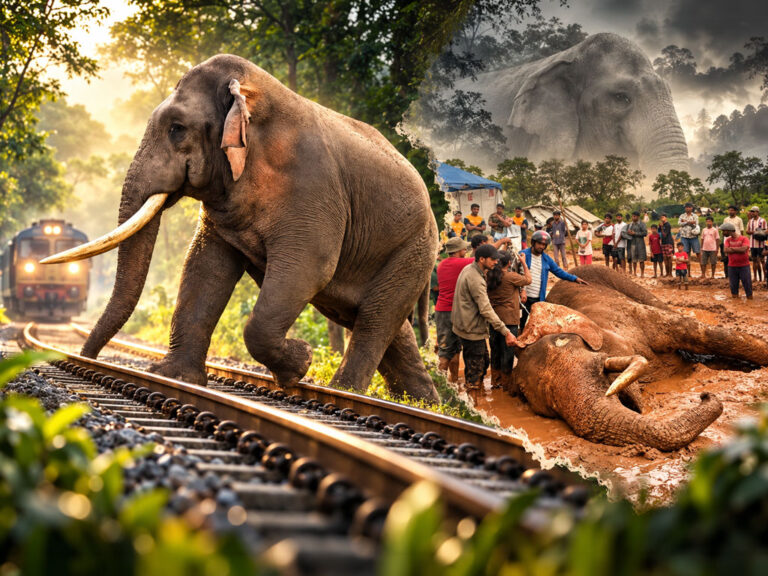
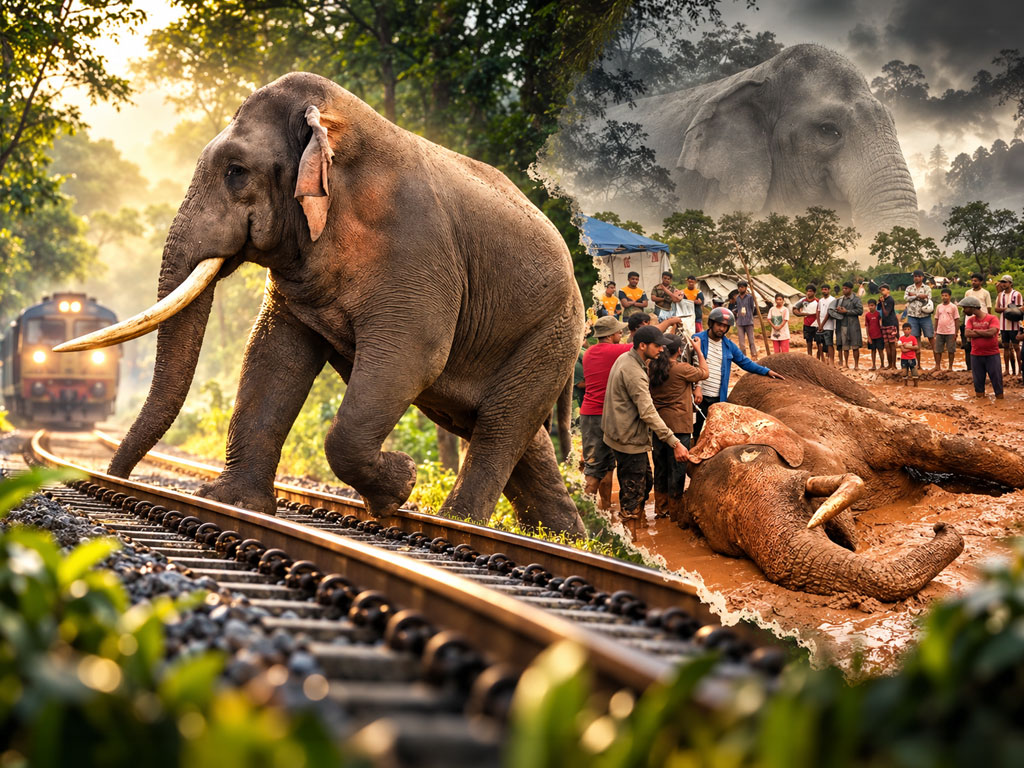
He eventually returned towards Galgamuwa, where he collapsed in a paddy field near Unit 4 Oya in the Valagamba Grama Niladhari Division.
Despite continued veterinary intervention, Kavantissa died on the evening of October 16.
Intensive Veterinary Efforts Could Not Save Kavantissa
As Kavantissa’s condition worsened, Environment Minister Dr. Dhammika Patabendi directed veterinary teams to intensify their efforts and monitor the elephant’s condition closely.
The Ministry reportedly considered obtaining assistance from foreign veterinary specialists if necessary.
Businessman Dudley Sirisena also publicly offered to meet the costs of bringing overseas veterinarians to Sri Lanka.
Wildlife officers, veterinarians and security personnel continued working despite heavy rainfall and difficult field conditions.
Following Kavantissa’s death, however, criticism of the medical treatment circulated widely on social media.
Questions were raised about the veterinary procedures used, the animal’s deteriorating health and whether different interventions might have altered the outcome.
The President of the Sri Lanka Veterinary Association, Dr. Sugath Premachandra, rejected allegations that veterinary personnel had failed to make adequate efforts to save the elephant.
According to the supplied account, he said a team of 19 personnel, including 17 wildlife veterinarians led by Dr. Ishuru and Dr. Pubudu, worked on the case.
The treatment effort also involved veterinary personnel from the Department of National Zoological Gardens and Senior Professor Ashoka Dangolla of the University of Peradeniya.
Premachandra emphasised the challenges of treating an enormous wild animal under limited field conditions and defended the dedication of the veterinary teams.
He attributed the elephant’s fatal deterioration to the diarrhoeal condition that emerged after the original injury had reportedly begun to improve.
The association president also said wildlife veterinarians had successfully treated nearly 300 elephants during the previous year, urging the public not to condemn them on the basis of unverified allegations.
His assessment represents the veterinary association’s position. The precise cause of Kavantissa’s death must be determined from the post-mortem examination and supporting clinical evidence.
Independent Investigation Into Veterinary Treatment
Minister Patabendi has announced that an independent investigation will examine whether mistakes occurred during Kavantissa’s treatment or whether any deliberate act contributed to his deterioration.
The Minister expressed regret that the elephant could not be saved despite the extensive medical attention provided.
He maintained that the veterinary team had made exceptional efforts under difficult circumstances.
The investigation is expected to consider the clinical decisions taken during treatment and any evidence of professional negligence or intentional harm.
Such an inquiry will need to distinguish between complications arising from the elephant’s injuries and illness and any failures in the medical response.
An unsuccessful treatment does not automatically establish veterinary negligence.
Similarly, the commitment and experience of those involved cannot substitute for an impartial examination of the available evidence.
Patabendi has also indicated that the Government intends to improve veterinary procedures for treating injured and ill wildlife.
Post-Mortem Completed; Report Ordered by Court
A post-mortem examination of Kavantissa has been conducted with the involvement of the Faculty of Veterinary Medicine at the University of Peradeniya, according to the supplied account.
Samples were collected for further examination.
The Galgamuwa Magistrate’s Court has directed wildlife authorities to submit the findings as part of the investigation into the tusker’s death.
Acting Magistrate Kanchana Hathurusinghe issued the relevant orders following submissions by wildlife officers.
The court also directed that Kavantissa’s remains be buried securely on land belonging to the Department of Wildlife Conservation, with arrangements to preserve the possibility of recovering the tusks if required.
Meegalewa Wildlife Office official W. Weerakoon was among the officers involved in the court proceedings and arrangements concerning the remains.
The matter is due to be taken up before Galgamuwa Chief Magistrate Ravindra Ranjan Bandara.
The Environment Ministry has separately indicated that laboratory testing of samples will be undertaken through the Government Analyst’s Department and private laboratories.
No final post-mortem findings establishing the cause of death have been confirmed in the material reviewed.
Kavantissa’s Death Exposes a Wider Wildlife Protection Challenge
Kavantissa’s death has renewed attention on the dangers confronting Sri Lanka’s remaining wild elephants.
For decades, human-elephant conflict has resulted in the deaths of both people and animals, particularly in areas where agricultural settlements overlap with traditional elephant habitats.
Firearms, jaw traps, poisoning and other illegal methods used against elephants continue to threaten wildlife populations.
The loss of an exceptional tusker is particularly troubling because such animals form a small proportion of the wider elephant population.
The immediate legal priority is to determine who shot Kavantissa and whether the arrested suspect or any other individual bears criminal responsibility.
The separate medical investigation must establish what caused his condition to deteriorate and whether the treatment he received was appropriate.
Beyond those proceedings lies a question that extends far beyond one animal: whether Sri Lanka can strengthen enforcement, protect elephant habitats and reduce conflict before more of its surviving tuskers are lost.
For Kavantissa, those answers will come too late. For the elephants that remain, they may prove decisive.