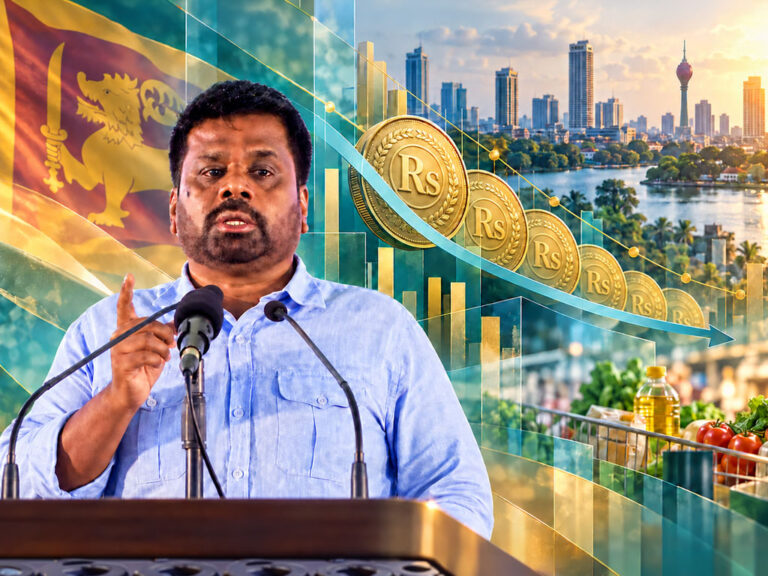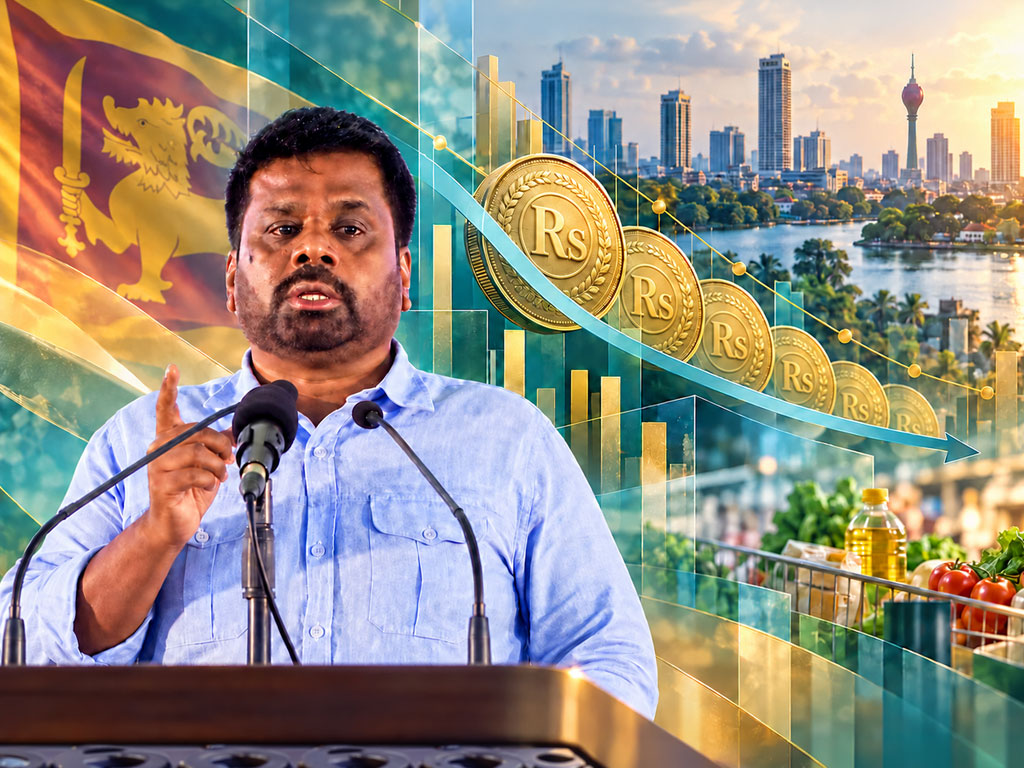
Colombo, October 31, 2026 — President Anura Kumara Dissanayake has pledged further reductions in selected taxes through the forthcoming 2027 Budget, while insisting that any relief must be delivered without undermining government revenue targets or fiscal discipline.
Addressing the National Convention of the National Intellectuals’ Organisation (NIO) in Colombo, the President acknowledged the pressure that rising prices have placed on households and said the government was seeking ways to ease the cost of living while safeguarding economic stability.
He maintained that the administration had not introduced new taxes since assuming office and had already relaxed certain existing tax measures.
Further concessions, he said, would be considered in the next Budget, provided they could be accommodated without compromising the revenue needed to meet the government’s financial commitments.

Revenue Performance and Fiscal Discipline
Dissanayake contrasted the government’s fiscal performance with that of previous administrations, claiming that earlier governments typically achieved approximately 90 per cent of their projected revenue targets.
Under the current administration, he said, revenue collections had exceeded expectations while the government maintained a primary budget surplus.
A primary surplus occurs when government revenue exceeds expenditure before interest payments on existing debt are included.
The President described this position as essential to reducing Sri Lanka’s debt burden and sustaining macroeconomic stability.
His comments indicated that the government intends to balance public demands for tax reductions against its broader fiscal commitments rather than introducing relief measures that would jeopardise revenue performance.
September Inflation Exceeds the Target Range
Turning to the cost of living, Dissanayake acknowledged that inflation had increased beyond the level the government had hoped to maintain.
Sri Lanka’s National Consumer Price Index recorded year-on-year inflation of 8.1 per cent in September 2026, while the Colombo Consumer Price Index registered 8.0 per cent.
Both readings were above the upper boundary of the Central Bank’s 5 per cent inflation target, which operates with an accountability margin of two percentage points on either side. statistics.gov.lk+2
The President said:
“At this moment, some impact has come to inflation. Our expectation was to keep inflation below 5%. We must keep inflation between 2% and 7%. That too feels like a legal obligation of ours.
“This inflation has come to a value slightly above 8% in September. That, to some extent, has caused the people of our country to face difficulties in purchasing goods and services.
“The main factor that has contributed to that is the war situation that has arisen in the Middle East region. That war situation has caused a massive impact on our supply routes.”
The President attributed much of the recent inflationary pressure to disruptions in international supply routes arising from conflict in the Middle East.
His assessment highlighted Sri Lanka’s exposure to external economic shocks, particularly where disruptions to transport and supply chains increase the cost of imported goods and essential services.
Dissanayake said the government’s priorities were to provide relief to households struggling with higher living costs while maintaining the fiscal discipline necessary for longer-term economic recovery.
Political Victory Alone Cannot Transform a Country
Beyond the immediate economic challenges, the President used his address to reflect on the broader responsibilities of his administration.
He argued that winning an election and assuming office did not, by themselves, amount to genuine social or economic transformation.
Meaningful change, he said, required a clear understanding of the government’s purpose, effective leadership, an organised programme of implementation and a sustained commitment to its objectives.
The President recalled the early years of the political movement that eventually brought the National People’s Power (NPP) to office.
At that stage, he said, the movement appealed to a relatively limited section of society and encountered considerable scepticism among professionals and more established social groups.
According to Dissanayake, the National Intellectuals’ Organisation played an important role in overcoming those divisions.
He credited the organisation with helping his political movement establish relationships across social and professional communities that had previously been reluctant to engage with it.
President Credits Intellectuals for 2024 Election Victory
Dissanayake said the NIO’s efforts helped broaden the movement’s public support and contributed to the electoral mandate secured in 2024.
He acknowledged the role played by academics, professionals and other intellectuals in changing perceptions of the movement and expanding its appeal.
Nevertheless, he stressed that electoral success represented only the transfer of political authority. The more difficult task was translating that mandate into lasting improvements in society and the economy.
The President stated:
“A transformation does not happen merely by taking power. A leadership and an operational mechanism with a clear vision of the purpose for which we took power, and the role to be played for that, are necessary for this.
“Also, there must be a strong interest and relentless effort in working continuously without giving up. The National Intellectuals’ Organisation has become a main force that provides that energy to the current government.”
His remarks placed the responsibility for delivering the government’s reform agenda on both its political leadership and the wider movement that supported its rise to power.
With the 2027 Budget approaching, that commitment will face an immediate test: whether the administration can provide meaningful tax relief to households affected by inflation while preserving the revenue performance and financial stability it considers essential to recovery.