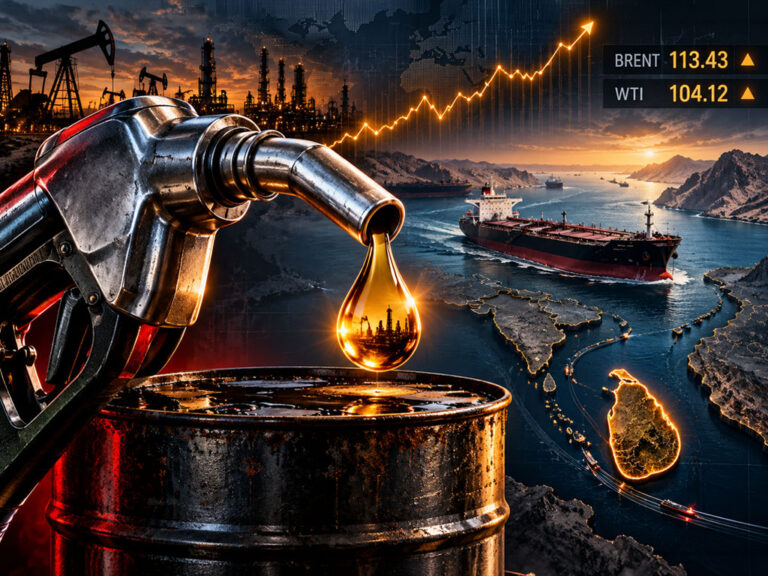
Colombo, October 31, 2026 — Sri Lankan motorists could face higher petrol and diesel prices from midnight tonight as the Ceylon Petroleum Corporation (CPC) prepares for its regular monthly fuel price revision amid renewed increases in international oil prices.
The adjustment is expected to be announced on Saturday night, with revised prices taking effect at the beginning of November.
Although an increase is considered possible, the CPC has yet to announce the revised rates, and no official decision confirming a price increase has been published.
Global Oil Prices Add Pressure

The possibility of higher domestic fuel prices follows a renewed rise in international crude oil prices, driven partly by escalating geopolitical tensions in the Middle East.
Disruptions and security risks affecting major international shipping routes, particularly the Strait of Hormuz, have intensified concerns about the cost and reliability of global oil supplies.
The region remains crucial to international petroleum shipments, meaning instability can influence oil prices well beyond the countries directly involved.
Higher crude oil prices, together with increased freight charges and maritime insurance premiums, can raise the cost of importing petroleum products into Sri Lanka.
These additional expenses may eventually be reflected in retail petrol and diesel prices, depending on the calculations applied under the government’s fuel pricing mechanism.

CPC and Private Fuel Companies Expected to Review Prices
Under the existing monthly pricing arrangement, the CPC periodically reviews the retail prices of petroleum products in response to changes in international market conditions and other relevant costs.
Private fuel suppliers, including Lanka IOC and Sinopec, are also expected to review their prices in connection with the latest adjustment.
However, the companies may publish their own retail price schedules. An adjustment by the CPC should therefore not automatically be taken as confirmation that every supplier will introduce identical changes.
The monthly pricing process considers several factors beyond international crude oil movements, including import costs, transportation, operating expenses, taxation and exchange rates.
Consequently, higher international oil prices do not necessarily translate into an identical increase across every domestic fuel category.
Current Petrol and Diesel Prices
The most recent CPC price revision took effect on October 1, 2026, following the adjustment announced on September 30.
The revised prices were:
| Fuel category | Current price per litre |
|---|---|
| Petrol 92 Octane | Rs. 414 |
| Petrol 95 Octane | Rs. 475 |
| Auto Diesel | Rs. 392 |
| Super Diesel | Rs. 528 |
| Kerosene | Rs. 285 |
The October adjustment increased Petrol 92 by Rs. 15, Auto Diesel by Rs. 10 and Super Diesel by Rs. 50 per litre.
Petrol 95 and kerosene prices remained unchanged.
These are the previously published CPC rates, not prices for the forthcoming November adjustment. Ceylon Petroleum Corporation+1
Exchange Rate Could Offset Some Import Costs
While international oil prices are an important consideration, the value of the Sri Lankan rupee against the US dollar could influence the extent of any domestic adjustment.
Petroleum imports are generally priced in foreign currency, making exchange-rate movements relevant to the final cost of bringing fuel into the country.
A relatively stable rupee could help cushion part of the increase in international oil prices, although its effect would depend on the actual import costs and exchange rates used in the pricing calculations.
Fuel prices are also influenced by domestic taxes, distribution expenses and other components of the pricing formula.
As a result, the final impact on motorists will become clear only after the revised retail prices are officially announced.
Motorists Await Midnight Announcement
Any increase in petrol or diesel prices would add to the financial pressure faced by households and businesses, particularly those dependent on road transport.
Higher diesel costs can affect public transport, freight operations, agriculture and the distribution of essential goods, while increases in petrol prices directly influence private transport expenses.
For businesses operating vehicle fleets or transporting products over long distances, even a relatively modest adjustment can increase operating costs.
Motorists and transport operators will therefore be watching the scheduled announcement closely.
Until the CPC and other fuel suppliers publish their revised schedules, however, the possibility of a price increase remains a forecast rather than a confirmed decision.