COLOMBO, 4 November 2026: Opposition challenges decision to withhold debate on allegations against Jagath Wickramaratne, while Parliament cites failure to submit a revised motion.
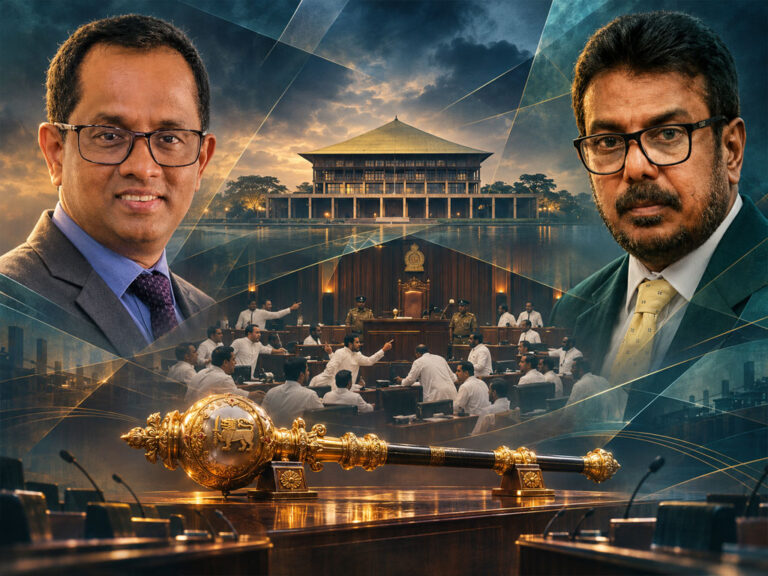
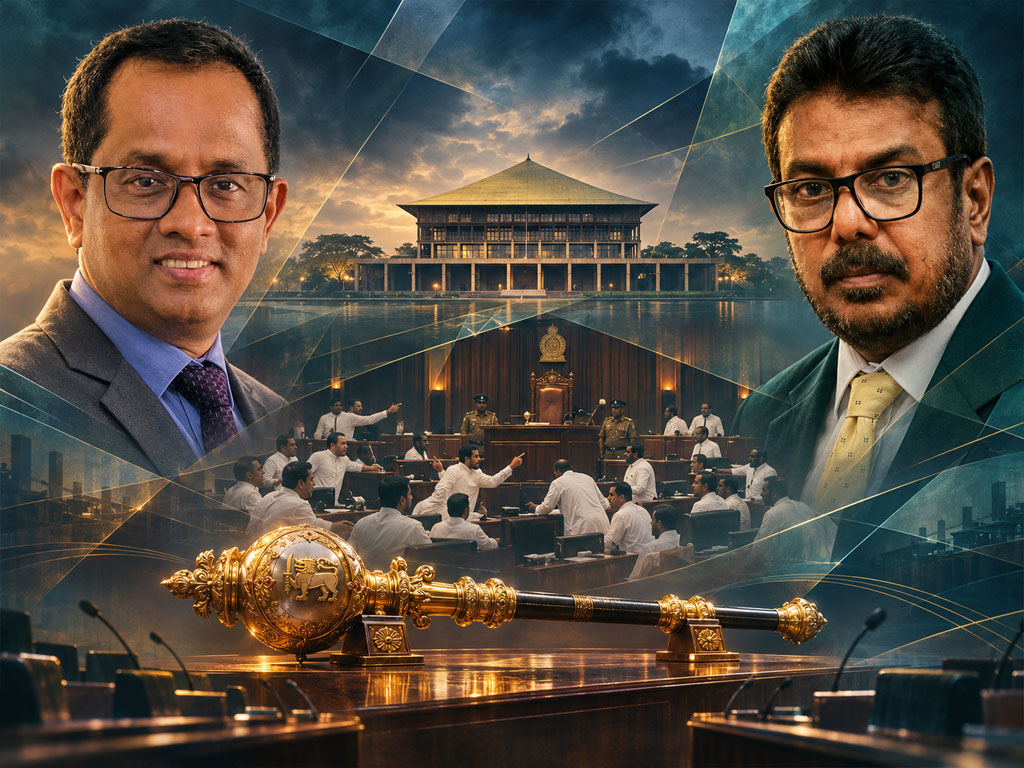
A dispute over the Opposition’s no-confidence motion against Speaker Dr. Jagath Wickramaratne erupted into a confrontation in Parliament on Tuesday (3), with protesting MPs attempting to seize the ceremonial Mace amid objections to the decision not to debate the motion.
The confrontation followed Deputy Speaker Dr. Rizvie Salih’s refusal to immediately entertain several questions of parliamentary privilege, including objections relating to the no-confidence motion.
Opposition Leader Sajith Premadasa accused the parliamentary authorities of denying elected representatives an opportunity to debate serious allegations against the Speaker. The Government, however, maintained that the motion had not been resubmitted in the form required under Parliament’s Standing Orders.
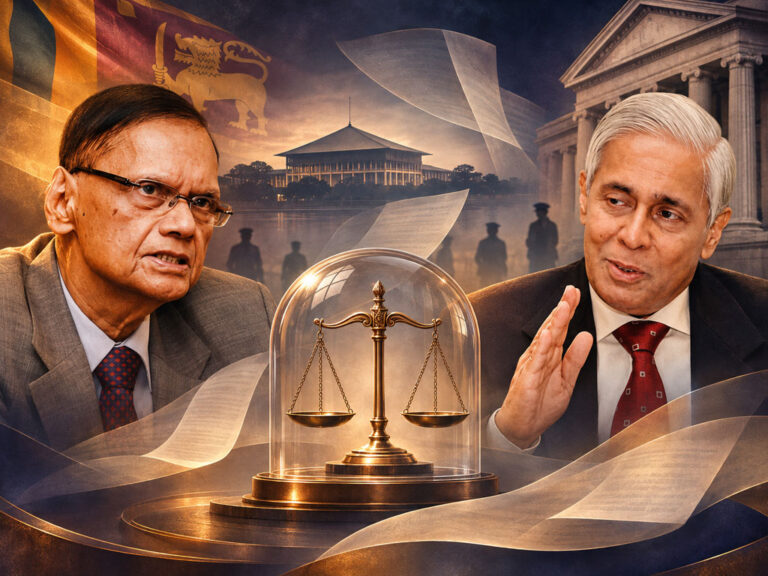
The disagreement has brought parliamentary procedure, the Speaker’s impartiality and the Government’s approach to allegations against senior officeholders under renewed scrutiny.

Disruption Over Parliamentary Privileges
Tensions rose when Opposition MPs sought permission to raise questions of privilege concerning the handling of the motion.
Salih informed the House that the relevant written submissions had been received after 9 a.m. and that he had not yet examined them. He said he would study the submissions before responding.
Opposition members objected, insisting that the matter warranted immediate consideration.
Their protest subsequently intensified, culminating in an attempt to seize the Mace, the ceremonial symbol of parliamentary authority.
The incident disrupted proceedings and demonstrated how a dispute over the parliamentary agenda had developed into a wider confrontation over the rights of Opposition members.
Motion Submitted With 44 Signatures
Premadasa told Parliament that the no-confidence motion against Wickramaratne had been submitted to Secretary-General of Parliament Kushani Rohanadeera on 9 October.
The document carried the signatures of 44 Opposition MPs and set out approximately 50 allegations concerning the Speaker’s conduct and administration of parliamentary affairs.
According to the Opposition Leader, the motion subsequently appeared in parliamentary records on 12 October.
He questioned how a motion that had entered the parliamentary process could later be denied a debate following consideration by the Committee on Parliamentary Business.
Premadasa argued that the decision undermined the privileges of MPs and raised concerns about whether the Speaker could be subjected to effective parliamentary scrutiny.
Parliament Cites Failure to Revise Motion
The Government and parliamentary authorities have offered a different account of why the debate did not proceed.
In an official announcement issued on 30 October, Parliament stated that the Opposition had previously been asked to amend provisions of its motion to comply with Standing Orders and resubmit a revised version.
According to that announcement, no revised motion had been received. The Committee on Parliamentary Business therefore decided that the debate would not take place on 3 November.
A previous parliamentary announcement, issued on 23 October, had identified 3 November as the proposed date for debating a revised no-confidence motion.
Leader of the House Bimal Rathnayake also said the Opposition had failed to submit the amended document by the stipulated deadline of 28 October.
He indicated that time could be allocated for a debate before the Budget proceedings if the Opposition submitted a motion complying with the applicable parliamentary rules.
These explanations establish that the dispute concerns not only the allegations against the Speaker but also whether the amendments requested by the parliamentary authorities were justified and whether the Opposition was afforded a reasonable opportunity to comply.
Serious Allegations Require Examination
The motion reportedly contains allegations relating to the Speaker’s exercise of authority, administrative decisions, the use of public resources and the treatment of parliamentary business.
Among the reported complaints are claims concerning privileges allegedly extended to his personal secretary and accusations of partiality in the management of proceedings.
These remain allegations made in a political motion. Their inclusion does not establish that misconduct occurred.
Nevertheless, the seriousness of the accusations makes the question of parliamentary accountability significant.
A Speaker is expected to preside over the House fairly and to command the confidence of members across party lines. When that impartiality is challenged, the institution must have a credible means of addressing the concerns.
A transparent explanation of the procedural objections to the motion, together with a clear route for its consideration, would help distinguish legitimate application of parliamentary rules from the Opposition’s allegation that scrutiny is being obstructed.
The Comparison With Ashoka Ranwala
The dispute has also revived questions about the Government’s handling of an earlier controversy involving former Speaker Ashoka Ranwala.
Ranwala resigned on 13 December 2024 following public questions about his claimed doctoral qualification and his inability at that time to produce supporting documentation.
His departure occurred within weeks of assuming the office.
The circumstances differ substantially from those surrounding Wickramaratne. The controversy involving Ranwala concerned verification of an academic credential, whereas the present no-confidence motion contains allegations about official conduct and parliamentary administration.
Neither controversy should be treated as proof of wrongdoing without supporting evidence.
Even so, the comparison presents a political challenge for the governing National People’s Power administration.
Critics are entitled to ask whether the standards of transparency and accountability applied to senior parliamentary officeholders are consistent, particularly when allegations concern the management of public resources and the integrity of Parliament itself.
The fact that Ranwala resigned does not, by itself, establish that Wickramaratne must do the same. Equally, procedural objections to a no-confidence motion should not become a substitute for addressing its substantive allegations.
A Test of Parliamentary Accountability
The confrontation now leaves several questions requiring clear answers.
What specific provisions of the original motion were considered inconsistent with Standing Orders? Were those objections communicated in sufficient detail? What amendments were requested, and why did the Opposition not submit the revised document?
Most importantly, when will Parliament provide a practical opportunity for the allegations to be debated or otherwise examined through an appropriate procedure?
These questions matter beyond the political contest between the Government and Opposition.
Parliament’s credibility depends on its ability to enforce procedural rules consistently while preserving meaningful scrutiny of the officials who administer them.
The attempted seizure of the Mace cannot resolve the underlying disagreement. Neither can the indefinite avoidance of debate.
The immediate responsibility of parliamentary leaders is to clarify the procedural position, protect the orderly functioning of the House and ensure that allegations against its presiding officer can be addressed through a transparent and credible process.