COLOMBO — Attorney General’s instructions prompt fresh court action as investigators examine conflicting medical evidence and allegations surrounding the removal of a child’s kidney.
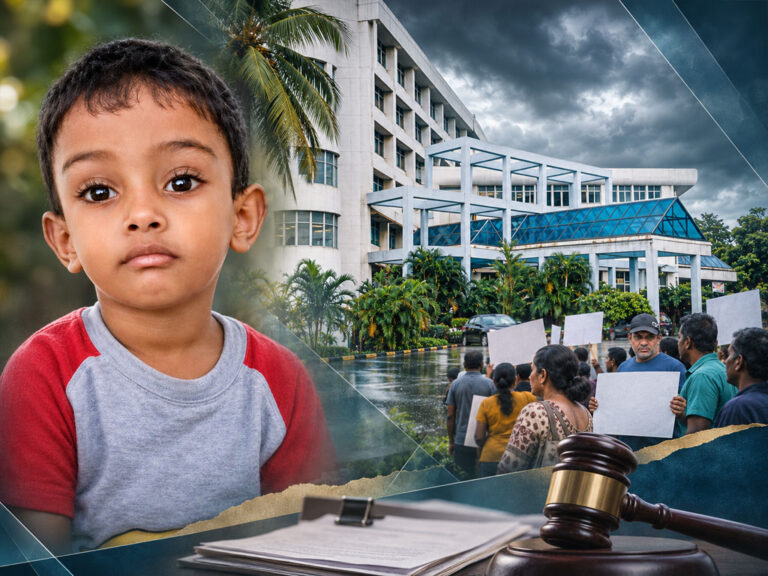
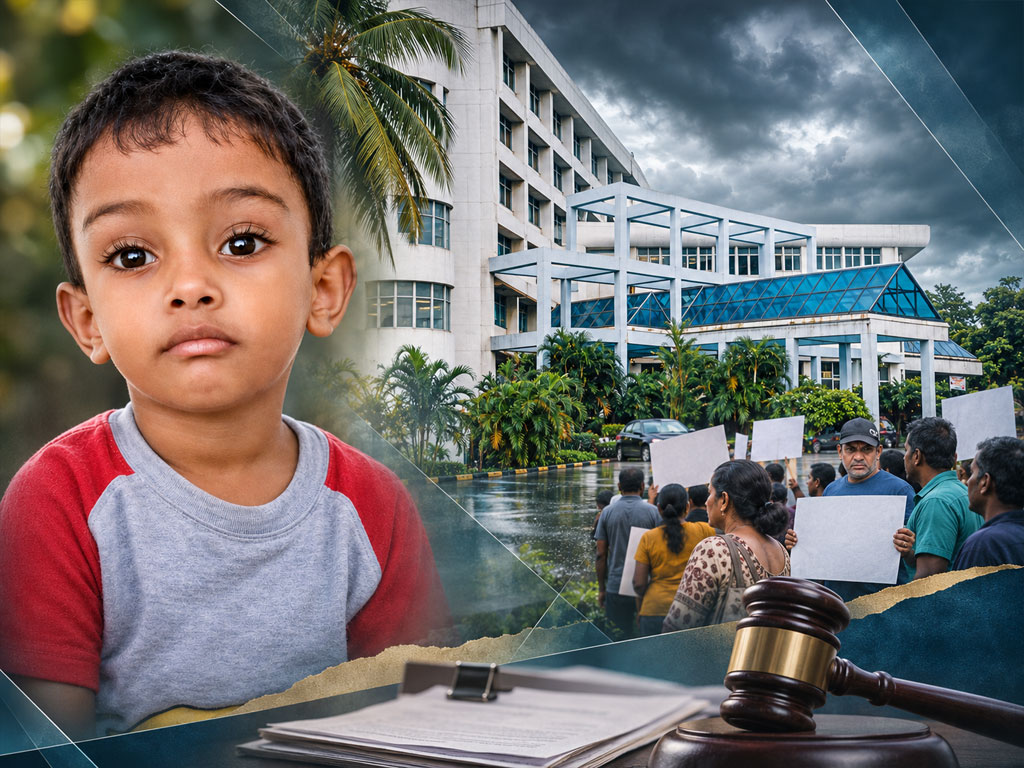
The Colombo Chief Magistrate’s Court has issued summons to two doctors in connection with the death of three-year-old Hamdi Fazlim, who died following kidney surgery at Lady Ridgeway Hospital in 2023, as investigators continue examining allegations of medical negligence.
Colombo Additional Magistrate Liyan Warushavithana issued the summons on Thursday, November 5, directing consultant surgeon Dr. Naveen Wijekoon and Dr. Nuwan Herath, who reportedly conducted preoperative examinations, to appear before court on March 29.
The order followed submissions by the Criminal Investigation Department (CID), which informed the court that the Attorney General had advised investigators to obtain statements from the two doctors in Sri Lanka.
Dr. Wijekoon, who is reported to be residing in Australia, has previously provided a statement through Skype.
The case has attracted considerable public attention because of conflicting medical evidence concerning the child’s kidneys and the circumstances surrounding his death.

Medical Examinations Before Surgery
Hamdi Fazlim, whose family resides in Kotahena, Colombo, was admitted to Lady Ridgeway Hospital for treatment of a kidney condition.
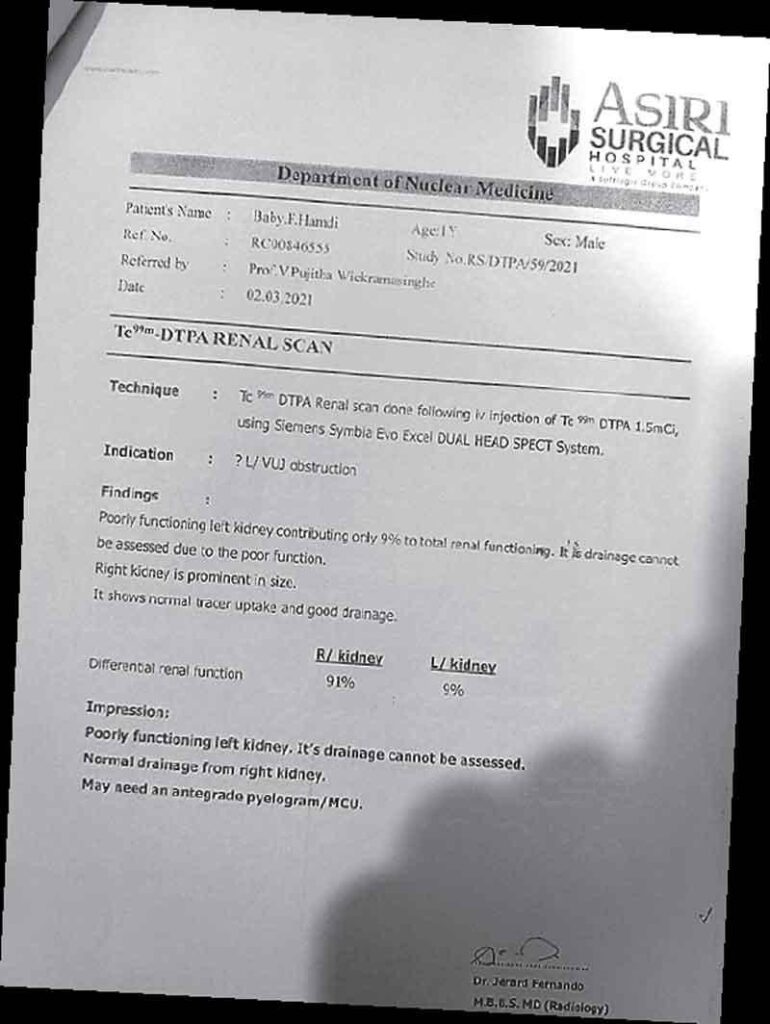
According to medical evidence and statements presented during earlier court proceedings, examinations indicated that the child’s left kidney was severely impaired.
His right kidney was reportedly functioning normally.
Dr. Nuwan Herath, who conducted examinations before surgery, was identified during the latest proceedings as one of the doctors whose evidence investigators wish to obtain.
Attorney Dr. Y. L. M. Yoosuf, appearing on behalf of the affected family, informed the court that the preoperative findings had indicated a healthy right kidney and a damaged left kidney.
The medical team had recommended removing the poorly functioning left kidney.
The operation was subsequently performed by a team involving consultant surgeon Dr. Wijekoon.
However, the child’s condition deteriorated following the procedure, giving rise to questions about what happened to his remaining kidney function.
Parents Allege Healthy Kidney Was Also Affected
Hamdi’s parents have maintained that the surgery resulted in the loss of his healthy right kidney, leaving him unable to survive without dialysis or a transplant.
Their allegations form the basis of a continuing investigation into the circumstances surrounding the operation and subsequent medical treatment.
Earlier court proceedings heard evidence indicating that the child’s right kidney had been functioning normally before surgery.
However, different medical explanations emerged following the operation.
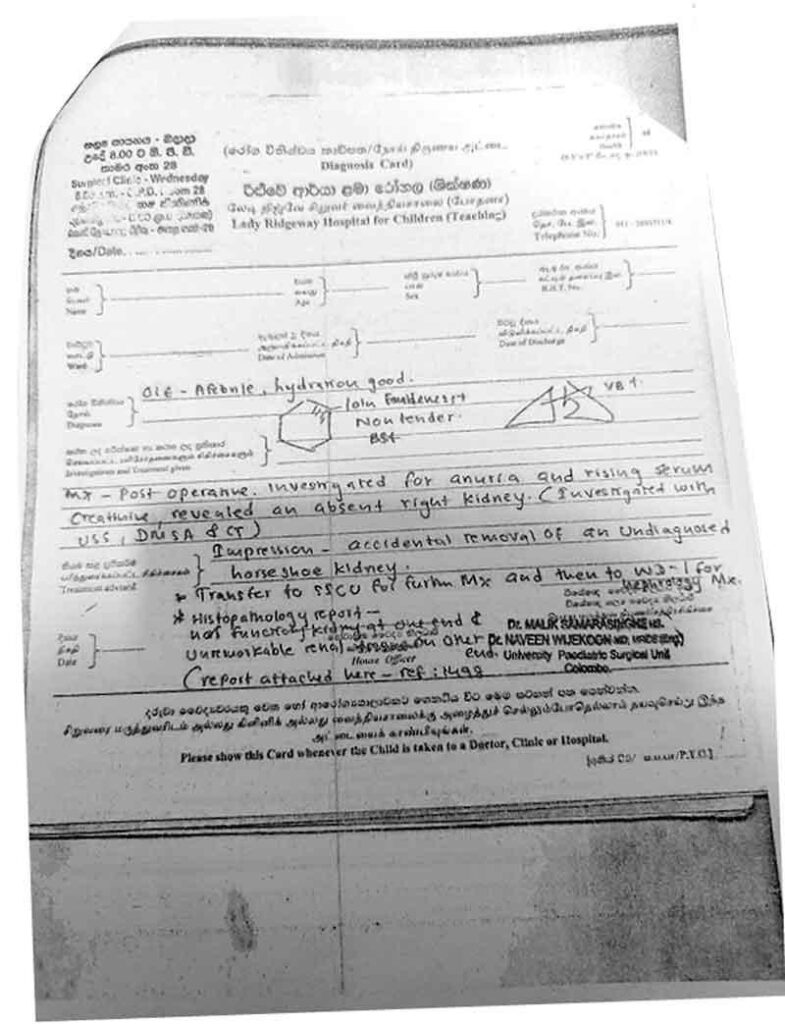
Lady Ridgeway Hospital officials previously suggested that the child may have had an anatomical abnormality involving kidneys that were joined together, potentially complicating their identification and removal.
During proceedings in November 2023, the hospital’s then Deputy Director, Dr. Santhushitha Senapathi, maintained that the surgical team had acted sincerely and with dedication.
He also referred to the possibility that the right kidney had been joined to the diseased left kidney and unintentionally removed during the procedure.
These explanations were disputed by evidence concerning the anatomical positioning and reported preoperative function of the kidneys.
The resulting inconsistencies became a central concern in the judicial investigation.
The child’s family continues to seek clarification about the circumstances of the surgery and whether appropriate medical precautions were followed.
Seven Months of Treatment Before Death
Following the operation, Hamdi experienced serious complications and required prolonged medical treatment.
His parents said he underwent dialysis while awaiting a possible kidney transplant.
Despite continuing treatment, his condition did not improve sufficiently.
Hamdi died on July 27, 2023, approximately seven months after the operation.
His death prompted questions about the medical decisions taken before and during surgery, the handling of postoperative complications and the explanations provided to his parents.
The family subsequently lodged complaints with the authorities, seeking an investigation into whether medical negligence contributed to their son’s death.
Investigations were initially conducted by Borella Police before the CID became involved.
Conflicting Medical Evidence Examined by Court
The inquiry has previously examined discrepancies between clinical records, statements by hospital officials and findings contained in the Judicial Medical Officer’s report.
During proceedings in August 2023, the Colombo Magistrate’s Court directed police to conduct further investigations using all relevant medical records.
The order followed concerns about apparent inconsistencies regarding the number, location and condition of the child’s kidneys.
Earlier evidence indicated that medical examinations had identified two kidneys in their expected anatomical positions.
Other explanations referred to the possibility of a rare congenital abnormality involving the kidneys being joined together.
The competing accounts have made the precise circumstances of the operation a central issue in the investigation.
Determining whether the medical team departed from accepted standards of care requires careful examination of the clinical records, surgical findings, expert evidence and decisions made during treatment.
The existence of conflicting medical evidence does not, by itself, establish criminal negligence.
Surgeon Previously Provided Statement From Australia
The investigation has also encountered difficulties in obtaining evidence from medical personnel who subsequently left Sri Lanka.
Dr. Wijekoon, who is reported to be living in Australia, had previously been expected to provide evidence remotely.
During earlier proceedings, investigators raised concerns about difficulties obtaining his testimony.
A statement was subsequently provided through Skype, and the corresponding records were submitted to court.
The Magistrate had previously directed investigators to obtain appropriate authentication of the overseas statement through diplomatic channels.
The latest proceedings represent a further step in the attempt to obtain evidence directly from the relevant medical practitioners.
The CID informed the court that, following consultation with the Attorney General, instructions had been received to arrange for the doctors to return to Sri Lanka to provide statements.
The court accordingly issued summons to Dr. Wijekoon and Dr. Herath.
A summons is a requirement to appear before court. It should not be interpreted as a conviction or a judicial determination that either doctor committed medical negligence.
Questions Over Surgical Safety and Medical Accountability
Hamdi’s death has prompted wider discussion about safeguards intended to prevent avoidable harm during surgery.
The case raises several matters that warrant examination by investigators and relevant medical authorities.
1. Preoperative identification of the surgical site
An important question is whether the medical team adequately reviewed the available scans and clinical findings before proceeding with the operation.
The World Health Organization’s surgical safety framework emphasises verification of patient identity, the planned procedure and the surgical site.
Investigators must establish which safeguards were required, whether they were followed and whether any omission contributed to the outcome.
2. Interpretation of the medical evidence
Conflicting accounts concerning the child’s kidney anatomy require detailed assessment by appropriately qualified specialists.
The investigation must establish what the preoperative examinations showed, what surgeons observed during the operation and how the postoperative findings should be interpreted.
3. Evidence from overseas medical practitioners
The departure of doctors who may hold relevant evidence has complicated the investigative process.
Their overseas residence does not itself establish wrongdoing or an intention to evade legal responsibility.
Nevertheless, the authorities must ensure that the court obtains the evidence necessary to examine the case fairly and comprehensively.
4. Professional regulatory oversight
The family’s concerns also raise questions about whether the relevant professional and administrative bodies have conducted appropriate reviews.
Any disciplinary action involving medical practitioners must comply with applicable law, procedural fairness and the findings of properly constituted investigations.
5. Communication with patients’ families
The case highlights the importance of providing families with accurate information about medical risks, unexpected complications and changes in treatment plans.
Such communication becomes especially important when serious complications arise during the treatment of a child.
Next Court Hearing
The court has directed the two doctors to appear on March 29, with the case scheduled to be taken up again on that date.
The immediate issue is the collection and assessment of evidence concerning the operation and the child’s subsequent treatment.
For Hamdi’s family, the proceedings represent another stage in a prolonged effort to establish what happened to their son.
For the wider healthcare system, the investigation carries implications for surgical safety, professional accountability and public confidence in hospital procedures.
Any eventual determination must rest on verified medical evidence and the applicable legal standards, while respecting both the family’s right to seek answers and the doctors’ right to a fair process.