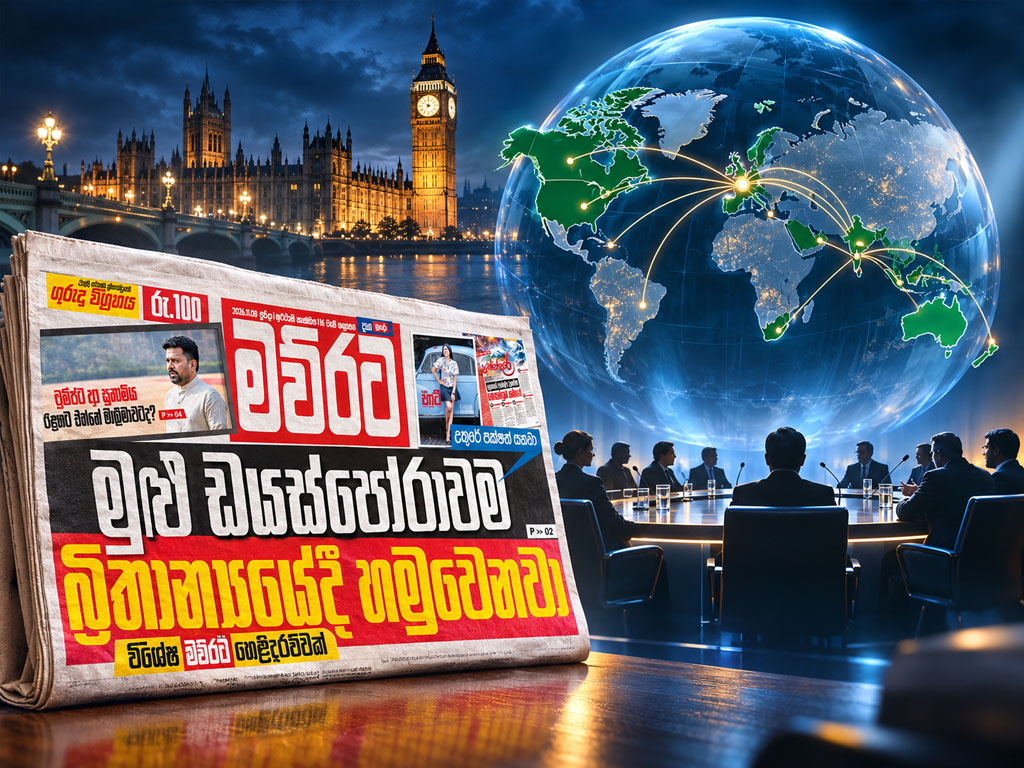
An ambitious initiative to bring together Tamil diaspora organisations from across the world could place Sri Lanka’s constitutional future under renewed international scrutiny. Reports suggest that discussions are already taking place with Northern political parties, while prominent international personalities have also been approached.
Major International Gathering Reportedly Being Planned
Nearly 100 Tamil diaspora organisations from different parts of the world are reportedly preparing to participate in a major conference in the United Kingdom, with discussions expected to focus on Sri Lanka’s political future and constitutional reform.
According to a report attributed to the Mawrata newspaper, the proposed gathering is being coordinated by Tamil diaspora organisations based in Britain.
The organisers are understood to have initiated discussions with Tamil organisations in several other countries as part of efforts to establish a broader international platform.
Although the precise date, venue and confirmed list of participating organisations have not been independently established, the reported initiative suggests an attempt to coordinate positions on longstanding political concerns affecting Sri Lanka’s Tamil community.

Northern Tamil Political Parties Reportedly Consulted
The newspaper further reported that discussions had been held with Tamil political parties in Sri Lanka’s Northern Province by the previous week.
These consultations are said to have centred on proposals that could be presented on behalf of the Tamil community if Sri Lanka introduces a new constitution.
Among the principal subjects reportedly discussed are the nature of a political settlement for the Northern Province and the extent of powers that could be devolved under a revised constitutional framework.
Constitutional reform and power-sharing have remained central questions in Sri Lanka’s political debate for decades.
Any coordinated proposals emerging from a major diaspora gathering could therefore attract considerable attention among political parties, civil society organisations and policymakers.
However, the specific parties involved in the reported consultations, and whether they have formally endorsed the initiative, remain to be independently confirmed.
International Figures Reportedly Approached
One of the more notable aspects of the newspaper’s account concerns reported discussions with internationally recognised political and human rights figures.
Those mentioned include former United States President Barack Obama, former British Foreign Secretary David Miliband and former United Nations High Commissioner for Human Rights Navanethem Pillay.
The report suggests that organisers have contacted or held discussions involving these personalities in connection with the proposed conference.
There has been no independent confirmation that any of the three has accepted an invitation, agreed to attend or endorsed the organisers’ proposals.
Their reported involvement should therefore be understood as an unverified claim concerning preliminary contacts, rather than confirmation of participation.
A Wider Effort to Build Political Consensus
The reported initiative comes amid wider efforts among Tamil political representatives, civil society groups and diaspora organisations to develop common positions on Sri Lanka’s political and constitutional questions.
A separate UK-based conference initiative has publicly outlined plans to bring together Tamil representatives, scholars, community organisations and international participants for discussions concerning political representation and the future of the Tamil community.
Such efforts provide important context for the latest report, although they do not independently establish the proposed attendance figures or arrangements described by Mawrata.
The central question is whether any international gathering can produce proposals reflecting a sufficiently broad range of political views, including those of communities directly affected by constitutional decisions in Sri Lanka.
For the proposed conference to carry lasting political weight, its organisers would need to clarify its representative structure, participating organisations and intended outcomes.
Constitutional Reform Could Return to the Forefront
The significance of the reported gathering lies in its potential to bring renewed attention to constitutional reform, power devolution and the political aspirations of Sri Lanka’s Tamil population.
Nevertheless, any proposals developed overseas would ultimately need to be considered within Sri Lanka’s constitutional and democratic processes.
The involvement of Northern political parties, the extent of diaspora consensus and the response of other political stakeholders would all influence the initiative’s eventual significance.
For now, the reported conference remains at the planning stage, with important details awaiting confirmation.
If the proposed international gathering proceeds on the scale described, it could become a significant forum for debating Sri Lanka’s constitutional future and the political arrangements sought by Tamil representatives at home and abroad.