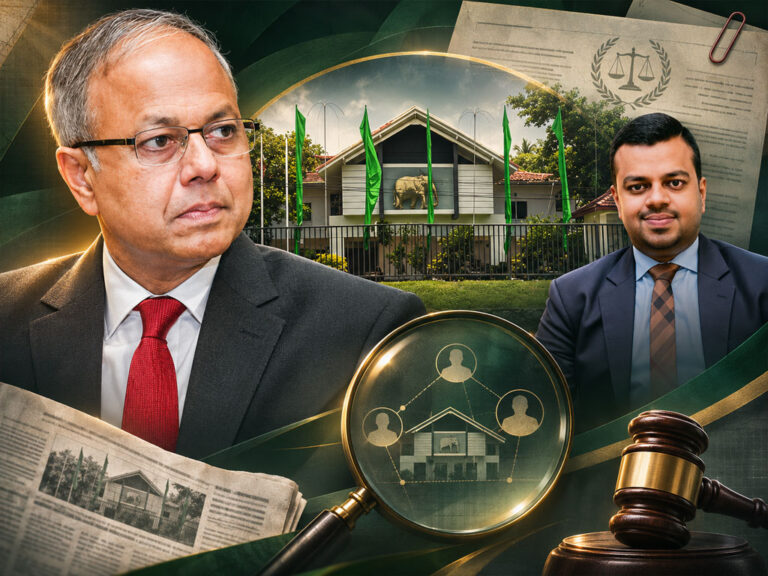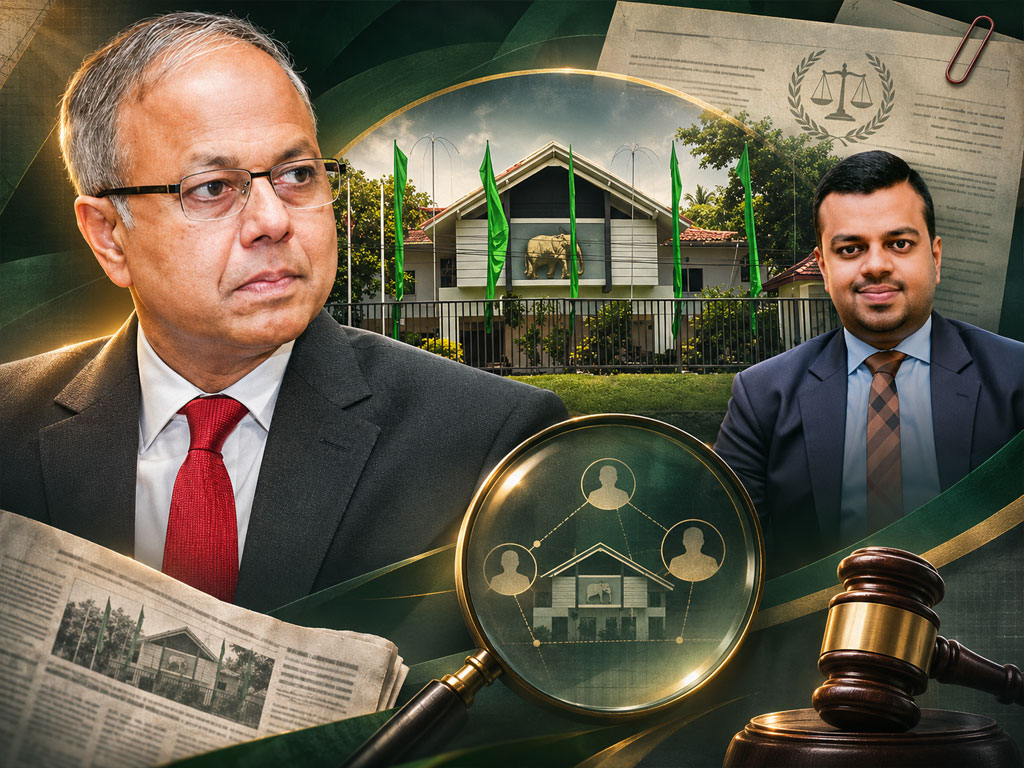
COLOMBO — Who controlled Isolez Biotech Pharma before the immunoglobulin scandal erupted? Reported company records show two founding shareholders transferring their holdings shortly after a criminal complaint, while earlier NMRA warnings and a meeting attended by a Presidential Secretariat representative raise questions about regulatory decisions, ownership and the scope of the investigation.
Company records reportedly showing that two shareholders transferred their entire holdings in Isolez Biotech Pharma AG Limited shortly after a criminal complaint was lodged in October 2023 have brought fresh attention to the company’s ownership and the regulatory decisions preceding Sri Lanka’s controversial immunoglobulin procurement.
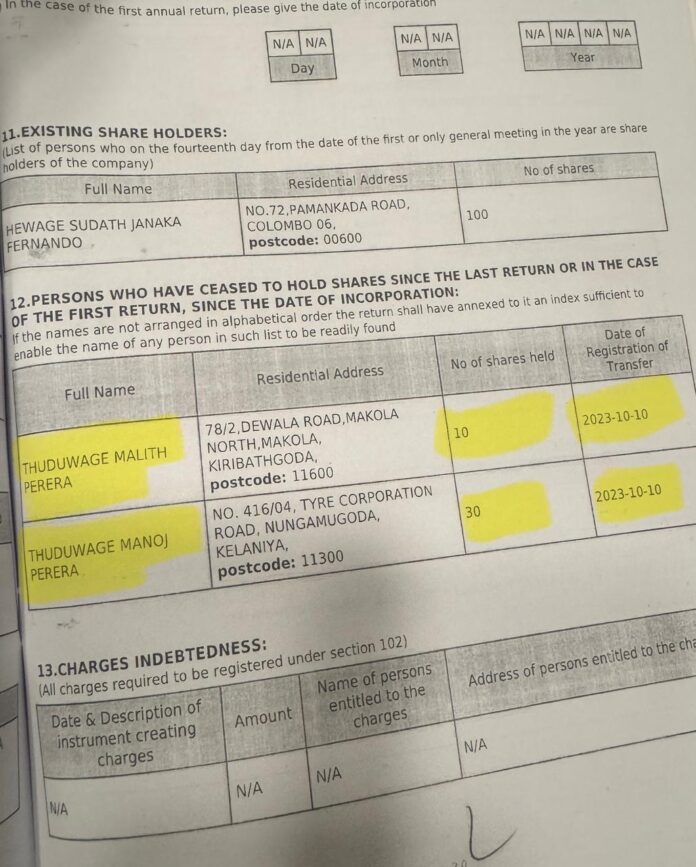
The records described in a recent report indicate that Thuduwage Malith Perera and Thuduwage Manoj Perera transferred their combined 40 shares to Hewage Sudath Janaka Fernando on October 10, 2023, leaving Fernando as the company’s sole shareholder.
The timing has prompted questions about the circumstances of the transfers and whether investigators examined the roles of everyone involved in the company’s management and operations.
Although the reported documents warrant scrutiny, a transfer of shares does not, by itself, establish criminal wrongdoing or prove that the individuals involved sought to avoid an investigation.

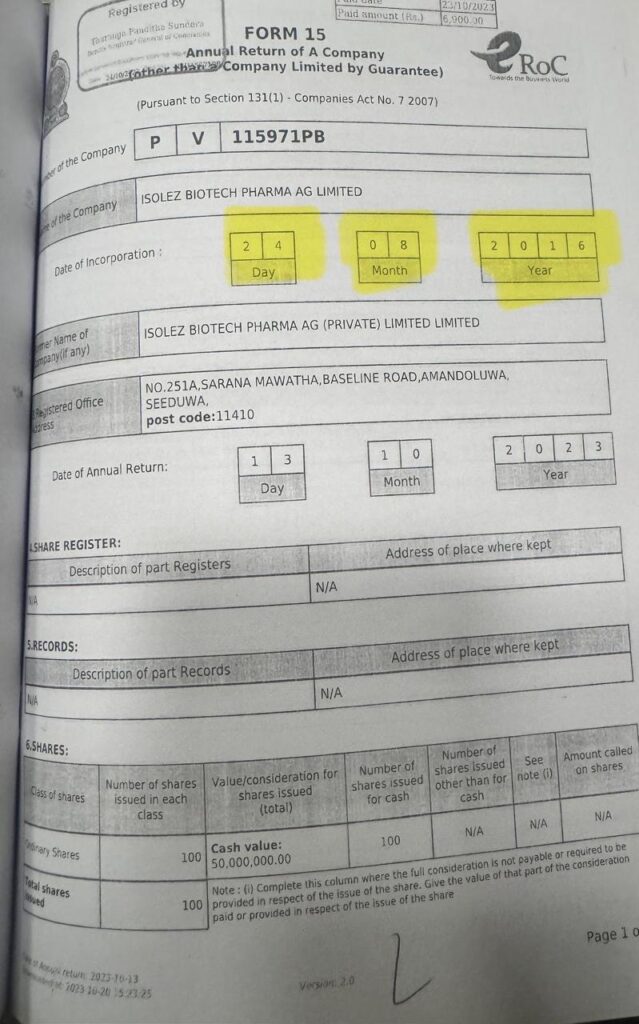
Company Established in 2016
According to the corporate registration details cited in the report, Isolez Biotech Pharma AG Limited was incorporated on August 24, 2016, during the administration commonly known as the Good Governance government.
The company’s operations subsequently became embroiled in allegations concerning the supply of counterfeit human immunoglobulin and other medicines to Sri Lanka’s public healthcare system.
Questions surrounding the company’s manufacturing capabilities and regulatory approvals emerged before the criminal investigation began.
A letter identified as NMRA/MFRD/LM-01-22, reportedly issued by the National Medicines Regulatory Authority on February 11, 2022, stated that inspections conducted in November and December 2021 did not support recommending the facility for Good Manufacturing Practice certification.
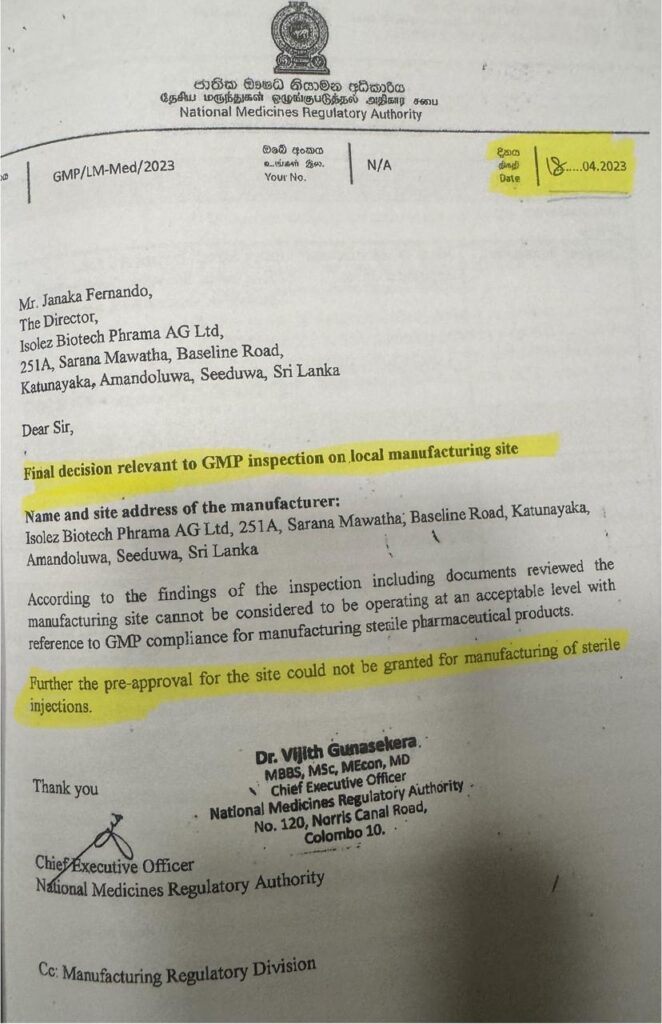
The report also cites an April 2023 regulatory decision issued under the signature of then NMRA Chief Executive Officer Dr. Vijith Gunasekara.
According to that account, the authority determined that the company’s premises at Amandoluwa, Katunayake, could not be approved for manufacturing sterile pharmaceutical products.
A February 2023 GMP inspection report reportedly identified additional concerns over the proposed manufacture of conventional medicines and cytotoxic drugs using the same production line.
These reported findings are significant because sterile pharmaceutical manufacturing requires stringent controls to prevent contamination and protect patients.
The original regulatory letters and inspection reports should be examined in full to establish their precise conclusions, the activities for which approval was sought and whether any subsequent authorisations were granted.
Read the Full Article
Discover the latest reporting and analysis from The Morning Telegraph.
Presidential Secretariat Representative at Technical Meeting
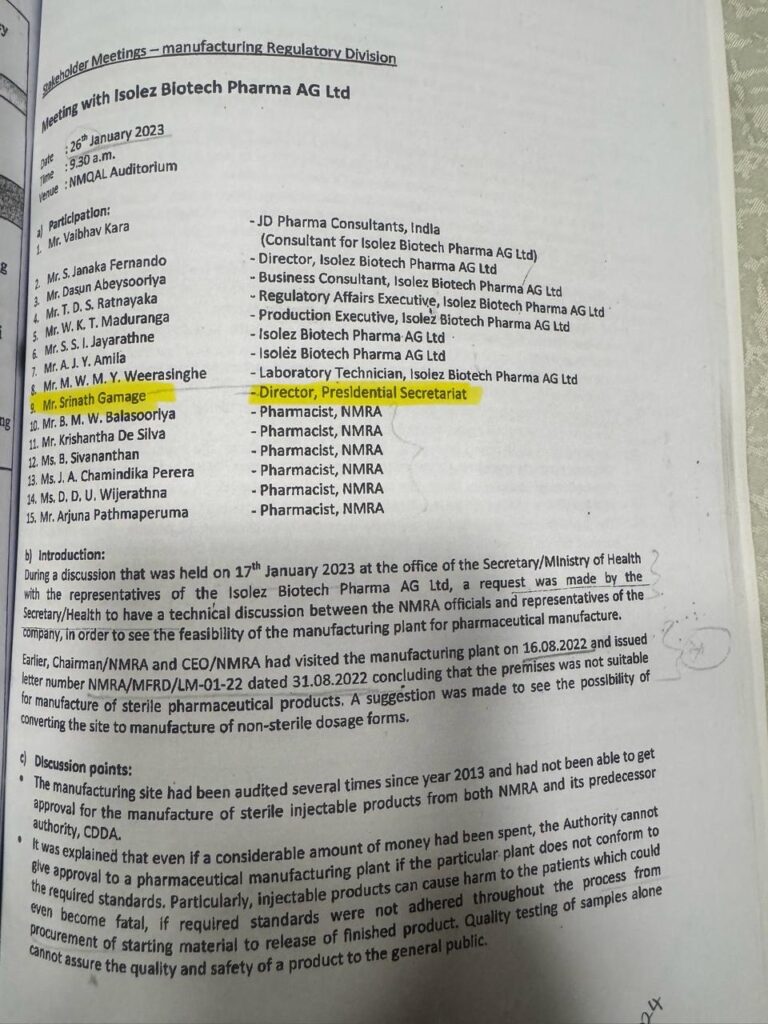
Another document cited in the report concerns a technical meeting held on January 26, 2023, chaired by the Secretary to the Ministry of Health and attended by representatives of Isolez Biotech Pharma and the NMRA.
The reported attendance list identifies its ninth participant as Srinath Gamage, described as a Director at the Presidential Secretariat.
His inclusion raises a question about the nature and purpose of the Presidential Secretariat’s involvement in discussions concerning the company.
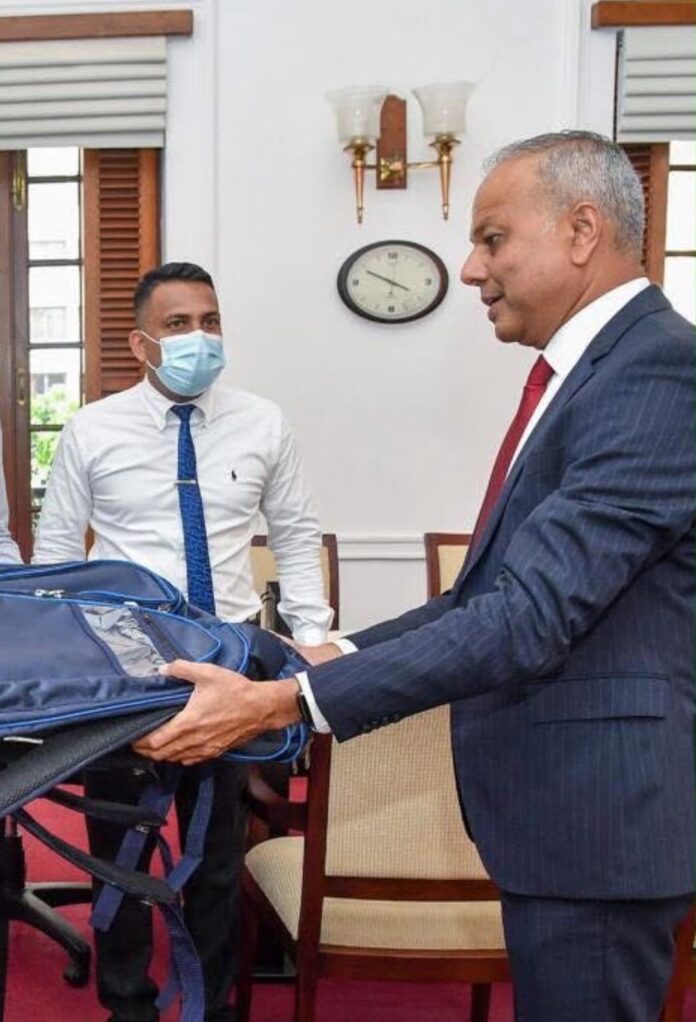
The report asks whether the meeting was connected to interventions by then Chief of Presidential Staff Sagala Ratnayake or progress reviews associated with the Ministry of Finance, which was under the President.
No evidence reviewed for this article establishes that Ratnayake directed the meeting, that Gamage acted improperly or that Presidential Secretariat participation influenced a regulatory decision.
The reasons for the representative’s attendance, the instructions under which he participated and the outcome of the meeting should be established through the official agenda, minutes and correspondence.
Participation in an administrative meeting is not, in itself, evidence of misconduct.
Shareholders Transferred Their Holdings After CID Complaint
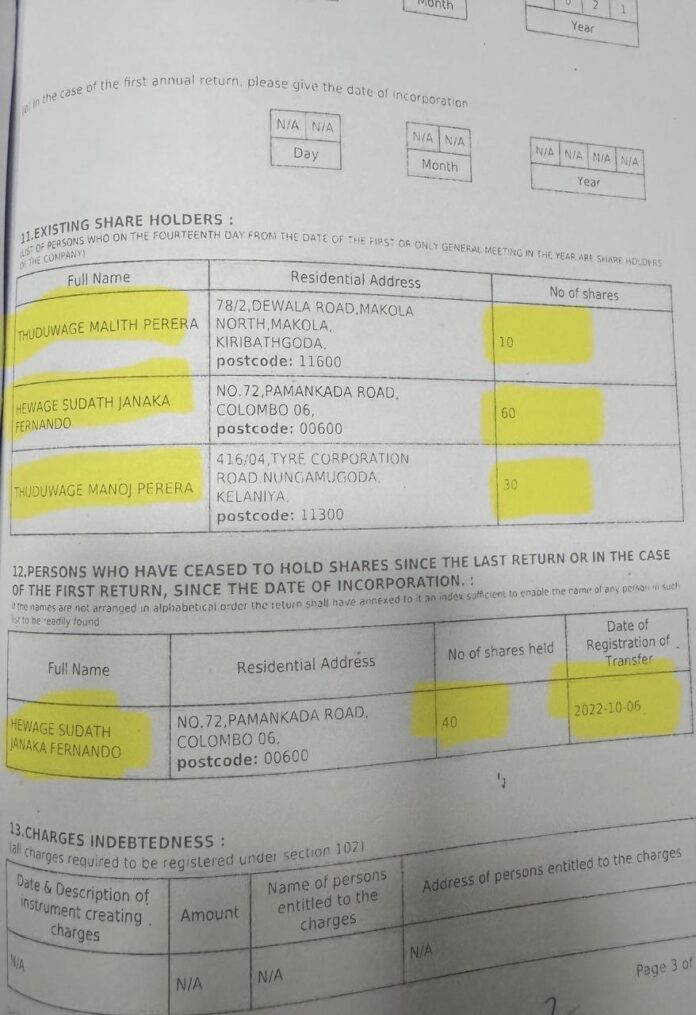
The most consequential information in the report concerns the company’s shareholder register.
According to the corporate records cited, the initial allocation of 100 shares was:
- Thuduwage Malith Perera — 10 shares.
- Thuduwage Manoj Perera — 30 shares.
- Hewage Sudath Janaka Fernando — 60 shares.
Fernando was subsequently named as the first suspect in the criminal investigation.
The report states that former Health Minister Keheliya Rambukwella submitted a written complaint concerning the alleged counterfeit medicine operation to the Criminal Investigation Department during the first week of October 2023.
A section of the company’s Registrar of Companies filing, described as identifying persons who had ceased to hold shares, reportedly records October 10, 2023, as the registration date for the transfer of the other two shareholders’ combined holdings.
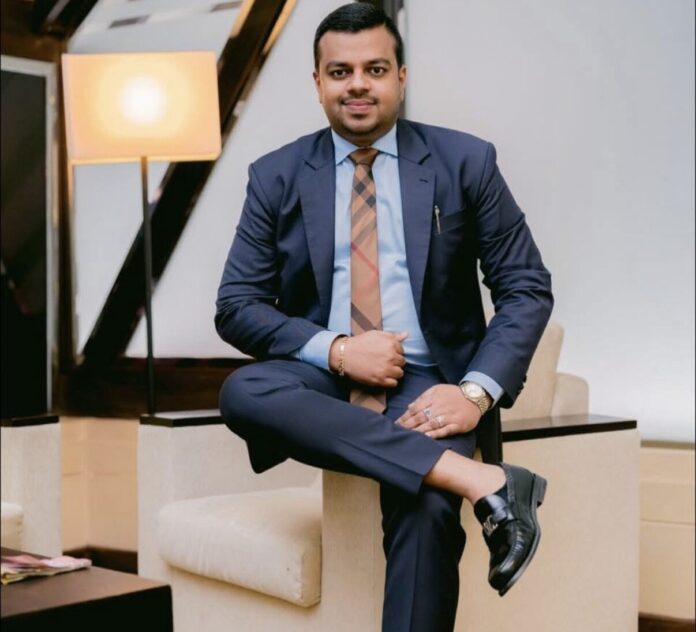
Following those transfers, Fernando reportedly held all 100 shares.
The proximity of the transactions to the criminal complaint deserves examination, particularly regarding when the transfers were agreed, what consideration was paid and whether they changed the company’s effective management or control.
Corporate shareholding records can identify legal ownership, but they do not necessarily establish who exercised operational authority, negotiated government contracts or made decisions concerning pharmaceutical production.
Determining those responsibilities would require additional records, including directorship filings, financial transactions, company resolutions and relevant correspondence.
Did Investigators Examine the Former Shareholders?
The report questions whether investigators adequately examined the activities of the two former shareholders and whether the timing of their departure was considered during the criminal inquiry.
It also raises the possibility that individuals outside the company may have influenced procurement decisions or received information about the investigation.
Those suggestions remain unsubstantiated allegations.
No evidence independently reviewed for this article establishes that the former shareholders received advance information from government officials, benefited from unlawful transactions or transferred their shares to avoid criminal liability.
Nor has it been established that investigators deliberately excluded them from scrutiny.
A proper examination would need to determine whether either shareholder participated in relevant business decisions, received payments connected to the disputed procurement or possessed information material to the prosecution.
The fact that a person has not been publicly identified as an accused does not establish that investigators never questioned or examined that individual.
Immunoglobulin Trial Reaches Submissions Stage
The wider criminal prosecution concerns allegations that public funds were fraudulently misappropriated through the supply of products falsely represented as human immunoglobulin and rituximab.
The Attorney General has brought proceedings against 12 accused, including former Health Minister Keheliya Rambukwella, in connection with the alleged misappropriation of Rs. 144.4 million.
The prosecution alleges that 6,195 vials supplied to the Medical Supplies Division contained substances other than the medicines they were purported to contain.
On November 4, 2026, the Colombo Permanent High Court Trial-at-Bar completed the oral stage of proceedings.
Written submissions are scheduled for November 25, followed by oral submissions on November 30. A date for the verdict is expected to be fixed thereafter.
During the proceedings, Rambukwella disputed responsibility for submitting the Cabinet paper associated with the emergency procurement process, attributing it to former President Ranil Wickremesinghe, who held the relevant ministerial responsibilities at the time.
That position represents Rambukwella’s account before the court, not a judicial finding concerning Wickremesinghe.
All accused remain entitled to the presumption of innocence unless convicted.
Ownership, Regulation and Accountability
The reported shareholder transfers, earlier regulatory warnings and January 2023 technical meeting present several matters that deserve clear explanations from the relevant authorities.
The Registrar of Companies can establish the company’s legal ownership history. The NMRA can clarify its inspection findings and decisions concerning manufacturing approval. The Ministry of Health and the Presidential Secretariat can explain the circumstances and outcomes of relevant administrative meetings.
Investigators, subject to the legal restrictions governing ongoing proceedings, can also clarify whether the company’s former shareholders and relevant officials were examined.
These inquiries should neither presume wrongdoing by persons who have not been charged nor disregard potentially material records simply because those individuals are outside the current prosecution.
Sri Lanka’s immunoglobulin scandal has exposed serious weaknesses in pharmaceutical procurement and the protection of public funds.
The remaining question is whether the available corporate, regulatory and administrative records have been examined comprehensively enough to establish the responsibilities of everyone materially involved.
That question requires documentary evidence and judicial scrutiny, not assumptions about guilt or political protection.
SOURCE:- HARI DESHAYA