New maritime incidents in one of the world’s most important oil shipping corridors have raised fears of further disruption to international trade, potentially exposing energy-dependent economies to rising costs.
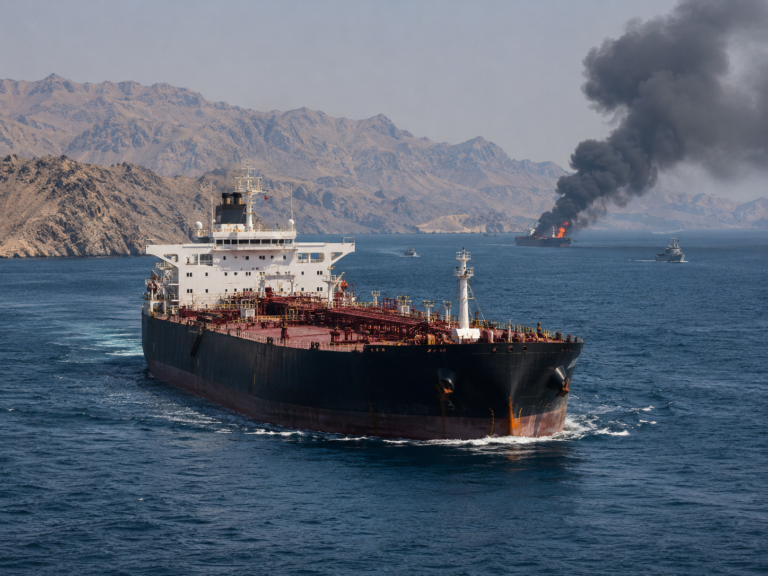
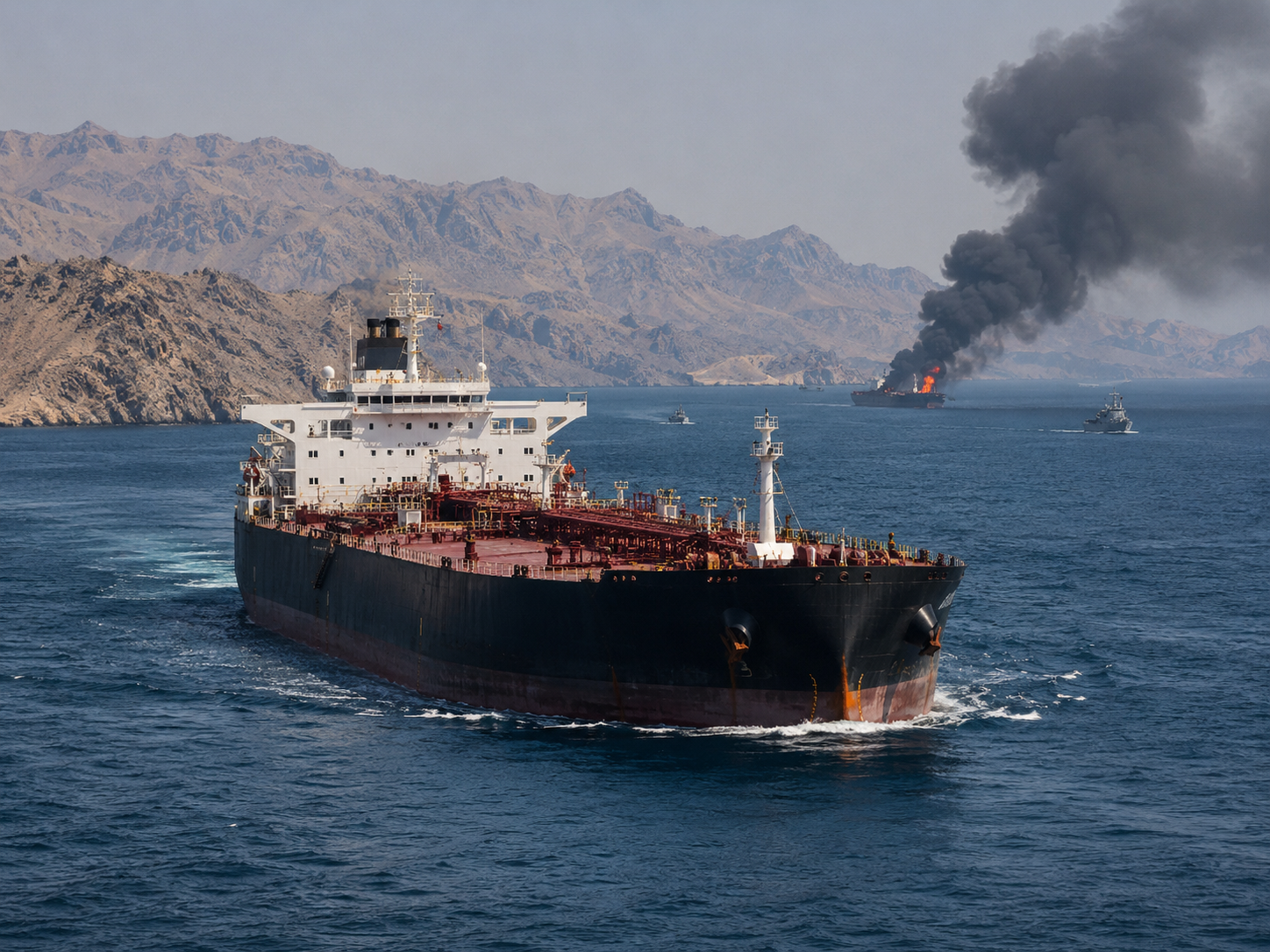
COLOMBO, November 17, 2026 — Three oil tankers were reportedly struck by naval mines and caught fire in separate incidents in and around the Strait of Hormuz on Monday, according to Iranian naval authorities, intensifying concerns over the security of a maritime passage crucial to global energy supplies.
The incidents, reported by Iranian state broadcaster IRIB and subsequently carried by international news agencies, occurred as commercial shipping continued to face heightened risks in the strategically important waterway.
Iran’s regular navy reported that one tanker struck a mine east of the strait, caught fire and became immobilised.
Separately, the Islamic Revolutionary Guard Corps Navy claimed that two additional tankers encountered mines while attempting to navigate the southern passage.
The identities of all three vessels and the full circumstances surrounding the incidents have not been independently established.
A Dangerous Passage for International Shipping
The Strait of Hormuz connects the Persian Gulf with the Gulf of Oman and the Arabian Sea, making it one of the most strategically important maritime routes in the world.
Oil and liquefied natural gas shipments from major Middle Eastern producers depend heavily on the passage.
Even limited disruption can influence commodity markets because of concerns about shipping delays, increased operating costs and potential supply interruptions.
The United Kingdom’s maritime security authorities have separately reported incidents involving commercial vessels in the region, including a tanker struck by an unidentified projectile that subsequently suffered an engine-room fire.
However, that incident should not automatically be treated as confirmation of the Iranian reports concerning naval mines.
Iranian authorities have also warned vessels against entering restricted waters or switching off tracking systems, arguing that ships disregarding navigational warnings expose themselves to serious danger.
The Cost of Maritime Insecurity
The immediate concern for shipping companies is whether the waterway can be navigated safely.
A vessel travelling through an area suspected of containing naval mines faces risks that extend beyond the possibility of physical damage.
Shipowners may encounter higher insurance premiums, demands for additional security precautions and delays caused by changes to navigational arrangements.
Oil traders and importing countries must also consider the possibility that further incidents could reduce the reliability of energy shipments.
Higher shipping and insurance costs can eventually contribute to increased prices for petroleum products and transported goods.
Why Sri Lanka Is Vulnerable
For Sri Lanka, instability in the Strait of Hormuz is particularly significant because of the country’s reliance on imported petroleum.
Any sustained increase in international fuel prices could place pressure on the national import bill and domestic energy costs.
Businesses involved in transport, manufacturing, agriculture and distribution could also experience higher operating expenses.
The scale of the eventual impact would depend on global oil prices, exchange rates, government pricing decisions and how long shipping disruptions continue.
Higher international crude prices do not necessarily produce an immediate equivalent increase in Sri Lankan retail fuel prices, but prolonged instability could make energy imports more expensive.
A Threat Beyond the Middle East
The latest reports demonstrate how quickly regional military tensions can produce international economic consequences.
The situation also highlights the importance of independently verifying competing claims during an active conflict, particularly when naval incidents involve unconfirmed vessel identities and disputed accounts of responsibility.
The immediate priority for maritime authorities is establishing the circumstances of the incidents and determining whether further hazards remain in commercial shipping lanes.
For energy-importing nations, the larger concern is whether a series of attacks or accidents could develop into a prolonged disruption of one of the world’s most important trading routes.
A sustained threat to shipping in the Strait of Hormuz would not remain a problem for the Middle East alone. Its economic consequences could reach countries thousands of kilometres away.
Sources
- Anadolu Agency — Iran says 3 oil tankers hit mines, catch fire in Strait of Hormuz, November 16, 2026.
https://www.aa.com.tr/en/middle-east/iran-says-3-oil-tankers-hit-mines-catch-fire-in-strait-of-hormuz/4126136 - Al Jazeera — Live coverage of maritime incidents and regional developments, November 16, 2026.
https://www.aljazeera.com/news/liveblog/2026/11/16/live-houthis-advance-in-yemen-as-tankers-hit-sea-mines-in-strait-of-hormuz