By Dwayne Ferreira
Sri Lanka’s 2027 education reforms renew scrutiny over how schools teach the country’s civil war, ethnic tensions and post-independence history.
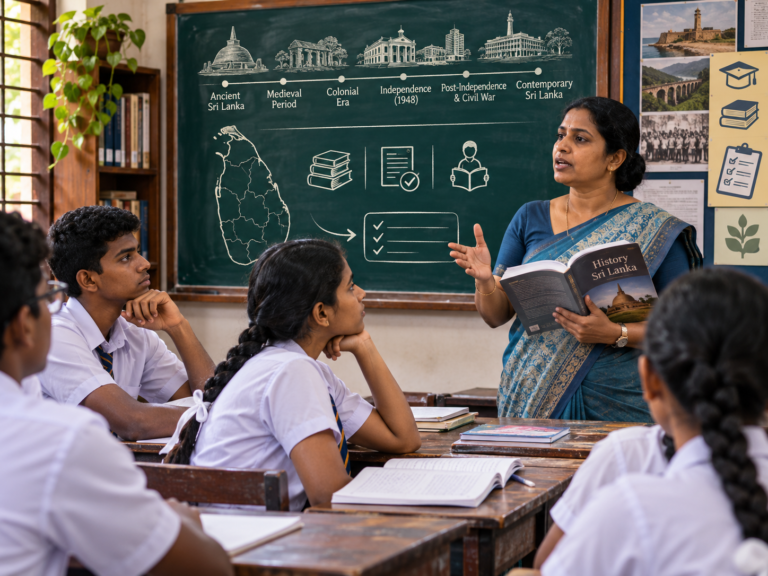
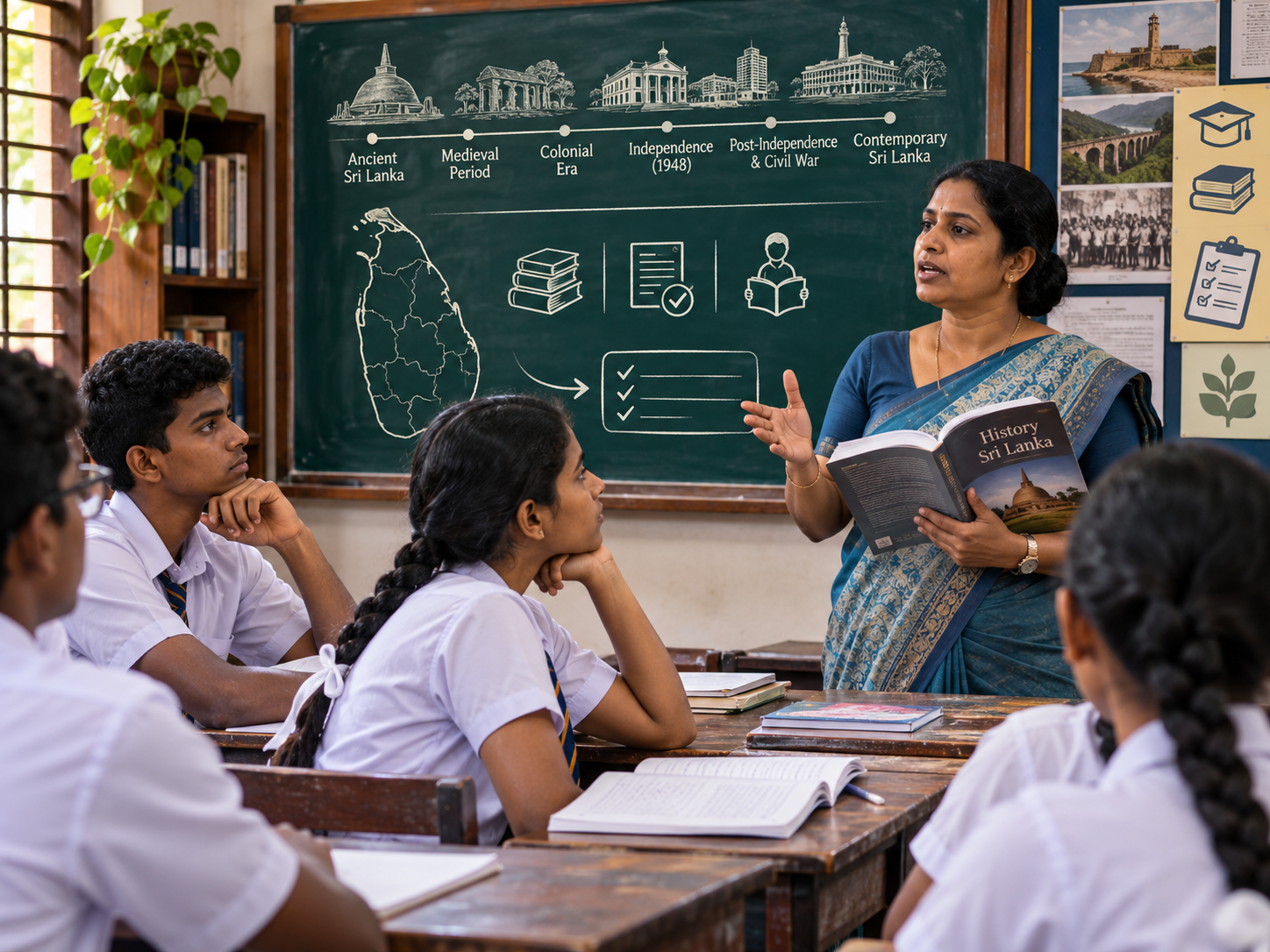
COLOMBO, November 18, 2026 — Sri Lanka’s latest education reforms are moving forward, with revised curricula scheduled to reach Grades 2 and 6 in 2027, reopening an important debate over how the country’s education system teaches the historical events that contributed to nearly three decades of civil war.
The Cabinet has approved the continuation of reforms introduced for Grade 1 in 2026 and the extension of the programme to Grades 2 and 6 next year.
According to information presented to Parliament, activity books, teacher guides and instructional materials have been prepared, while teacher training programmes are underway.
However, the government’s announcements leave an important question unanswered: how comprehensively will the revised education system address the political, social and ethnic developments that shaped Sri Lanka’s modern history?

A Complicated History
Sri Lanka’s civil war, which ended in May 2009, followed decades of political disputes, discriminatory policies, communal violence and the emergence of armed separatist movements.
Significant historical developments include the citizenship legislation introduced after independence in 1948, the Sinhala Only Act of 1956, controversies surrounding university admissions in the 1970s, the burning of the Jaffna Public Library in 1981 and the anti-Tamil violence of July 1983.
These events remain essential to understanding the country’s post-independence political development.
Yet the question of how much detail schoolchildren encounter, and how these subjects are presented, requires an examination of the actual textbooks and teaching materials.
It would be premature to conclude that the new curriculum excludes these subjects without reviewing the final approved documents.
Education Beyond Examinations
The National Education Commission and National Institute of Education have central roles in curriculum development, while the Ministry of Education is responsible for implementing government education policy.
The latest reforms are intended to extend beyond textbook changes to teaching methods, assessment and the broader educational environment.
That creates an opportunity to consider whether modern Sri Lankan history should be taught through multiple documented perspectives, allowing students to distinguish historical facts, competing interpretations and political narratives.
Teaching such material presents challenges, particularly where events remain politically sensitive or disputed.
However, avoiding difficult subjects can also leave younger generations without the historical knowledge needed to understand continuing debates over reconciliation, language rights, citizenship and constitutional reform.
A Question for Education Authorities
The central issue is not whether schools should promote a particular interpretation of the civil war, but whether students are being equipped to understand the documented events that preceded it.
A comprehensive review would require comparing existing history textbooks with the newly approved curriculum framework, examining teacher training resources and obtaining the Ministry’s position on the treatment of recent history.
As Sri Lanka prepares for the next phase of education reforms, the depth and accuracy of historical education deserve the same scrutiny as examination structures and classroom technology.