COLOMBO, November 21, 2026 — Defence lawyers have challenged financial discrepancies and the handling of a witness statement in Chamara Sampath Dassanayake’s bribery case. The MP remains in remand after the court rejected bail, with another ruling due on November 27.
The submissions were made before Colombo Chief Magistrate Asanga S. Bodaragama on November 20, during proceedings concerning allegations that Dassanayake accepted Rs. 8.4 million from three private companies in connection with phosphate export licences while serving as State Minister of Primary Industries.
The Magistrate rejected Dassanayake’s bail application and ordered that he and his former private secretary, Sumathipala Liyanarachchi, remain in remand custody until November 27.
President’s Counsel Nalin Ladduwahetty, appearing for Liyanarachchi, questioned the consistency of the Bribery Commission’s reports and referred to a statement previously recorded from Dinesh Perera, the fourth suspect in the case.
The defence maintains that the payments were connected to political promotional activities rather than illegal gratification. That explanation remains contested, and no judicial finding establishing the purpose of the transactions has been reported.

Defence Questions Difference Between Rs. 8.4 Million and Rs. 8.1 Million
A central issue raised by the defence concerns the amount of money identified in the complaint and subsequent investigative material.
The original allegation refers to Rs. 8.4 million allegedly obtained from three companies.
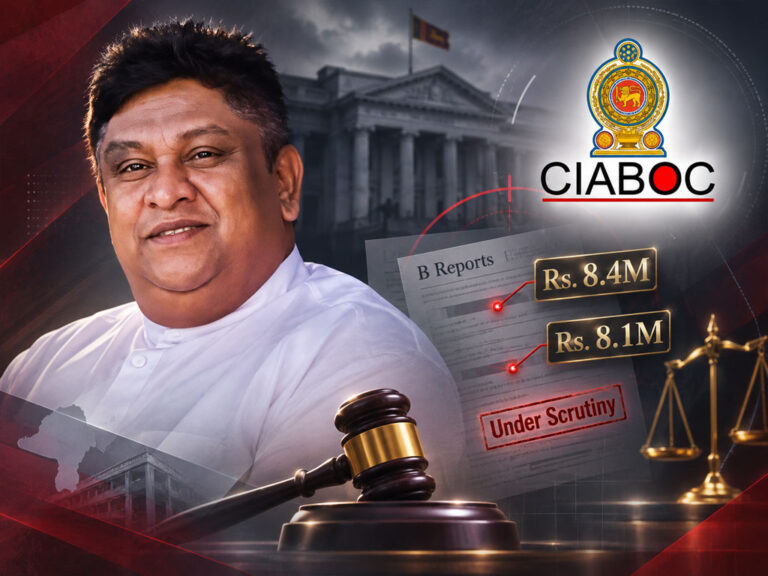
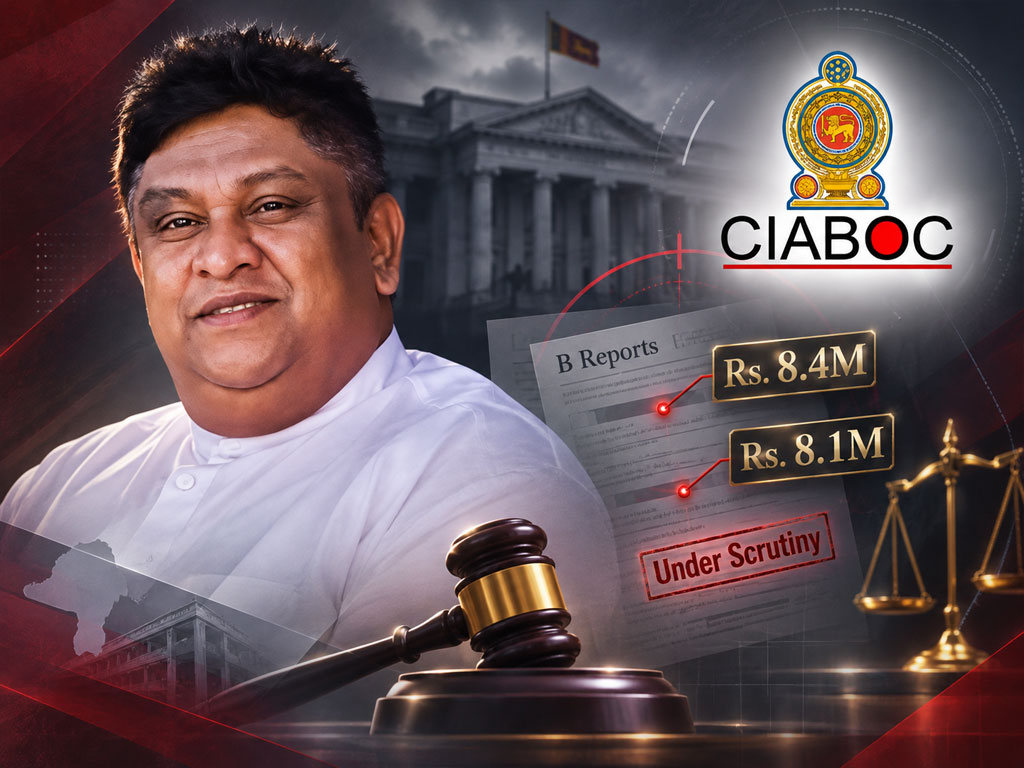
According to the defence’s account of the court documents, the initial B report submitted by the Bribery Commission on September 25, 2026, instead identified Rs. 8.1 million associated with two institutions.
Ladduwahetty reportedly told the court that Rs. 5.9 million had been deposited into an account from one institution, while a further Rs. 2.2 million came from another private institution.
Those amounts total Rs. 8.1 million, creating a difference of Rs. 300,000 from the Rs. 8.4 million cited in the broader allegation.
The President’s Counsel argued that this variation, together with alleged differences between the original report and five subsequent reports, required closer examination.
The discrepancy is potentially relevant to the defence’s challenge, but it does not establish that the underlying allegation is false.
Different figures in investigative documents may reflect additional transactions, revised calculations or other evidentiary considerations. The precise reason for the variation would need to be established through the original records and explanations presented to court.
Dinesh Perera’s Statement Becomes Central to Bail Arguments
The defence also questioned the handling of a statement reportedly obtained from Dinesh Perera on June 24, 2025.
Perera has been identified as the fourth suspect in the investigation.
According to Ladduwahetty’s submissions, the statement contained information suggesting that money had been provided for the promotion of Dassanayake’s political activities.
The President’s Counsel argued that this account was material to the defence and questioned why it had not been referred to in the initial B report or the subsequent reports described during the hearing.
He maintained that the statement supported the position advanced on behalf of Liyanarachchi concerning the purpose of the payments.
The defence’s argument raises a distinction between money allegedly provided as illegal gratification in exchange for official action and funds claimed to have been intended for political activities.
That distinction cannot be resolved solely by describing a payment as political funding. Its legality would depend on the circumstances, the purpose of the transaction, any benefit sought and the applicable provisions of the Anti-Corruption Act.
Bribery Commission Disputes Defence Interpretation
The Bribery Commission challenged the defence’s reliance on Perera’s earlier statement.
An Assistant Director from its Legal Division informed the court that Perera had travelled overseas the day after his statement was recorded.
The official also maintained that no statement had been obtained from Perera specifically concerning the transaction forming the basis of the present case.
According to the Commission’s position, the earlier questioning formed part of an investigation initiated under the Anti-Corruption Act following an anonymous complaint.
Investigators subsequently identified financial transactions considered relevant to the present allegations, including a reported payment of Rs. 2 million into an account associated with the first suspect.
The Commission’s explanation therefore disputes the defence’s suggestion that the earlier statement necessarily undermines the current investigation.
The competing submissions leave the significance of Perera’s account, its relationship to the alleged transactions and its treatment in the investigative reports as matters requiring examination through the judicial process.
Open Warrant Issued for Fourth Suspect
During the November 20 proceedings, the Colombo Chief Magistrate ordered an open warrant for Perera’s arrest.
The order followed information presented to court concerning his departure from Sri Lanka and his status as a suspect in the investigation.
Defence counsel questioned the circumstances surrounding the earlier statement and the subsequent decision to seek a warrant.
The issuance of a warrant does not establish Perera’s guilt or determine the truth of the allegations against the other suspects.
His evidence could nevertheless be relevant to clarifying the origin, intended purpose and movement of the disputed payments.
Defence Challenges Arrest and Bail Procedures
The defence has also raised objections concerning the procedures followed by the Bribery Commission.
According to the supplied account of the submissions, counsel questioned the decision to arrest Dassanayake in Badulla rather than first obtaining a further statement through the usual investigative process.
The defence also alleged that other comparable cases had been handled differently, particularly in relation to the use of certificates issued under Section 149(1) of the Anti-Corruption Act.
That provision addresses bail in bribery and corruption proceedings and provides for remand in specified circumstances where the Director-General certifies the detection of an alleged gratification offence.
It also allows a Magistrate to grant bail in exceptional circumstances, with reasons recorded.
The defence questioned whether the Commission had applied its powers consistently and whether Dassanayake had been treated differently from suspects in other investigations.
These claims of selective treatment have not been established by a judicial finding.
The existence of different bail outcomes in separate cases would not, by itself, demonstrate improper conduct. The evidence, legal provisions and circumstances of each matter must be considered individually.
Court Rejects MP’s Bail Application
Dassanayake was arrested by the Bribery Commission on October 12, 2026, in connection with allegations arising from his tenure as State Minister of Primary Industries.
The investigation concerns claims that payments were solicited or accepted in return for facilitating phosphate export licences for private companies.
The MP has remained in remand custody during the proceedings.
At the November 20 hearing, Chief Magistrate Bodaragama rejected his application for bail.
The court separately considered the request made on behalf of his former private secretary, Liyanarachchi, whose lawyers relied on the alleged inconsistencies in the investigative material and the disputed significance of Perera’s statement.
The Magistrate reserved the decision on Liyanarachchi’s bail application for November 27.
Both suspects were ordered to remain in remand custody until that date.
The allegations against them remain unproven, and neither the rejection of bail nor continued remand amounts to a finding of criminal guilt.
November 27 Decision to Address Secretary’s Bail
The next scheduled proceedings will determine the outcome of Liyanarachchi’s bail application, rather than a fresh decision on the application already rejected in respect of Dassanayake.
The defence’s submissions have identified several issues requiring careful consideration, including the difference between the reported financial amounts, the significance of Perera’s earlier statement and the consistency of the Commission’s investigative material.
For CIABOC, the proceedings also underline the importance of providing a clear evidentiary account of the alleged transactions and explaining material differences raised by defence counsel.
Whether those differences affect the strength of the prosecution case, justify further disclosure or support any subsequent legal application remains for the courts to determine.
The case is expected to return before the Colombo Chief Magistrate on November 27, with the Bribery Commission’s investigation and the allegations against the suspects remaining subject to judicial scrutiny.
Right of reply: The Morning Telegraph welcomes clarifications or responses from the Commission to Investigate Allegations of Bribery or Corruption, Parliamentarian Chamara Sampath Dassanayake, his legal representatives and other parties referred to in this report.