By Marlon Dale Ferreira
A groundbreaking film shows evidence from cutting-edge molecular research to cosmic level findings, to unveil compelling insights of intelligent design within DNA, proteins, and the very fabric of the universe.
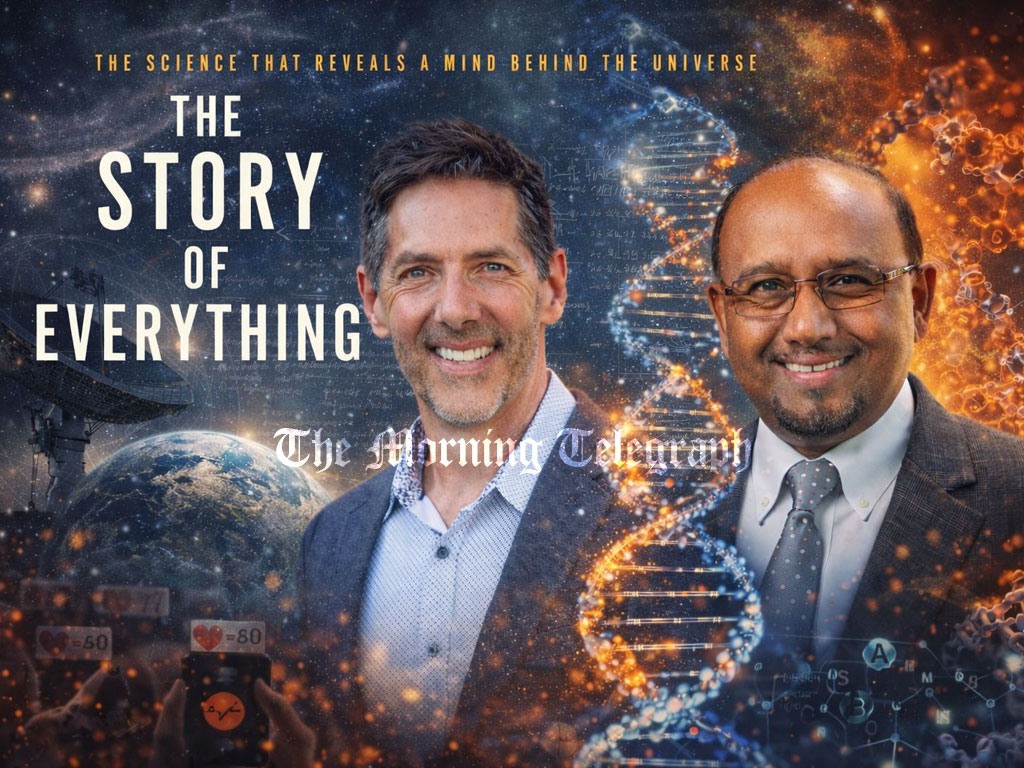
The upcoming film “The Story of Everything,” set for theatrical release on April 30, takes audiences on a sweeping journey through the cosmos, presenting data that shows the universe as an intricately designed system shaped by intelligence.
Providing scientific discovery with philosophy of science, the documentary highlights the precision of natural laws governing stars and galaxies, while also diving deep into the complexity of life at the cellular level. It presents a narrative that shows intentional design is embedded throughout nature, from the vastness of space to the microscopic architecture of living organisms.
Among the featured experts are two distinguished professors from Biola University’s School of Science, Technology and Health, Dr. Douglas Axe and Dr. Richard Gunasekera. Their work in molecular biology, biochemistry, nanomedicine, and genomics forms a central part of the film’s exploration into intelligent design at the molecular level.
Dr. Axe, a leading voice in molecular biology and co-director of the Stewart Science Honors Program, shares his fascination with the extraordinary design of protein molecules. These proteins carry out essential processes within living cells, and according to Axe, their structure reflects both functional precision and remarkable beauty. His contribution to the film emphasizes how these molecular systems point toward deeper questions about the origins and purpose of life.
Dr. Gunasekera, the research professor specializing in nanomedicine and biochemistry at the university, focuses on the intricate design found within DNA. He explains how DNA replication is not merely a mechanical process, but one that includes built-in error detection and correction mechanisms. Enzymes such as DNA polymerase act with a level of precision that resembles a proofreading system, ensuring genetic accuracy during cell division and development.
He further describes DNA as a chemical language composed of four bases that must align in exact sequences to encode biological information. Any error in this sequence is often corrected through sophisticated repair systems, maintaining the integrity of life. As a scientist involved in cancer research, Gunasekera highlights how these mechanisms are fundamental to both health and disease.
Their academic journeys have also shaped their findings. Dr. Axe recalls his early fascination with proteins during graduate studies, a passion that has continued throughout his career. Meanwhile, Dr. Gunasekera reflects on his postdoctoral work during the Human Genome Project, where groundbreaking discoveries deepened his appreciation for the complexity and precision of molecular systems.
The film also explores broader questions about the origin of life and the structure of the universe. Dr. Axe points to the work of astronomer Fred Hoyle, who predicted a specific property of carbon necessary for life. When this prediction was later confirmed, it suggested that the universe possesses finely tuned conditions that support life’s existence.
Dr. Gunasekera highlights findings from genomic research showing that humans share a striking level of genetic similarity, suggesting a common origin. Studies on mitochondrial DNA and Y chromosomes point to shared ancestral lines, which some interpret as evidence supporting the idea of a unified beginning for humanity.
Beyond scientific insights, the film encourages students, especially those in Christian academic environments, to engage with both scientific and theological perspectives. It promotes critical thinking, innovation, and openness to multiple frameworks for understanding the evidence about life and the universe.
A special free preview screening of the film will be held at Biola University in Los Angeles, California, on Wednesday the 22nd at 7 PM. The event will also feature a panel discussion with Dr. Axe and Dr. Gunasekera, offering audiences a deeper understanding of the themes explored in the film.
As science continues to uncover the complexities of life and the universe, “The Story of Everything” invites audiences to consider whether these discoveries point toward something more profound, raising enduring questions about design, purpose, and the nature of existence.