Drug screening technology could help Sri Lanka stop narcotics entering prisons while reducing invasive searches and protecting human dignity.
Drug screening technology can strengthen Sri Lanka’s fight against narcotics while reducing the need for intrusive searches that may harm human dignity, privacy and psychological well-being.
The Government’s sincere efforts to eradicate the growing menace of drug trafficking deserve the appreciation and support of every law-abiding Sri Lankan.
Drug abuse has spread throughout society like a deadly epidemic. It deprives the country of productive human capital and causes immense suffering to thousands of parents, spouses and innocent children.
More importantly, the crisis threatens the future of the younger generation. They will one day inherit responsibility for leading the country. Protecting them from this destructive social evil must therefore remain a national priority.
Illicit drug trafficking and drug abuse now represent two of the most serious challenges confronting Sri Lanka. Beyond their devastating health effects, narcotics create major social, economic and national security concerns.
Drug trafficking networks constantly adopt sophisticated methods to evade detection. These include concealing narcotics inside body cavities when attempting to smuggle drugs into prisons, police detention facilities and other secure locations.
In response, Sri Lanka Police, the Department of Prisons and other law enforcement agencies have had to conduct physical body searches. In certain circumstances, officers also carry out intimate body cavity searches.
Their objective is unquestionably legitimate. Authorities must prevent illicit drugs from entering secure facilities and protect public safety.
However, one important question deserves careful consideration.
Is it still necessary to rely mainly on such intrusive procedures when modern technological alternatives are readily available?

Drug Screening Technology and Human Dignity
Physical body searches, particularly intimate searches, can profoundly affect a person’s dignity, privacy and psychological well-being.
These consequences do not affect offenders alone. People who are later found to be innocent may still suffer humiliation, fear and emotional distress.
For many individuals, such an experience can remain deeply traumatic long after the search has ended.
Sri Lanka’s Constitution recognises the importance of protecting the dignity of every person.
Article 11 states: “No person shall be subjected to torture or to cruel, inhuman or degrading treatment or punishment.”
Article 13(5) also guarantees the presumption of innocence. It states: “Every person shall be presumed innocent until he is proved guilty.”
These constitutional protections remind us that law enforcement and human dignity must exist together. Authorities must enforce the law while also respecting the fundamental rights of every individual.
The United Nations Standard Minimum Rules for the Treatment of Prisoners, known as the Nelson Mandela Rules, reinforce this principle.
The rules emphasise that authorities must always treat prisoners with respect for their inherent human dignity.
They also encourage prison administrations to minimise invasive search procedures. Wherever practical, authorities should replace them with modern technological alternatives.
This approach does not weaken law enforcement. Instead, it promotes professionalism and helps ensure that security measures meet internationally accepted human rights standards.
Technologies Already Used Worldwide
Many countries have significantly reduced their reliance on intrusive body searches by introducing advanced screening systems.
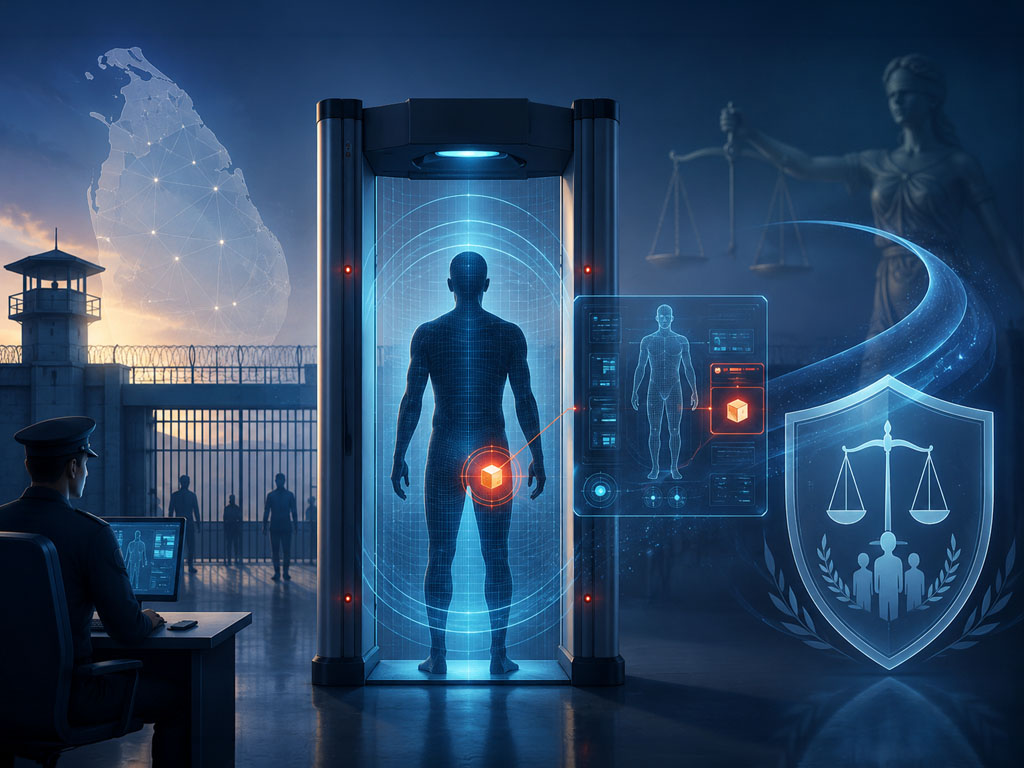
Full-body scanners can quickly detect objects hidden beneath clothing or attached to a person’s body.
Modern millimetre-wave body scanners, widely used at international airports, can identify concealed items without revealing intimate body images. Therefore, they maintain strong security while protecting personal privacy.
Low-dose X-ray body imaging systems can detect objects concealed internally within the human body.
Authorities may use such systems in high-risk situations where the law permits their use and qualified medical professionals provide appropriate supervision.
Drug trace detection systems offer another effective option.
These systems can identify microscopic traces of narcotics on a person’s hands, clothing, luggage or other possessions within seconds.
Narcotic detection dogs, commonly known as K-9 units, also remain among the most effective and internationally recognised drug detection methods.
Correctional facilities, airports, seaports and border crossings worldwide continue to use trained dogs to identify illegal narcotics.
More recently, authorities have integrated artificial intelligence and machine learning into security screening systems.
These technologies can improve the accuracy of detecting suspicious objects and unusual behaviour. Many major international airports and border control facilities now use them routinely.
Several countries across the Asia-Pacific region have also incorporated these technologies into their wider security systems.
The use of drug screening technology can therefore help Sri Lanka detect narcotics more accurately while reducing unnecessary physical contact between officers and those being searched.
A Practical and Affordable Way Forward
Advanced screening systems require substantial financial investment. However, Sri Lanka does not need to equip every prison and detention facility at the same time.
The Government could begin by introducing the technology at selected high-risk prisons and other critical locations.
These initial installations could operate as pilot projects. Authorities could then assess their effectiveness, reliability and operating costs before extending the programme nationwide.
A carefully managed pilot programme would also allow officials to identify training requirements and develop clear legal and operational procedures.
The Government could seek financial and technical assistance from international organisations and development partners.
Many such institutions support human rights, prison reform and the modernisation of criminal justice systems.
Sri Lanka could also explore partnerships involving technical training, equipment grants and expert assistance.
However, the introduction of new technology must come with proper safeguards.
Authorities should establish clear rules on when each system may be used, who may operate it and how officials will protect any information gathered.
Medical supervision should remain mandatory whenever screening methods involve radiation or internal imaging.
The Government should also ensure that officials receive adequate training in privacy, human rights and the safe operation of equipment.
Security and Human Rights Can Coexist
Security and human rights are not mutually exclusive concepts.
On the contrary, a truly effective security system protects both public safety and human dignity.
Sri Lanka continues to make significant efforts to align its aviation security, maritime security, national security and law enforcement systems with international best practices.
It is therefore timely for the country’s methods of conducting personal searches to meet the standards expected in the twenty-first century.
This proposal does not seek to provide comfort, protection or any unfair advantage to drug traffickers.
Authorities must rigorously enforce the law against anyone involved in narcotics offences.
However, the methods used to enforce the law should reflect justice, science, professionalism and respect for human dignity.
The objective should not be to search more people. It should be to detect more crime.
Modern technology provides a way to improve security while offering greater protection for individual rights.
The Government, Department of Prisons, Sri Lanka Police and relevant policymakers should therefore seriously consider introducing modern screening systems as part of a comprehensive national strategy against drug smuggling.
Such a strategy should combine intelligence gathering, technological screening, trained officers, K-9 units and effective legal safeguards.
It should also include regular reviews to ensure that authorities use the equipment lawfully, effectively and without discrimination.
The strength of a civilised society depends not only on how firmly it punishes criminals. It also depends on how fairly and humanely it enforces the law.
Sri Lanka now has an opportunity to build a criminal justice system in which security and human dignity coexist.
By adopting reliable drug screening technology, the country can show that effective law enforcement and respect for fundamental rights are complementary principles rather than competing objectives.

By P. A. Jayakantha
Former Director General of Civil Aviation and Chief Executive Officer
ICAO Accredited International Auditor, USAP-CMA