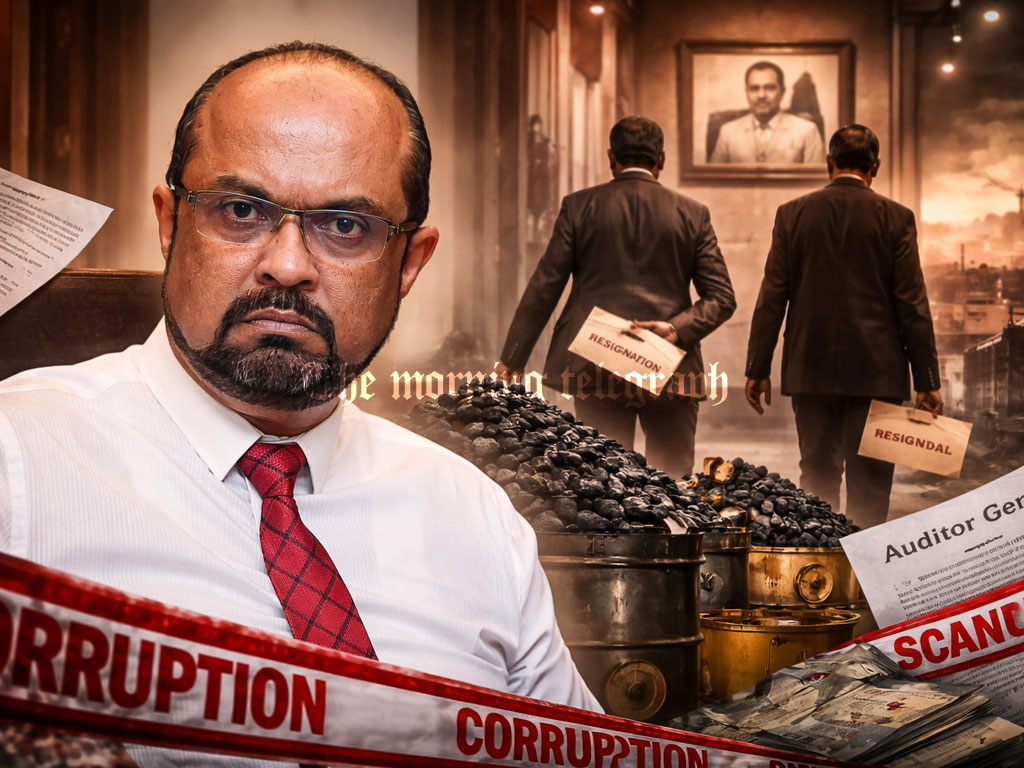
A deepening coal import controversy forces top resignations, exposing governance cracks and raising urgent questions about accountability, corruption, and energy security in Sri Lanka.
Amid mounting pressure over the ongoing coal import crisis, Energy Minister Kumara Jayakody has stepped down from his position, marking a significant political development in Sri Lanka’s energy sector.
In a parallel move, Ministry Secretary Udayanga Hemapala has also resigned from his post, signaling the seriousness of the allegations surrounding the coal procurement process.

These resignations come as part of an effort to facilitate transparent investigations into claims of fraud, corruption, and irregularities linked to coal imports into the country.
Official sources confirm that both resignation letters have been formally submitted to President Anura Dissanayake, who is now expected to oversee the next steps in addressing the crisis.
For several months, concerns have been raised regarding the substandard quality of coal supplied to the Norochcholai power plant, a critical component of Sri Lanka’s national power generation infrastructure.
The situation escalated further after the Auditor General’s report highlighted multiple deficiencies, procedural lapses, and systemic issues in the coal importation process.
These revelations have intensified public scrutiny, with growing demands for accountability, governance reforms, and stricter oversight in energy procurement and supply chain management.
The unfolding crisis underscores broader challenges in Sri Lanka’s energy governance, particularly the need for transparency and integrity in managing essential resources.