A political firestorm erupts as serious allegations surface that a controversial ministerial appointment was made despite known corruption claims, raising urgent questions about accountability and governance.
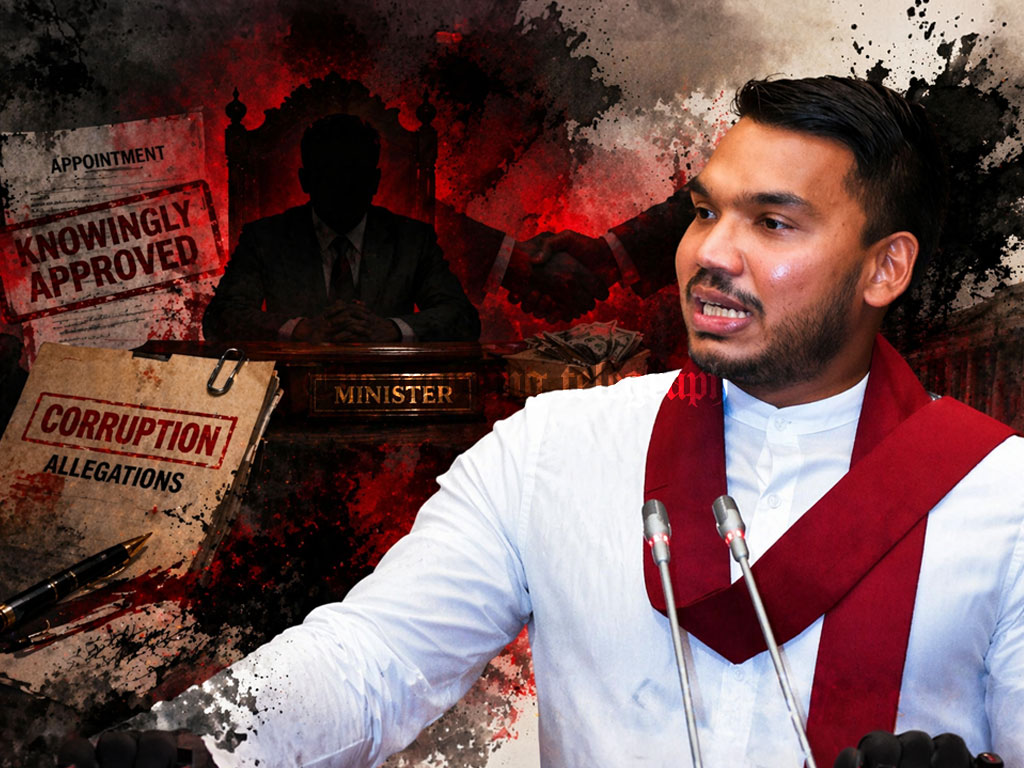
The National Organizer of the Sri Lanka Podujana Peramuna, Mr. Namal Rajapaksa, has alleged that President Anura Kumara Dissanayake knowingly appointed Kumara Jayakodi as the Minister of Energy despite being fully aware of corruption allegations surrounding him, intensifying the ongoing political controversy.
He made these remarks while addressing journalists after visiting Mahara Prison, where he went to check on the well-being of former Minister Johnston Fernando, using the opportunity to question the conduct of the current government.

Speaking further, Namal Rajapaksa stated that while individuals accused of stealing massive sums continue to operate within the system, the government has reportedly spent between fifteen to twenty lakhs to maintain Johnston Fernando over a matter involving only two and a half lakhs, raising concerns about selective accountability.
He pointed out that a no-confidence motion against the minister had been debated in Parliament, where the entire government, including the President and 159 members, defended the minister, insisting there was no wrongdoing, particularly in relation to the coal procurement issue.
Rajapaksa highlighted that the President himself repeatedly assured Parliament that there was no fraud linked to coal transactions, even before the Auditor General’s observations and subsequent developments that led to the minister’s resignation.
He argued that responsibility ultimately lies with the President, stating that even at the time of appointment, there were already allegations related to fertilizer dealings when Jayakodi was placed in key institutional roles during Anura Kumara Dissanayake’s tenure as Minister of Agriculture.
Drawing parallels, he noted that just as the largest tender at that time involved fertilizer, the current administration’s biggest financial undertaking revolves around coal procurement, making the appointment of Jayakodi to oversee such a critical sector highly questionable.
He further stated that opposition MP D.V. Chanaka had raised these concerns in Parliament as early as last year, but the government failed to act, allowing delays in tenders, the import of substandard coal, and the allocation of public funds under questionable circumstances.
According to Rajapaksa, although the minister has now resigned, the financial burden remains with the public, who continue to face increased electricity tariffs and fuel prices as a result of these decisions.
He also referred to past instances during previous governments where ministers resigned over major controversies such as the Avant Garde case and the Central Bank bond issue, emphasizing that such resignations are not unprecedented but often fail to address the real economic impact on citizens.
Turning to broader economic concerns, he alleged that the current government has purchased fuel at some of the highest prices in the global market despite having access to multiple alternatives, even suggesting that ministers have justified purchasing fuel from unofficial channels.
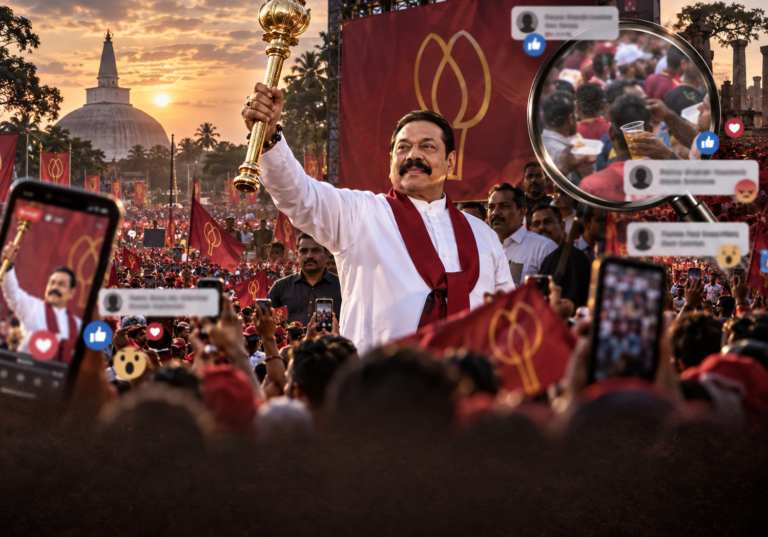
Addressing allegations against former President Mahinda Rajapaksa, he defended the long-serving leader by stating that all asset and liability declarations have been submitted in compliance with legal requirements throughout his 55-year political career.
He maintained that these disclosures have been repeatedly provided whenever requested by successive governments, and reiterated that there is nothing to conceal, adding that any future requests would also be met with full transparency.
Commenting on concerns raised by the Catholic Church, Rajapaksa acknowledged that their suspicions regarding unresolved aspects of the Easter Sunday attacks are valid, particularly in relation to officials who allegedly failed to act on critical intelligence.
He pointed out that individuals linked to those lapses are now involved in investigating the coal procurement issue, raising serious questions about credibility and impartiality in ongoing investigations.
He concluded by stating that while political figures may come and go, it is essential that the state remains stable and accountable, emphasizing that future governments must inherit a system that upholds transparency, justice, and responsible governance.