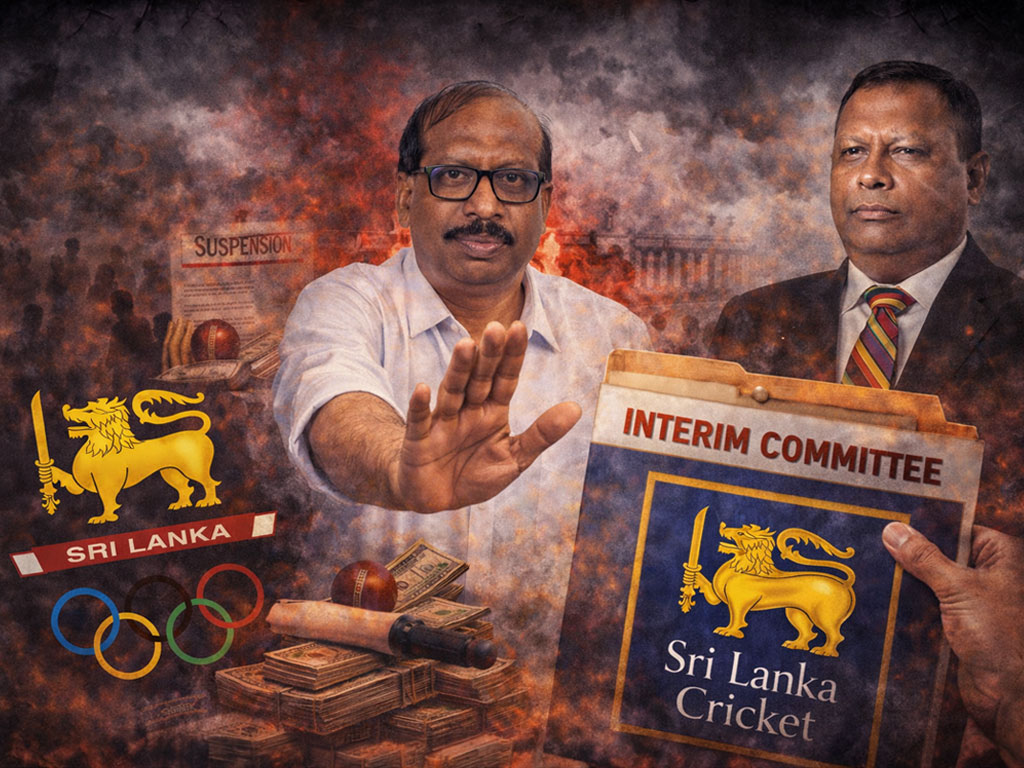
A strong and rapidly circulating rumour within sporting circles suggests that the Minister of Sports, Sunil Kumara Gamage, had approached outgoing National Olympic Committee of Sri Lanka (NOCSL) President Suresh Subramaniam with a controversial proposal, to assume the role of Chairman of an Interim Committee for Sri Lanka Cricket (SLC), in the event the Minister proceeds to suspend the currently elected SLC Executive Committee.
According to sources, the move was part of a broader attempt to restructure the administration of Sri Lanka Cricket, despite the fact that the existing body was democratically elected. However, Subramaniam, who has built a reputation for taking a firm stance against corruption during his tenure at the NOCSL, is understood to have flatly refused the offer.

A Reputation Built on Reform
Subramaniam’s refusal comes as little surprise to those familiar with his recent track record. Widely credited for initiating sweeping reforms within the NOCSL, he was instrumental in driving a financial forensic audit spanning the past decade, an exercise that has reportedly exposed deep-rooted irregularities and misconduct. His tenure saw decisive action taken even against members within his own Executive Committee, reinforcing his image as a leader unwilling to compromise on governance and accountability.
It is believed that this very reputation may have prompted the Minister to consider him for the proposed interim role at Sri Lanka Cricket.
Mounting Pressure on SLC Leadership
Meanwhile, Sri Lanka Cricket President Shammi Silva continues to face an intense and sustained social media campaign calling for his removal. Various factions, comprising businessmen, former cricketers, and political actors, have increasingly voiced their desire to see a change in leadership.
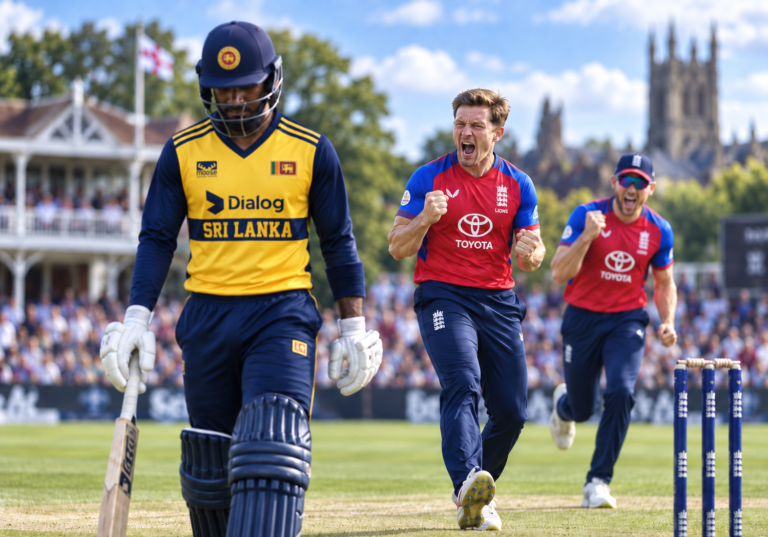
This pattern is not new. In Sri Lanka’s sporting landscape, victories are often celebrated as the triumph of players, while defeats are laid squarely at the feet of administrators. Such sentiment has repeatedly fueled attempts to unseat elected officials, particularly within cricket, the country’s most financially powerful sporting body.
The Stakes Behind the Struggle
Since Sri Lanka’s historic World Cup successes, cricket has evolved into the wealthiest sports institution in the country, making control over its administration highly sought after. This has led to recurring power struggles, with competing interests seeking influence over its governance.
Despite the criticism directed at its leadership, Sri Lanka Cricket under Shammi Silva has emerged as a significant contributor beyond the boundaries of the game. During his tenure, SLC has provided substantial financial assistance, sports equipment, and support to the Ministry of Sports, other sporting associations, hospitals, schools, clubs, and numerous institutions across the country, often stepping in during times of need.
A Defining Moment for Sports Governance
The reported rejection by Subramaniam adds a new dimension to an already complex situation. It raises critical questions about governance, political influence, and the autonomy of sporting bodies in Sri Lanka.
As tensions continue to build, the unfolding developments may well shape the future of cricket administration in the country, testing not only leadership but also the principles of democratic governance within sport.