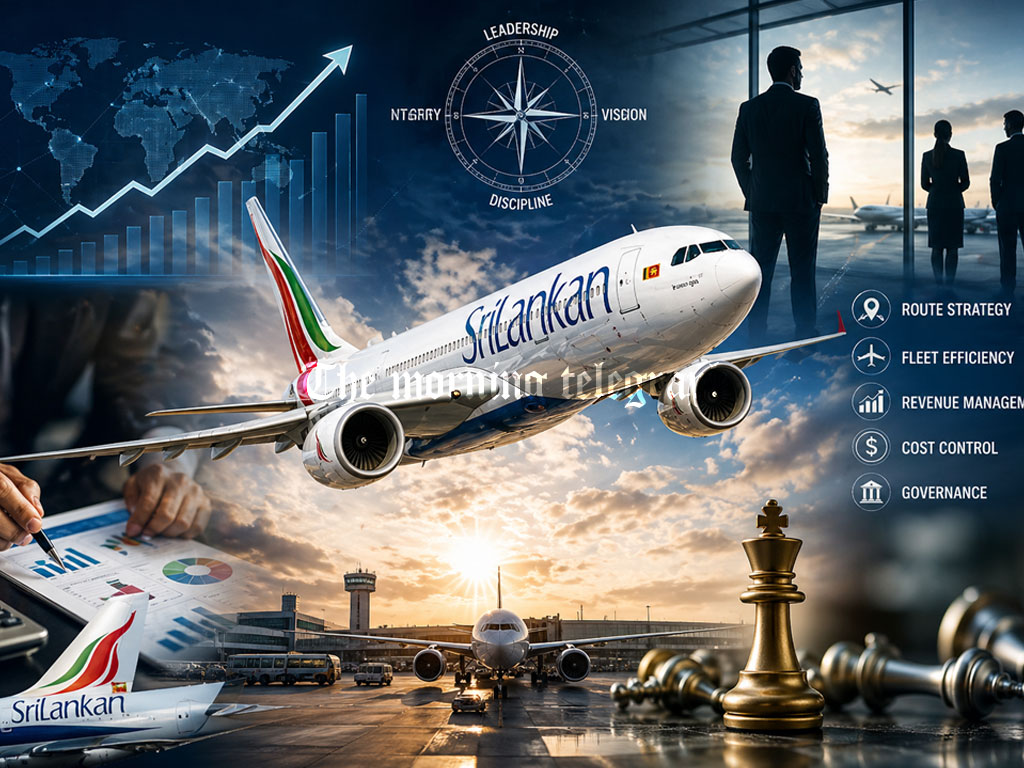
Forget the rumour mill and political wish lists. SriLankan Airlines is bleeding, and the next CEO must be a turnaround specialist, not a corporate tourist. Drawing on insights shaped by operational realities from the Air Lanka era, this hard hitting analysis explains why the national carrier continues to underperform and identifies the exact leadership profile required to fix it. No fluff. No diplomacy. Just a clear, uncompromising look at who should take the hot seat.
The Real Question Behind CEO Selection
The conversation about the future of SriLankan Airlines, once known as Air Lanka, should never be reduced to a simple game of musical chairs. According to industry observers with decades of experience inside the carrier, this is not about picking a popular name or rewarding a loyal politician. The real question is much deeper and more urgent. What kind of mindset, what kind of management philosophy, and what kind of ethical backbone must the next leader possess? The airline has spent decades swinging between brilliant service and financial disaster. To break that cycle, analysts say the country must first understand how it got here. The entire discussion around SriLankan Airlines CEO selection has been clouded by emotion and ego, but what is truly needed is a clear headed assessment of the airline’s structural weaknesses.
Experience from the Air Lanka era in the 1980s provides invaluable lessons. Those formative years taught many lessons that still echo today. What follows is not academic theory. It is a collection of observations, hard earned insights, and honest concerns about where SriLankan Airlines stands and who needs to steer it out of the storm. The national carrier has never lacked intrinsic potential, but that potential has been repeatedly squandered.

Geographic Advantage Wasted
One thing SriLankan Airlines has never lacked is raw potential. Sri Lanka sits at the crossroads of South Asia, the Middle East, and Southeast Asia. That is not just a geographical fact. It is a strategic goldmine. Any well managed airline could turn Colombo into a natural hub, seamlessly connecting passengers from Dubai to Delhi, from Bangkok to Bahrain. But potential alone means nothing. Over the years, this geographic gift has been wasted on inconsistent policy, episodic political interference, and a failure to adhere to the immutable fundamentals of commercial aviation. A proper airline turnaround strategy must start by recognising this waste and correcting it.
The airline’s geographical positioning is, in itself, a strategic gift. Situated at the crossroads of South Asia, the Middle East, and Southeast Asia, Sri Lanka occupies a natural hub location that, if leveraged with precision and foresight, could render its national airline a pivotal connector of regional and intercontinental traffic. This geographic advantage, however, has too often been subordinated to inconsistent policy, episodic political interference, and a failure to adhere to the immutable fundamentals of commercial aviation. The airline has never lacked intrinsic potential, but that potential has been repeatedly mismanaged.
The Paradox of Service and Finance
Looking back at the airline’s earlier years, a strange contradiction still haunts the carrier. It was famous for excellent service and a strong brand. Passengers loved flying Air Lanka. The food was good, the cabin crew was warm, and the overall experience felt premium. But behind the glamour, the financial discipline was always shaky. The focus on looking good, on creating a beautiful product, was not the problem. The problem arose when image obsessed management forgot that an airline is not a national mascot. It is a capital intensive, margin hungry business that must survive on cost control, smart pricing, and ruthless efficiency. Any credible candidate for national carrier turnaround must understand this fundamental truth.
The recollection of the airline’s earlier years evokes a paradox that remains unresolved. It excelled in service delivery and brand perception, yet faltered in financial discipline. The emphasis on glamour, manifested in inflight service excellence and aesthetic appeal, while commendable in isolation, became counterproductive when it overshadowed the primary objective of commercial sustainability. An airline is not, in its essence, a symbol of national pride alone. It is a complex, capital intensive enterprise that must operate within the unforgiving parameters of cost efficiency, yield management, and market responsiveness.
Network Planning Failures
One of the most obvious failures in the airline’s history has been its lack of coherent network planning. For example, profitable routes to the Middle East and India ran alongside money losing routes such as Vienna. This contradiction is not bad luck. It is a symptom of a deeper problem. The decision of where to fly must never be based on diplomatic pressure, political favours, or national ego. It must come from hard data, demand forecasting, and honest competitive analysis. Successful airlines around the world have learned that network discipline, characterised by the elimination of persistently unprofitable routes and the reinforcement of high yield sectors, is the only way to survive long term. Achieving route profitability and network planning success is not optional. It is the bare minimum.
One of the most conspicuous shortcomings in the historical management of SriLankan Airlines has been the absence of coherent network planning. Profitable operations in the Middle East and India have been juxtaposed with loss making routes such as Vienna. This dichotomy underscores a fundamental lapse in route rationalization. The decision of where to operate must be governed not by diplomatic convenience or prestige considerations, but by rigorous market analysis, demand forecasting, and competitive benchmarking. Successful airlines have demonstrated that network discipline, characterized by the elimination of persistently unprofitable routes and the reinforcement of high yield sectors, is indispensable to long term viability.
Fleet Selection Mistakes
Fleet selection is the second big pillar of commercial sense. The choice of aircraft must match the route structure, passenger demand, and operating costs. Fleet commonality, fuel efficiency, and maintenance savings are not just technical details. They are strategic weapons. Putting a jumbo jet on a thin route burns cash at an alarming rate. Ignoring fuel efficiency for the sake of prestige bleeds money every time the aircraft takes off. SriLankan Airlines has a troubling history of prioritising image over efficiency in its fleet decisions. That tendency has only made its financial wounds deeper. A leader focused on fleet optimisation and aviation asset management would never make such elementary mistakes.
Equally critical is the question of fleet selection, the second of the triadic principles essential for commercial credibility and sustainability. The choice of aircraft must align with route structure, passenger demand, and operational economics. Fleet commonality, fuel efficiency, and maintenance optimization are not mere technical considerations. They are strategic imperatives. A mismatch between aircraft type and route demand can erode profitability with alarming results, particularly in an industry where margins are notoriously thin. The historical tendency of SriLankan Airlines to prioritize image over efficiency in fleet decisions has at times exacerbated its financial fragility.
Pricing and Revenue Management Failures
The third principle is pricing. In the old days, pricing was a simple exercise. An airline calculated costs, added a margin, and published a fare. That world is gone. Modern aviation runs on dynamic, data driven revenue management. Prices change by the minute based on demand, competitor behaviour, and a thousand other variables. The airline once had a strong marketing and commercial team that understood this. That skill existed. The tragedy is that this expertise was often blocked by top down directives that lacked commercial rationality. The imposition of capricious policies, particularly those influenced by political considerations, has historically undermined the autonomy of professional management and diluted accountability. A robust revenue management and pricing strategy is the third leg of any successful airline operation.
Pricing introduces the intricate domain of revenue management. In contemporary aviation, pricing is no longer a static exercise but a dynamic, data driven process that integrates demand elasticity, competitor behavior, and ancillary revenue streams. The airline’s earlier success, attributed to a competent marketing and commercial team, suggests that this capability once existed within the organization. The tragedy lies in the fact that such expertise was often constrained by top down directives that lacked commercial rationality. The imposition of capricious policies, particularly those influenced by political considerations, has historically undermined the autonomy of professional management and diluted accountability.
Governance: The Core Weakness
All of this points to the single most debilitating weakness of SriLankan Airlines: governance. Political appointments have not merely been an administrative inconvenience. They have been a systematic poison. Mixing state ownership with political control has created a governance monster that is neither a proper public body nor an effective private company. In such an environment, long term planning becomes impossible. Strategy is sacrificed for short term political wins. Talented executives leave in frustration. The cycle of failure continues. Ending political interference in state owned airline governance is not a side issue. It is the central battle.
This brings into sharp focus the most debilitating weakness of SriLankan Airlines. Political appointments have not merely been an administrative inconvenience. They have constituted a systemic impediment to institutional integrity. The conflation of state ownership with political control has resulted in a governance model that is neither fully public nor effectively corporate. In such an environment, strategic continuity becomes elusive, and long term planning is sacrificed at the altar of short term expediency. Financial instability, identified as the airline’s principal challenge, is both a symptom and a consequence of these deeper structural flaws.
Financial Instability as Symptom, Not Cause
Financial instability is not the cause of the airline’s problems. It is the result. Chronic losses, growing debt, and a dangerous reliance on government bailouts have stopped the airline from investing in modernisation, expanding its network, and competing globally. The goal is not merely to show a tiny profit on paper. The goal is to establish a sustainable financial framework that balances revenue growth with cost discipline. That requires leadership, not accounting tricks. Proper corporate governance reform for public enterprises must be the foundation of everything else.
Chronic losses, mounting debt, and reliance on state support have constrained the airline’s ability to invest in modernization, expand its network, and compete effectively in an increasingly liberalized global market. The imperative, therefore, is not merely to achieve profitability in a narrow accounting sense, but to establish a sustainable financial framework that balances revenue growth with cost discipline. The airline’s financial instability is not the cause of its problems but the result of deeper governance failures.
Learning from Successful Airlines
To solve these problems, industry experts point to airlines that have successfully navigated similar circumstances. Carriers such as Singapore Airlines and Emirates have demonstrated the transformative power of strategic clarity, operational excellence, and leadership continuity. While the contextual differences are significant, the underlying principles are transferable. These airlines have leveraged their geographic advantages, invested in modern fleets, cultivated strong brand identities, and, crucially, insulated management from undue political interference. No airline can thrive if its chief executive looks over the shoulder every morning wondering which politician will call with a demand. Learning from commercial aviation best practices is essential.
In addressing these challenges, it is instructive to consider the trajectories of airlines that have successfully navigated similar circumstances. Carriers such as Singapore Airlines and Emirates have demonstrated the transformative power of strategic clarity, operational excellence, and leadership continuity. While the contextual differences are significant, the underlying principles are transferable. These airlines have leveraged their geographic advantages, invested in modern fleets, cultivated strong brand identities, and, crucially, insulated management from undue political interference. That last point is crucial for any airline turnaround strategy.
Assets That Can Be Leveraged
For SriLankan Airlines, the path to revitalisation must begin with a candid appraisal of its assets. The good location is only the beginning. The airline also has a legacy brand that still means something to travellers. It has a skilled workforce that knows how to deliver service. It has access to a growing tourism market. Sri Lanka itself is a beautiful destination, full of cultural heritage, natural beauty, and biodiversity. The airline must position itself as the preferred carrier for travellers to and from the island, integrating its strategy with national tourism objectives. This requires close collaboration with tourism authorities, investment in marketing, and the development of seamless connectivity. Creating a true tourism aviation synergy that Sri Lanka can be proud of is a realistic goal.
Beyond its geographic location, the airline possesses a legacy brand, a skilled workforce, and access to a growing tourism market. Sri Lanka’s appeal as a destination, rich in cultural heritage, natural beauty, and biodiversity, offers a substantial opportunity for inbound traffic. The airline must position itself as the preferred carrier for travelers to and from the island, integrating its strategy with national tourism objectives. This requires close collaboration with tourism authorities, investment in marketing, and the development of seamless connectivity.
Regional Connectivity Potential
Another underused asset is the potential for regional connectivity. By focusing on short and medium haul routes within South Asia and the Indian Ocean, the airline can establish itself as a niche hub carrier. This strategy would entail optimising flight schedules, enhancing transit facilities, and forging strategic alliances with other carriers. Codeshare agreements and membership in global alliances can expand the airline’s reach without spending hundreds of millions on new planes. This is not fantasy. This is how smaller carriers survive and even thrive. Developing a strong regional hub carrier model for South Asia is well within reach.
By focusing on short and medium haul routes within South Asia and the Indian Ocean region, the airline can establish itself as a niche hub carrier. This strategy would entail optimizing flight schedules, enhancing transit facilities, and forging strategic alliances with other carriers. Codeshare agreements and membership in global alliances can expand the airline’s reach without necessitating substantial capital expenditure. This approach has worked for other carriers in similar geographic positions.
Avoiding Commercial Pitfalls
While chasing these opportunities, the airline must watch out for common commercial pitfalls. Overexpansion is a real danger. The temptation to launch new routes for reasons of pride or to acquire shiny new aircraft without a clear profit path must be resisted. Cost overruns, inefficient procurement, and a lack of financial transparency can destroy any progress. Growth is good, but it must be measured and sustainable. Avoiding the classic mistakes seen throughout Air Lanka’s history is a must.
In pursuing these opportunities, the airline must remain vigilant against common commercial pitfalls. Overexpansion is a perennial risk, particularly when driven by ambition rather than market demand. The temptation to launch new routes or acquire additional aircraft without a clear profitability pathway must be resisted. Similarly, cost overruns, inefficiencies in procurement, and lack of transparency in financial management can quickly erode any gains made through improved operations.
Technology and Digital Transformation
Another critical trap is failing to keep up with technological advancements. The aviation industry is going through a rapid digital transformation. Customer experience, operational efficiency, and data analytics are now central to success. SriLankan Airlines must invest in modern information technology systems, improve its online presence, and leverage data to inform decision making. Ancillary revenue streams, such as baggage fees, seat selection, and onboard services, can also help the airline become more financially stable. These are not optional extras. They are survival tools. Embracing digital transformation in aviation is no longer a choice.
The aviation industry is undergoing rapid digital transformation, encompassing areas such as customer experience, operational efficiency, and data analytics. SriLankan Airlines must invest in modern IT systems, enhance its online presence, and leverage data to inform decision making. The integration of ancillary revenue streams, such as baggage fees, seat selection, and onboard services, can also contribute to financial resilience. Airlines that fail to adapt to technological advancements will be left behind.
Leadership Requirements
At the centre of all this is leadership. The next chief executive must have proven experience in turning around an unprofitable airline. That is non negotiable. But it is not enough. The ideal candidate must also have strategic vision, personal honesty, and the ability to handle a complex group of stakeholders. Analysts have broken down exactly what that means for independent airline leadership.
Central to all these considerations is the role of leadership. The selection process rightly emphasizes the need for a CEO with proven experience in turning around an unprofitable airline. This criterion, while essential, must be complemented by a broader set of attributes. The ideal candidate must possess not only technical expertise and industry knowledge, but also strategic vision, ethical integrity, and the ability to navigate complex stakeholder environments.
First Requirement: Independence
First, the new chief executive must be independent. Independence does not mean ignoring national interests. It means making decisions based on business logic, not political convenience. This requires a governance framework that clearly delineates the roles of the board, management, and the government. Operational decisions must be safe from external meddling. If every route decision and every procurement choice has to pass through a political filter, the airline will never succeed.
The new CEO must be independent. Independence, in this context, does not imply detachment from national interests, but rather the capacity to make decisions based on commercial logic rather than political expediency. This requires a governance framework that clearly delineates the roles of the board, management, and government, ensuring that operational decisions are insulated from external interference. Without independence, no amount of personal skill can overcome political pressure.
Second Requirement: Change Agent
Second, the chief executive must be a genuine change agent. Transforming an airline with entrenched practices and cultural inertia takes courage and resilience. This includes making difficult decisions such as restructuring operations, renegotiating contracts, and where necessary, downsizing. Such measures are never popular, but they are essential to restoring financial health. A leader who fears conflict or craves popularity will only deepen the crisis.
The CEO must be a change agent. Transforming an airline with entrenched practices and cultural inertia demands courage, resilience, and the ability to inspire trust. This includes making difficult decisions, such as restructuring operations, renegotiating contracts, and, where necessary, downsizing. Such measures, while often unpopular, are indispensable to restoring financial health. A leader who avoids hard choices cannot fix a broken airline.
Third Requirement: Communication
Third, the chief executive must be a clear communicator. Transparency and accountability are vital to rebuilding stakeholder confidence, including that of employees, customers, and investors. People need to know the plan. They need to see progress. They need to understand the challenges. When a leader communicates honestly and consistently, it creates a sense of shared purpose, reduces resistance to change, and turns a scattered workforce into a united team.
The CEO must be a communicator. Transparency and accountability are critical to rebuilding stakeholder confidence, including that of employees, customers, and investors. Clear communication of the airline’s strategy, progress, and challenges can foster a sense of shared purpose and mitigate resistance to change. Without honest communication, even the best turnaround plan will fail to gain buy in from those who must execute it.
Fourth Requirement: Global Mindset
Fourth, the chief executive must be globally minded. Aviation is an international business. Success requires an understanding of global trends, regulations, and competitive dynamics. Experience in diverse markets and exposure to best practices will help the chief executive position SriLankan Airlines effectively on the world stage. A leader who has only ever worked in one small market will lack the perspective needed to compete.
The CEO must be globally minded. Aviation is inherently international, and success in this industry requires an understanding of global trends, regulatory frameworks, and competitive dynamics. Experience in diverse markets and exposure to best practices can equip the CEO to position SriLankan Airlines effectively on the global stage. A narrow perspective will not suffice in an industry that spans continents.
Fifth Requirement: Sustainability
Fifth and finally, the chief executive must be committed to sustainability. The environment is no longer a side issue. It is a core strategic concern. Fuel efficient aircraft, sustainable aviation fuels, and responsible operational practices are not merely ethical choices. They are business necessities. Airlines that ignore sustainability will lose customers, face regulatory penalties, and fall behind competitors. The next chief executive must take sustainable aviation fuels seriously in the Sri Lankan context.
The CEO must embody a commitment to sustainability. Environmental considerations are increasingly shaping the aviation industry, influencing regulatory policies, customer preferences, and operational practices. The adoption of fuel efficient aircraft, investment in sustainable aviation fuels, and implementation of environmentally responsible practices are not merely ethical imperatives but strategic necessities. Airlines that ignore sustainability will not survive the coming decade.
The Path Forward
In conclusion, the future of SriLankan Airlines depends on its ability to reconcile its inherent strengths with a disciplined, forward looking strategy. The lessons of the past, misplaced priorities, failed governance, and lost opportunities, must guide a new era of leadership. Choosing a chief executive is not the final goal. It is the beginning of a long and difficult journey.
The airline must return to the basics: where to fly, what planes to use, and what prices to charge. But these principles must be applied within a bigger picture that includes governance reform, financial sustainability, technological innovation, and strategic alignment with national tourism goals. Only then can SriLankan Airlines rise above its troubled past and become a strong, competitive, and respected carrier in the global aviation landscape.
Profile of the Ideal Candidate
Based on extensive analysis of the airline’s history and global best practices, a clear profile of the ideal candidate has emerged. Selection committees should resist the allure of famous names and convenient choices. Instead, they should look for a dynamic individual who brings together experience, independence, cultural sensitivity, and strategic skill. The right leader must have not merely survived the difficulties of airline management but done so with excellence, turning problems into opportunities. Only such a leader can guide SriLankan Airlines toward a future that is not a repeat of old dreams, but a real achievement of lasting potential.
The ideal candidate should be a proven architect of transformation, not in the abstract, but in the harsh and exacting theatre of commercial aviation. It is not sufficient that the candidate has held senior office. Rather, he or she should be one who has demonstrably turned around an ailing or underperforming airline and restored it to financial stability and operational credibility. Such experience carries with it an intimate familiarity with the anatomy of failure, misaligned networks, inefficient fleets, distorted pricing structures, and, more importantly, the discipline required to correct these with precision and resolve.
The ideal candidate should be grounded in the immutable principles of airline economics, understanding with clarity that the triumvirate of route selection, fleet optimization, and pricing strategy forms the bedrock of profitability. In this regard, the candidate must exhibit an unyielding commitment to commercial rationality, resisting the perennial temptation to privilege image over substance or prestige over performance. Decisions on where to operate must be informed by data and demand, not sentiment. Choices of equipment must reflect efficiency and suitability, not symbolism. Pricing must be dynamic, competitive, and responsive to market realities.
The ideal candidate should be fiercely independent in judgment yet diplomatically attuned to the realities of state ownership. Political interference, however well intentioned, has corroded the integrity of management and distorted strategic priorities. The ideal candidate must therefore possess both the courage to uphold professional autonomy and the tact to engage constructively with governmental stakeholders. Independence, in this sense, is not defiance but disciplined adherence to principle.
The ideal candidate should be a custodian of governance, committed to transparency, accountability, and institutional integrity. The airline’s chronic financial instability has not arisen in isolation but is symptomatic of deeper governance deficiencies. The new CEO must therefore establish systems and practices that ensure clarity of decision making, robustness of internal controls, and openness in financial reporting. In doing so, he or she will not only restore confidence among stakeholders but also lay the foundation for sustainable growth.
The ideal candidate should be a strategist with a global outlook, yet deeply cognizant of Sri Lanka’s unique cultural and societal ethos. Aviation operates within an international matrix of competition, regulation, and cooperation. The CEO must therefore bring to the role an awareness of global best practices, an ability to forge alliances, and a sensitivity to evolving industry trends. At the same time, he or she should be adaptable to the cultural fabric of Sri Lanka, respectful of its values, responsive to its workforce, and aligned with its national aspirations. This duality of perspective, global in vision, local in sensibility, is indispensable.
The ideal candidate should be an integrator of national assets, recognizing that the airline does not operate in isolation but as a vital component of a broader economic ecosystem. Sri Lanka’s tourism potential, its strategic geographic location, and its human capital constitute assets that, if effectively harnessed, can propel the airline toward renewed relevance. The CEO must therefore cultivate synergies with tourism authorities, leverage the island’s position as a regional hub, and invest in the development and motivation of the airline’s workforce.
The ideal candidate should be prudent in ambition, avoiding the pitfalls of overexpansion and imprudent investment that have historically burdened the airline. Growth, while desirable, must be calibrated and sustainable. The temptation to pursue unprofitable routes for reasons of prestige, or to acquire aircraft without a clear economic rationale, must be resolutely resisted. Instead, the CEO should adopt a disciplined approach to expansion, grounded in rigorous analysis and aligned with long term objectives.
The ideal candidate should be technologically astute, embracing the digital transformation that is reshaping the aviation industry. From revenue management systems to customer engagement platforms, technology offers tools that can enhance efficiency, improve service, and generate additional revenue streams. The CEO must therefore champion innovation, ensuring that the airline remains competitive in an increasingly data driven environment.
The ideal candidate should be a communicator of clarity and conviction, capable of articulating a coherent vision and inspiring confidence among diverse stakeholders. The process of transformation is invariably accompanied by uncertainty and resistance. It is through transparent communication and consistent engagement that the CEO can build trust, align interests, and foster a culture of shared purpose.
Above all, the ideal candidate should be a leader of character, imbued with integrity, resilience, and a sense of stewardship. The challenges facing SriLankan Airlines are formidable, and their resolution will require decisions that are, at times, difficult and unpopular. It is the strength of character of the CEO that will determine whether such decisions are made with courage and executed with fairness.
Final Message to the Selection Committee
To the selection committee entrusted with this profoundly consequential task, the message is clear. Resist the allure of superficial qualifications and convenient political choices. Look instead for a dynamic individual who embodies a synthesis of experience, independence, cultural sensitivity, and strategic acumen. Find someone who has not only navigated the complexities of airline management but has done so with distinction, transforming adversity into opportunity. Only such a leader can hope to guide SriLankan Airlines toward a future that is not merely a reflection of its past aspirations, but a realization of its enduring potential.