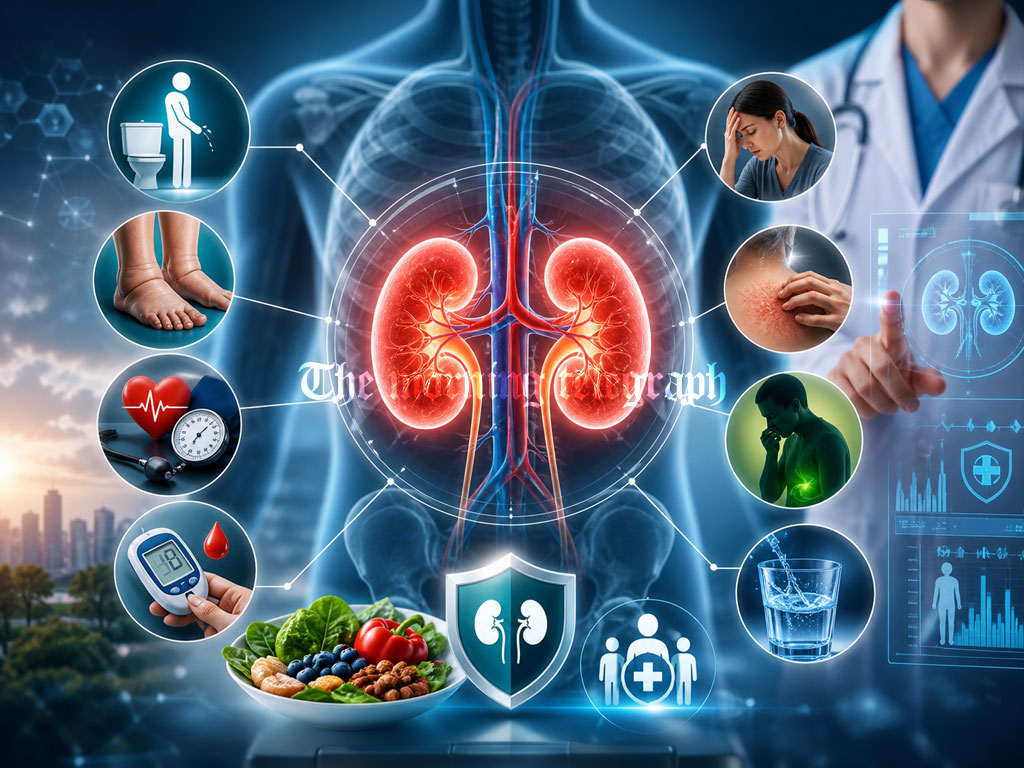
Kidney disease symptoms like frequent urination, swelling, high blood pressure, diabetes, fatigue and itching may signal early kidney trouble.
Kidney disease symptoms are often ignored until the condition becomes serious, even though the kidneys perform vital functions that keep the body healthy.
The kidneys remove waste from the body, maintain the balance of fluids and electrolytes, monitor blood pressure, and support the production of red blood cells.
However, many people do not pay attention to early warning signs that may indicate kidney dysfunction. If these symptoms are identified in time, treatment for kidney related diseases can begin earlier.
These five commonly overlooked symptoms may be signs of kidney disease or kidney failure.

- Frequent Urination
Frequent urination can be a symptom of kidney disease. It may indicate kidney dysfunction and is medically referred to as polyuria.
When the kidneys are damaged, urine may be passed in smaller amounts than needed. Passing frothy urine frequently is also described as one possible sign.
However, Dr. Mohsin Wali, a senior consultant at Sir Ganga Ram Hospital, says frothy urine may not be due only to kidney disease. It can also be caused by other medical conditions.
2. Swelling Of The Body
Swelling around the eyes and legs can also be a warning sign of kidney dysfunction.
If the ankles and lower part of the legs are swollen, it should not be ignored. Such swelling may indicate kidney disease.
Dr. Garima Aggarwal, a nephrologist at Manipal Hospital, says people should be cautious when their feet swell. Swelling of the eyes, face, and legs may suggest possible kidney related problems.
3. Blood Pressure
High blood pressure can seriously affect the kidneys. Experts describe blood pressure as a double edged sword because high blood pressure damages the kidneys, while kidney dysfunction can also cause blood pressure to rise.
This means people should remain alert about changes in blood pressure.
Dr. Garima Aggarwal says blood pressure often remains uncontrolled, leading to an increase in medication dosage. That too may be a symptom of kidney disease.
4. Diabetes
Diabetes has a major impact on kidney health.
Dr. Garima Aggarwal says 80% of kidney patients suffer from diabetes. She also states that between 30% and 40% of diabetics have kidney involvement.
If a person with diabetes begins to develop kidney disease, their sugar levels may also drop. Over several years, high sugar levels can cause kidney disease to develop.
5. Fatigue, Itching And Nausea
Kidney disease can lead to a deficiency of phosphorus in the body. This may cause itching.
Fatigue, body itching, and nausea can also be symptoms of kidney disease. According to experts, itching may occur due to a lack of phosphorus in the body.
Some kidney patients may begin to feel nauseous and lose their appetite. These symptoms should not be dismissed, especially when they occur alongside swelling, blood pressure changes, diabetes, or urinary problems.
How To Reduce The Risk Of Kidney Disease
Experts say a healthy lifestyle can greatly help in preventing kidney disease.
Regular exercise, drinking enough water, and reducing salt and sugar intake are considered useful ways to protect kidney health.
Drink Enough Water
People should drink at least two and a half litres of water every day, unless a doctor has advised otherwise for a specific medical reason.
Water plays an important role in maintaining healthy kidneys. When enough water is consumed, the kidneys produce enough urine to remove harmful substances from the body.
It can also reduce the risk of kidney stones and infections. If enough water is consumed, urine usually remains clear or light yellow.
Dr. Garima Aggarwal says a person should generally drink two to two and a half litres of water per day.
Reduce Salt Intake
High salt consumption is not suitable for the kidneys because it raises blood pressure and can damage kidney function.
Pickles, papadums, and processed foods should be avoided or reduced. Foods such as noodles and chow mein often contain high amounts of salt and should also be limited.
Do Not Use Sendha Salt Carelessly
Sendha salt, also known as rock salt, can be harmful to the kidneys.
The trend of consuming pink sendha salt has increased, but patients with high blood pressure should not consume it without caution.
Dr. Mohsin Wali says many people believe sendha salt is healthier than regular salt. However, it contains low potassium and high sodium content.
Reduce Sugar Consumption
Those who want to prevent kidney disease should consume less sugary food.
It is best to avoid sugar where possible. Cakes, cookies, pastries, and cola contain processed sugar and may increase the risk of obesity, diabetes, and kidney disease.
Control Your Weight
Maintaining a healthy weight through exercise is important for preventing kidney disease.
Experts say obese individuals are at higher risk of developing kidney disease and should reduce body weight. Keeping the Body Mass Index low is recommended.
If BMI is below 24, that is considered very good. Light physical exercise is also important because it helps keep the metabolic process healthy.
If this is maintained at a good level, the risk of developing diabetes and high blood pressure by the age of 50 may be reduced.
Eat A Balanced Diet
A diet rich in fruits, vegetables, and grains can support kidney health.
Foods containing probiotics are also considered healthy and should be given priority in the diet. Fried foods should be avoided as much as possible.
Drinking enough water, eating a balanced diet, and exercising regularly can help keep the kidneys healthy and support overall body health.
Do Not Use Medication Without Medical Advice
Dr. Garima Aggarwal says doctors often see people buying medicines from pharmacies and using them without consulting a doctor.
She says many people take painkillers, especially older people who use them for body pain and arthritis.
Some medicines may contain heavy metals and steroids, which can be harmful to the kidneys.
This raises concerns about the casual use of medication without medical supervision. What happens next could be critical if people continue to ignore early kidney disease symptoms, delay medical care, or use medication without proper advice.