Vehicle taxes increased for personal imports as government urges buyers to delay non-essential purchases amid reserve and fuel price concerns.
Vehicle taxes on personal imports have been increased only to discourage non-essential purchases temporarily, Deputy Finance Minister said while rejecting claims of a massive price surge.
Speaking to the media, the Deputy Minister of Finance said the government’s intention is not to push up vehicle prices, but to send a clear message to the public to delay non-essential imports by a few months.
He said the policy comes at a time when efforts are being made to gradually build the country’s foreign reserves and bring the economy to a more stable position.

According to the Minister, controlling demand for vehicle imports is the main objective behind the tax amendment.
He rejected the widely circulated claim that vehicle prices would increase by around 150%, calling it completely false.
The Minister explained that what has actually been imposed is a 50% surcharge on the existing 130% customs duty.
Accordingly, he said the real tax increase is approximately 11.5%, not the exaggerated figure currently being spread among the public.
He added that the government has not blocked a genuinely essential individual from importing a vehicle, even if that person is willing to pay a higher price.
However, the government is advising others to postpone such imports for a period of three months.
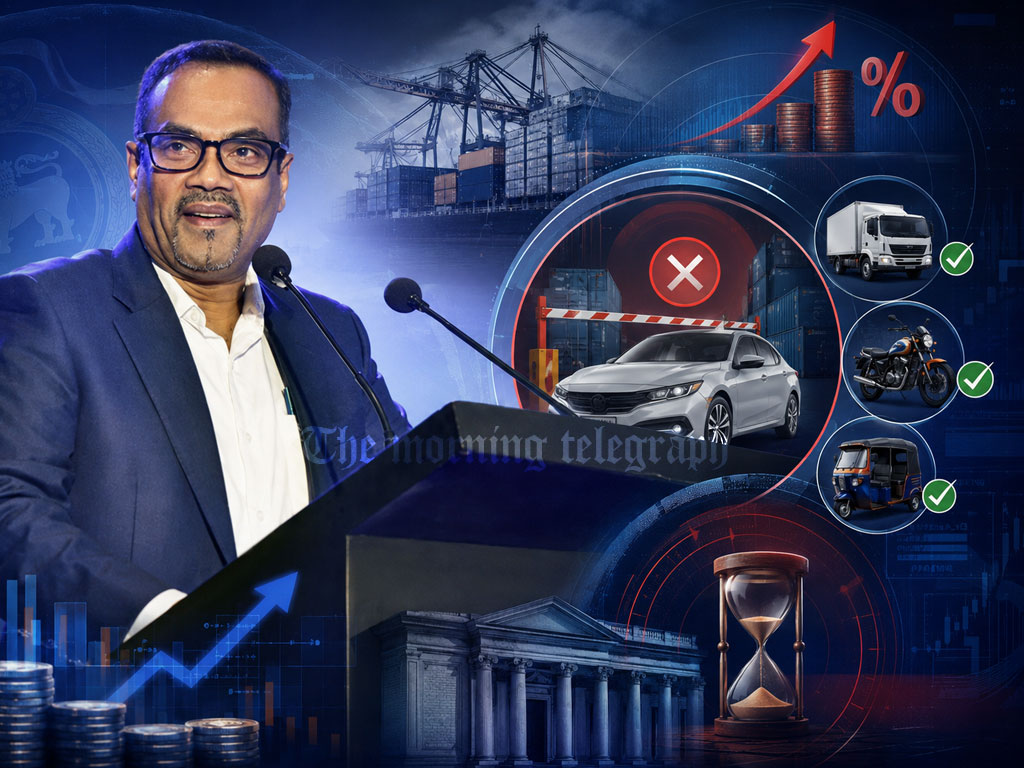
The Minister clarified that the tax amendment does not apply to motorcycles, three-wheelers, or vehicles used for business purposes.
He also stated that vehicles imported through Letters of Credit opened before the 15th will be subject to the old tax rates.
Therefore, he said there is no reason to increase the prices of vehicles already available in the market.
The Minister further explained that global political developments and rising fuel prices have forced the government to make such policy decisions in order to manage the economy carefully.
He said the government does not want unnecessary panic to trigger a rush for vehicle imports and additional dollar outflows.
Instead, the government expects to further stabilise the economy within the next three months before easing pressure on import demand.