

By Marlon Dale Ferreira
Captain Rajind Ranatunga’s resignation as a TRI/TRE has reopened the explosive SriLankan Airlines A320 Type Rating controversy, raising fresh questions over the six instructors who challenged Daminda Rambukwella’s training, the Rs. 8.7 million write-off, and whether the airline’s own Board later concluded that the trainee they rejected had in fact been made a victim of the process.
The recent resignation of Captain Rajind Ranatunga as a Flight Instructor and Examiner, known in aviation terms as a TRI/TRE, has reopened one of the most sensitive and controversial chapters in SriLankan Airlines’ pilot training history.
What began as a dispute over the Airbus A320 Type Rating of then Trainee Junior First Officer Daminda Rambukwella has now grown into a far wider story involving instructor refusal, management intervention, CAASL clearance, a disputed grading system, a Board-level finding, and an Rs. 8.7 million training cost write-off.
But the latest twist is far more dramatic.
The very instructors who once challenged Rambukwella’s competence have remained largely silent after the SriLankan Airlines Board Sub-Committee concluded that he had not failed, but had instead been caught in a flawed training process.
So the question now becomes unavoidable:
Were the instructors right, or did the system they represented fail the very trainee they accused?

The Six TRI/TREs Who Took a Stand
The Morning Telegraph can reveal that the controversy escalated after six TRIs/TREs formally raised concerns over the training and grading process connected to TJFO Rambukwella.
Their position was that Rambukwella’s certified A320 Type Rating was not in keeping with the laid-down grading system. They later refused to proceed with the next phase of his training, which included Aircraft Base Training, Line Training, Safety Pilot Clearance, and Final Line Check.
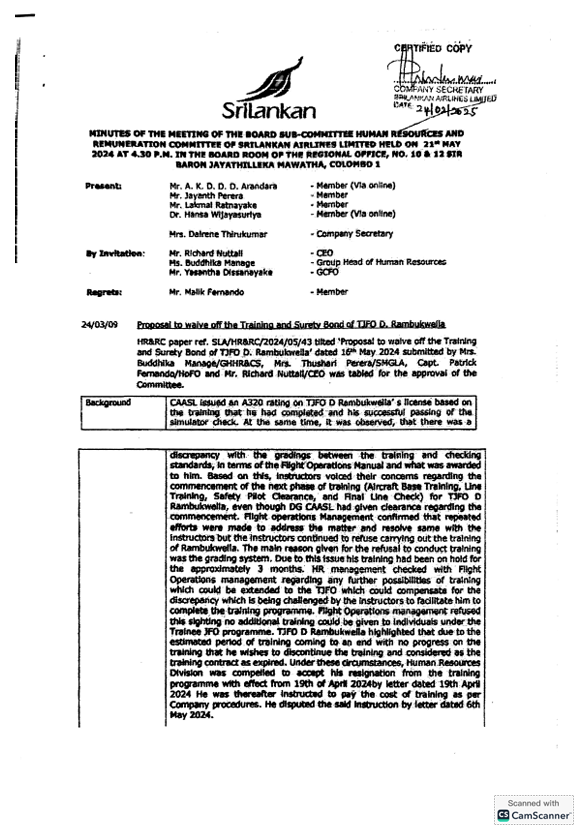
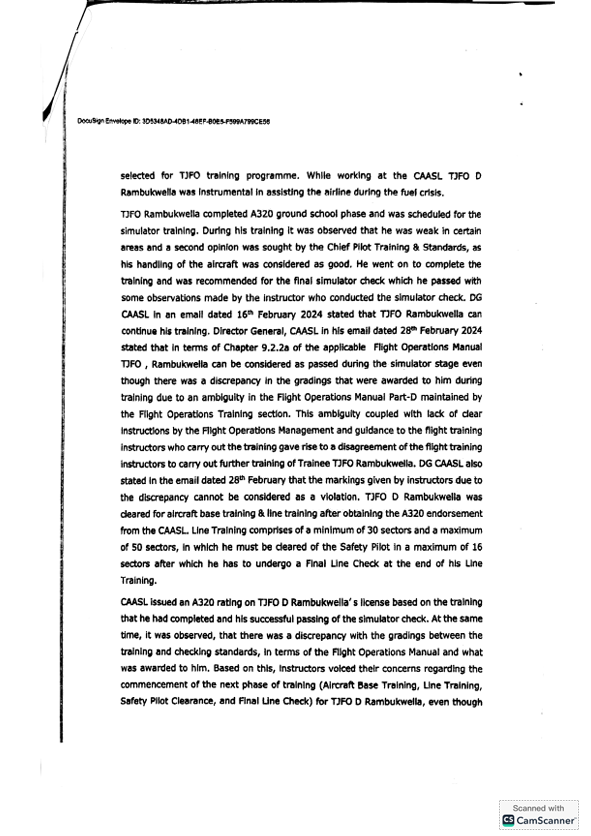
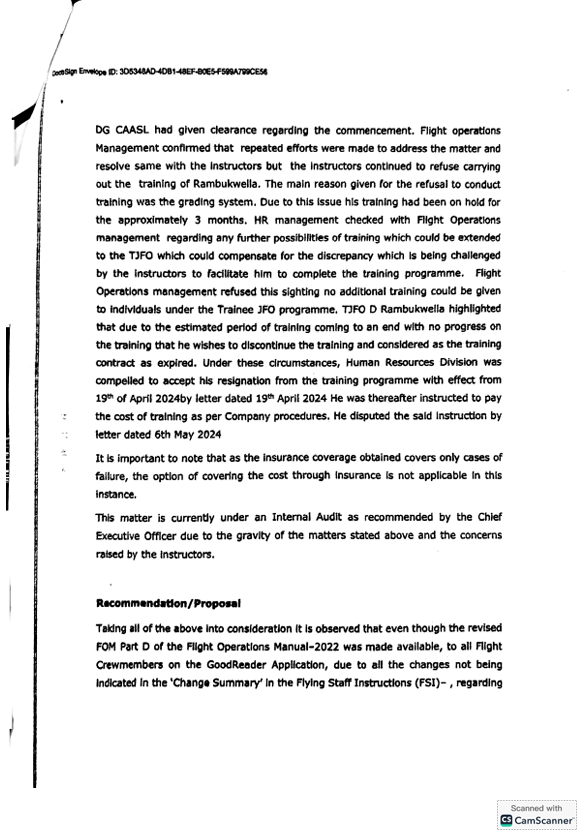
According to SriLankan Airlines’ own Board Sub-Committee minutes, instructors voiced concerns about commencing the next phase of Rambukwella’s training despite clearance having been given by the Director General of CAASL. Flight Operations Management also confirmed that repeated attempts had been made to resolve the issue with the instructors, but the instructors continued to refuse to carry out the training, citing the grading system as the main reason.
This refusal left Rambukwella stranded.
His training remained on hold for approximately three months, while the dispute dragged on internally.


Passed Ground School and Simulator, But Blocked at Line Training
The public controversy has often been framed as though Rambukwella had simply failed to meet the standard required to become a pilot at SriLankan Airlines.
But the Board minutes tell a more complicated story.
The document states that CAASL issued an A320 rating on TJFO D. Rambukwella’s licence based on the training he had completed and his successful passing of the simulator check. At the same time, a discrepancy was observed between the grading standards in the Flight Operations Manual and the grades awarded to him.
In other words, Rambukwella had passed ground school and simulator-related stages and had his type rating endorsed. What remained was further airline-specific training before being absorbed into the flying cadre.
That is where the real drama unfolded.
Despite being rostered for training, the process was repeatedly stalled or cancelled, with the TRIs/TREs refusing to fly with him or examine him.
Former DG CAASL Jayakantha’s Email Changed the Battlefield
The dispute took another turn when former Director General of Civil Aviation P.A. Jayakantha sent an email dated 16 February 2024 under the subject “Continuation of Training” to Head of Flight Operations Captain Patrick Fernando.
In that email, Jayakantha stated that after reviewing the relevant areas of SriLankan Airlines’ Flight Operations Manual and training documentation, he had noticed that some instructors had not adhered to the approved marking system.
More explosively, he stated that some trainees who had obtained more Grade 2 markings than permitted had been allowed to continue training and had been cleared as Junior First Officers.
That statement changed the entire complexion of the controversy.
If the grading system had previously been applied inconsistently, why was Rambukwella singled out?
If other trainees had allegedly been allowed to continue despite falling short of the approved grading threshold, why did the instructors draw the line in his case?
And if Jayakantha’s concern was accurate, did the controversy expose not one failed trainee, but a wider failure inside SriLankan Airlines’ pilot training system?

Board Paper Says Rambukwella Was Not a Failure
What happened next now raises serious questions about the conduct of all sides.
The SriLankan Airlines Board Sub-Committee Human Resources and Remuneration Committee met on 21 May 2024 to consider a paper titled “Proposal to waive off the Training and Surety Bond of TJFO D. Rambukwella.”
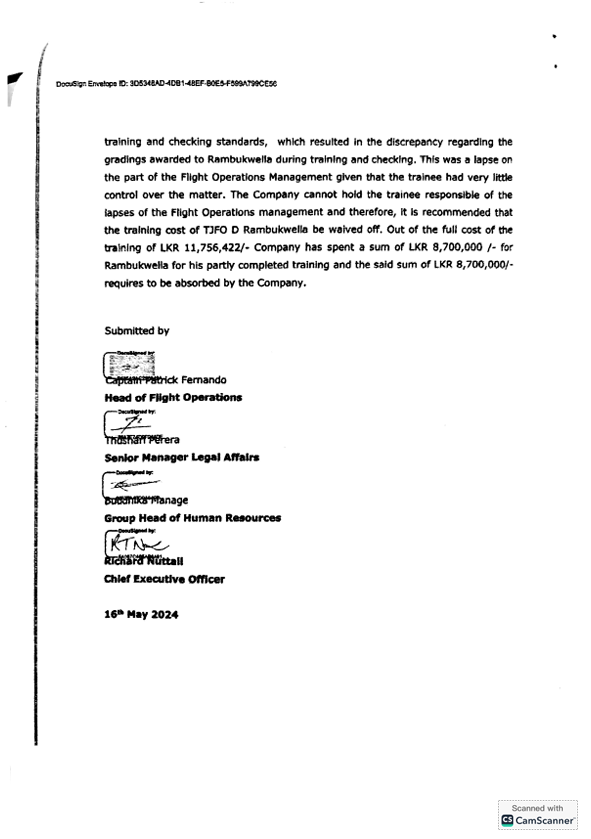
The paper was submitted by senior figures including Group Head of Human Resources Buddhika Manage, Senior Manager Group Legal Affairs Thushari Perera, Head of Flight Operations Capt. Patrick Fernando, and CEO Richard Nuttall.
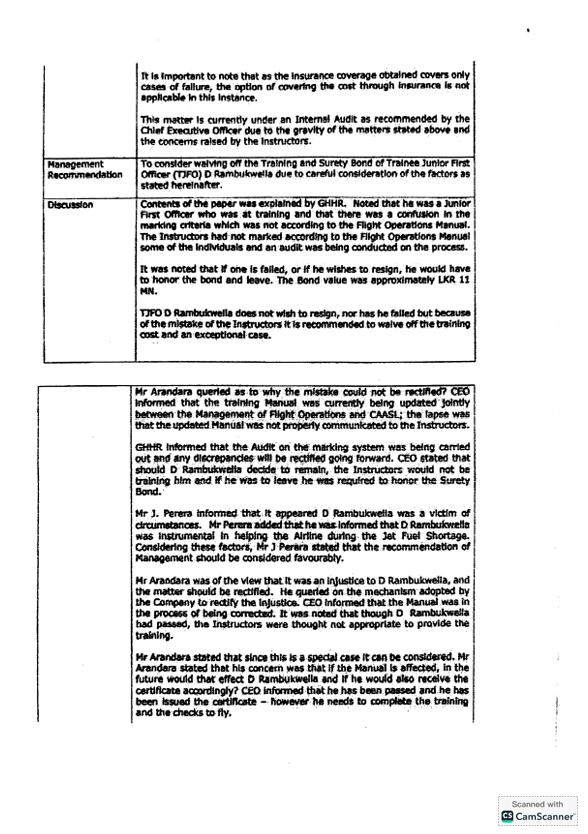
During the discussion, it was noted that there had been confusion in the marking criteria and that the instructors had not marked according to the Flight Operations Manual. The CEO also informed the committee that the training manual was being updated jointly between Flight Operations Management and CAASL, and that the lapse was that the updated manual had not been properly communicated to instructors.
Then came the most damaging line for those who had painted Rambukwella as a failed trainee.
The committee minutes record that TJFO D. Rambukwella did not wish to resign, nor had he failed, but because of the mistake of the instructors, it was recommended that his training cost be waived as an exceptional case.
“Victim of Circumstances”
The Board Sub-Committee discussion went further.
Committee member Mr. Jayantha Perera stated that it appeared Rambukwella was “a victim of circumstances.” Another member, Mr. Arandara, was of the view that it was an injustice to Rambukwella and that the matter should be rectified.
That is not a minor administrative observation.
It means the airline’s own Board-level process did not view Rambukwella as a straightforward training failure.
Instead, the committee accepted that he had been trapped in a flawed process involving grading discrepancies, instructor refusal, and management lapses.
Rs. 8.7 Million Written Off
The final decision was equally significant.
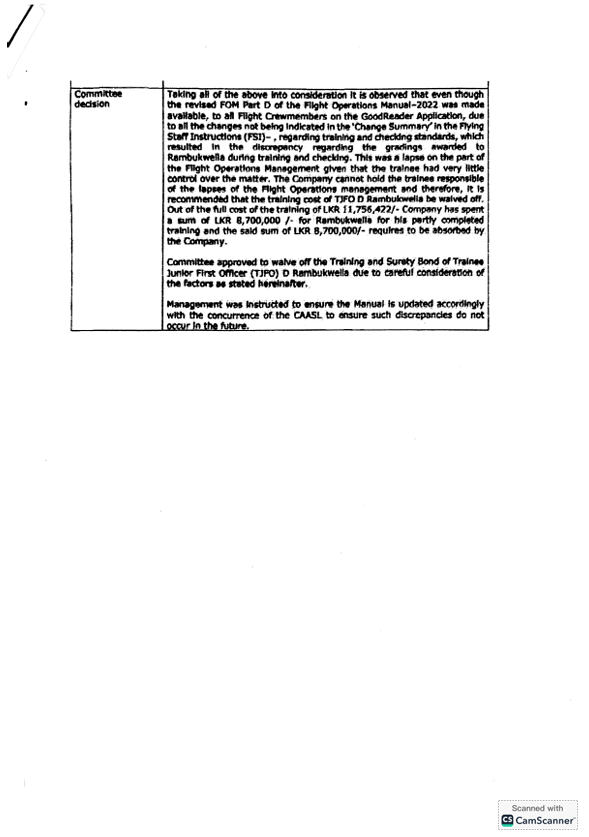
The committee observed that although the revised FOM Part D of the Flight Operations Manual 2022 had been made available to flight crew through the GoodReader application, all changes had not been properly indicated in the change summary of the Flying Staff Instructions. This had resulted in the grading discrepancy connected to Rambukwella.
The committee then concluded that this was a lapse on the part of Flight Operations Management, and that the trainee had very little control over the matter. It further stated that the company could not hold Rambukwella responsible for the lapses of Flight Operations Management.
The result was the waiver of his Training and Surety Bond.
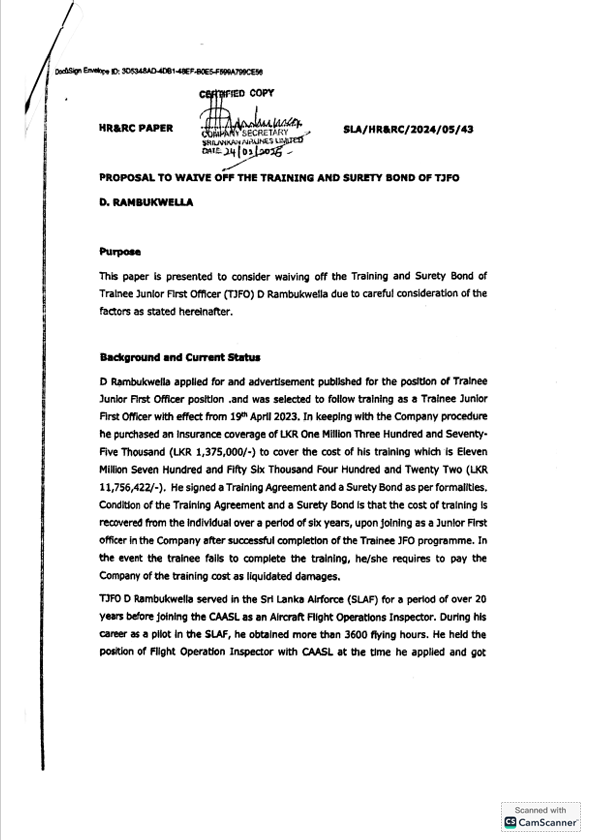
Out of the total training cost of Rs. 11,756,422, the company had already spent Rs. 8,700,000 on his partly completed training, and that amount had to be absorbed by the company.
Why Did the Six Instructors Stay Silent?
This is where the story now becomes explosive.
If six TRIs/TREs were confident that Rambukwella had not met the standard, why have they remained largely silent after the Board Sub-Committee concluded that he had been made a victim of the process?
Their silence can be read in two possible ways.
First, they may have accepted the Board’s conclusion that the problem lay not with the trainee alone, but with the flawed grading and communication process within Flight Operations.
Second, they may be choosing silence because openly challenging the Board’s finding could place them in conflict with the current Flight Operations Management and expose them to professional backlash.
Either way, the silence is deafening.
Did the Hunter Become the Hunted?
The reversal of fortunes is now striking.
Rambukwella, once blocked from completing line training and effectively forced out of the airline’s flying pathway, later entered the Civil Aviation Authority of Sri Lanka and has now risen to become its Director General.
Meanwhile, the instructors who challenged his training record now find themselves facing questions of their own.
Were they protecting safety standards?
Were they applying rules selectively?
Were they resisting a trainee because of genuine concerns?
Or did they become part of a process that SriLankan Airlines later found had victimized the trainee?
These questions deserve answers.
Two Instructors Reportedly Sought Favours From Rambukwella
In a further twist, The Morning Telegraph reliably learns that two of the six TRIs/TREs have since approached current DG CAASL Rambukwella seeking personal assistance or favours.
That development now adds a deeply ironic layer to the controversy.
The very man once opposed by sections of the instructor group is now in a position, where some of those connected to that same group are said to have turned to him for help.
Those close to the matter say Rambukwella, guided by his Christian faith, treated them with dignity and respect, choosing to look into their requests favourably rather than retaliate.
It is a remarkable reversal.
The trainee once accused now occupies the regulator’s chair.
The instructors who refused to train him now face questions about whether they themselves were part of a flawed system.
Captain Rajind Ranatunga’s Resignation Adds Fuel
Captain Rajind Ranatunga’s resignation as a TRI/TRE now adds fresh fuel to this fire.
At one level, it may be treated as a personal or professional decision.
But in the context of the Rambukwella controversy, Jayakantha’s email, the Board Sub-Committee decision, and the Rs. 8.7 million write-off, it inevitably raises new questions.
Was his resignation connected in any way to the unresolved fallout from the training dispute?
Was it a protest?
Was it self-protection?
Or is it simply part of a wider unease within SriLankan Airlines’ training structure?
Without a clear explanation, speculation will only grow.
The Public Safety Question Still Remains
This entire controversy cannot be reduced to personalities.
It is not merely about Rambukwella.
It is not merely about Rajind Ranatunga.
It is not merely about six TRIs/TREs.
It is about whether SriLankan Airlines’ pilot training system applied its rules fairly, consistently, and safely.
Former DG CAASL Jayakantha’s email raised the possibility that some trainees may have been allowed to continue and be cleared despite not meeting the grading threshold. The Board Sub-Committee minutes suggest that Rambukwella was caught in a process where the manuals, markings, and instructor understanding were not aligned.
That means the real issue is larger than one pilot’s type rating.
It goes to the heart of public safety.
The Hunters, the Hunted, and the Rs. 8.7 Million Question
The resignation of Captain Rajind Ranatunga has reopened a controversy that SriLankan Airlines may have hoped would fade quietly.
But it has not faded.
Instead, the documents now raise sharper questions.
If Rambukwella had passed ground school and simulator training, why was he blocked at line training?
If the instructors were right, why did the Board describe him as a victim of circumstances?
If the Board was right, why have the instructors not publicly challenged that finding?
If Jayakantha was right, how many others were previously allowed through despite grading issues?
And if the airline absorbed Rs. 8.7 million because of Flight Operations Management lapses, why should the public ultimately carry the cost?
Until SriLankan Airlines, CAASL, and the instructors involved provide clear answers, this controversy will remain unresolved.
For now, one uncomfortable question hangs over the entire affair:
Was Daminda Rambukwella truly the failed trainee, or did he expose a failed training system that has now turned the hunters into the hunted?


DAMINDA RAMBUKWELLA NEVER PASSED HIS SIMULATOR TRAINING!.
This story never started at the beginning, it seems the Editor has broken the story as and when he got possession of relavant documents, but is yet to publish the Simulator Training records, which clearly shows that Daminda Rambukwella UNDER PERFORMED in many simulator sessions and also was in fact UNSUCCESSFUL AT HIS FINAL EVALUATION FOR A320 RATING.
These facts are constantly being hidden and being whitewashed as “Ground and Similator training completed Successfully” when it was never the case and a complete fabrication. HE DID NOT PASS HIS SIMULATOR TRAINING.
There was another Female candidate who was failed by these very same instructors however, she had performed far better than Daminda Rambukwella during simulator training. The question then begs to be answered why were there two sets of rules being applied by Patrick Fernando and the Board of Directors? Daminda Rambukwella’s training should have been terminated on the very first occasion he scored grade 2 in more than 3 occasions, but the airline continued his simulator training regarless of being a failure. Was this due to any unfair influence brought upon by the Board of Directors? Were any of the Board members connected to the Hayleys Group in anyway where Daminda Rambukwella’s wife worked in an Executive position to extend favours?
One also needs to investigate the argument that there were changes to the marking scheme, which I find is a whole load of hog wash as the Flight Operations Manual and Training Manual (Part D) available at the CAASL has never been amended since 2022, neither has Sri Lankan Airline submitted any amendments to the CAASL for approval till todate. So why this talk of victimisation? If at all the instructors have been victimized for failing to tow the management line and pass a failed JFO.
There was no need to keep Daminda Rambukwella waiting for three months in limbo, had Patrick Fernando done his job correctly Daminda Rambukwella should have been terminated immediately and the Rs 8.7 million claimed from him forthwith. I believe he is also required to furnish 2 Guarantors as part of his training bond so why not claim it from them.
As part of the Ground School Daminda Rambukwella should have educate himself and known the contents of Part D of the Training manual, which explicitly states the grade he is required to obtain to pass each session of flight simulator program, regardless he remained in hope that the instructors would grant him a break by overlooking his failed grades and pass him.
Patrick Fernando has not only aided and abetted in this sordid affair he also whole heartedly indulged in the deception while he himself has failed Daminda Rambukwella in more than one simulator session by marking him with 5 grade ones where flight safety is involved and then went on to mislead the Board of Directors with the blessings of the then CEO Richard Nuttal.
The sad part of all this is that all relavant documents to this case and a few others similar incidents in nature have been submitted to the United Nations Office in Charge of Auditing the Regulator being CAASL, and now Sri Lanka is well on its’ way to failing an ICAO audit for the first time, which leads to automatic Black Listing. We the taxpaying public have all the Right to lay the blame squarely at the feet of Minister Bimal Ratnayake and Minister Aruna Karunatileka for first appointing this sort of character to head the CAASL and second for continued service of a scoundrel in the likes of Daminda Rambukwella who has a bad track record wherever he has worked be it the Airforce Sri Lankan Airlines where he was an utter failure or the CAASL, which he is in the process of destroying.
Finally the responsibility lies with President Anura Kumara Disanayake and his government for not upholding the promise and pledge they made to have a good clean governance free of political Influence, Nepotism and most of all get rid of the Rajapakse stooges that are still running the government administration although the NPP is in power.
his story was created by Sri lankan airlines instructors and some people eyed for the DGA position. Passing or failing of A320 training is not a disqualification reason for the DG CAASL as it has set of requirements outlined clearly. DG Rambukwella has all qualifications to meet perfectly suite to this position. If any one unhappy, can go to the courts by challenging his appointment. One guy in CAA, Isuru went to the Supreme Courts but it was refused by the Supreme Courts. So it is not a reason to disqualify the failure of A320 rating or resining from Sri lankan Airlines, but those instructors can not bear up his appointment and purely in Jeleouse, making false allegations.
Failures are the pillars of success. Now those instructors are in fear for revelation of unfair grading favoring for their kids to join to the airlines. If the management position as misinformation in application of grading, this Flight Training Department has to be fully overhauled and appoint new instructors.