Japan Hostage Justice faces fresh scrutiny after Sri Lankan student Vichakshana died in police custody after months of detention.
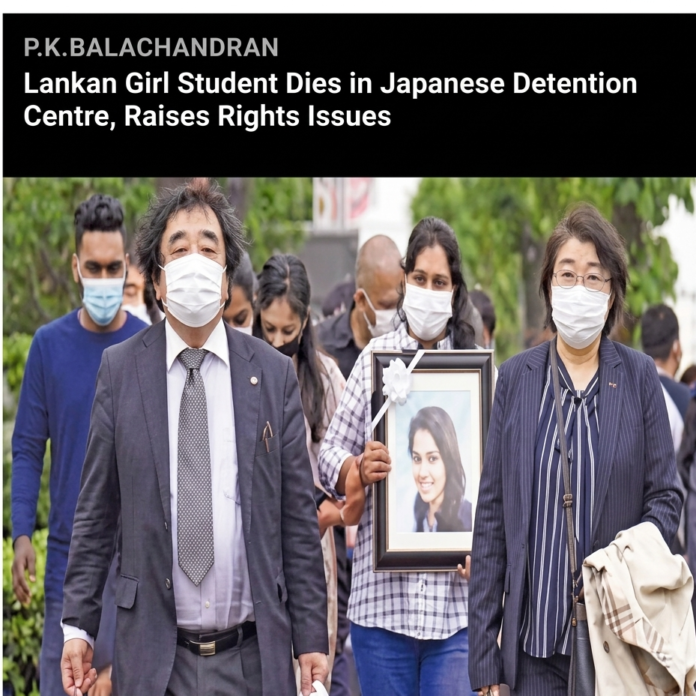
Japan Hostage Justice is once again under harsh scrutiny after a 22-year-old Sri Lankan student, Vichakshana, died inside police custody in Ibaraki Prefecture.
Japan is often praised globally as a model of technology, discipline, order, and human dignity.
But behind that polished image, the death of this young Sri Lankan has exposed a darker reality within a legal system long criticized by human rights activists.
Vichakshana, from the Mahahilla area in Beliatta, Hambantota, arrived in Japan in 2023 with hopes of following a technical course and building a better future.
Instead, his life ended after three months inside a police cell in Tsuchiura, Ibaraki Prefecture.
His death is not merely an isolated tragedy.
It reflects a much wider human rights crisis faced by foreign students and workers in Japan.

How a Simple Shopping Trip Became a Detention Nightmare
On February 22, 2026, Vichakshana visited Tsuchiura City in Ibaraki Prefecture with several friends to buy essential goods.
During that visit, a shopkeeper accused Vichakshana and another young woman of shoplifting and complained to the police.
Based on that suspicion, Tsuchiura Police arrested both of them.
The police also informed Vichakshana’s sister, Satyani Shakya, who was living in Japan.
After hearing the news, Satyani immediately went to the police station to help her brother.
With assistance from a lawyer arranged through the intervention of the Sri Lankan Embassy in Japan, she prepared to face the legal process.
According to Satyani, no major problem appeared during the first two weeks.
No Clear Evidence, Yet No Freedom
Although Vichakshana was produced before court by police, sufficient evidence was not presented to prove the theft allegation made by the complainant.
As a result, the case was postponed again and again.
Behind the detention of an unproven suspect inside a police cell for nearly three months lies Japan’s internationally criticized “Hostage Justice System.”
Under this system, bail is often denied until a suspect confesses to the alleged crime.
The strategy is said to involve long detention, restricted access to lawyers, and intense psychological pressure.
Critics say this cruel process helps create Japan’s extremely high conviction rate, with 99% of suspects produced in Japanese courts eventually convicted.
Vichakshana, whose charge had not been proven, was trapped inside this merciless system.
Holding his sister’s hands during visits, he repeatedly pleaded in tears.
“Oh, sister, tell the lawyer to finish this. I have done no wrong.”
Final Words That Exposed a System
As days turned into weeks, and weeks turned into months, Vichakshana was not granted bail.
He remained in police custody under heavy mental pressure, while his physical condition reportedly worsened day by day.
“My head hurts, my chest hurts,” he told his sister several times.
His frightened sister advised him, “Brother… tell the police you are sick.”
But Vichakshana’s reply revealed the coldness he was facing inside detention.
“They don’t care about it.”
On May 19, Satyani Shakya was informed by police that Vichakshana, who had been arrested on suspicion on February 22, had died mysteriously inside the police cell.
He had been held for more than three months without proper medical attention.
The circumstances raise serious questions about whether this was a natural death, or the result of the deliberate denial of basic human rights and medical care.
Official Silence and Suspected Cover-Up
The conduct of Japanese police after Vichakshana’s death has raised further suspicion.
Reports indicate that police refused even to accept a complaint filed by his sister, Satyani Shakya, seeking justice for his mysterious death.
Several weeks have now passed since his death.
Yet steps have still not been taken to send his body to Sri Lanka.
His remains are reportedly still in a mortuary in Japan.
This has deepened suspicion that authorities may be attempting to hide the true cause of death or delay the release of evidence.
Instead of challenging the cruelty exposed by this tragedy, Japanese media has remained largely silent.
That silence is disturbing.
From Wishma to Vichakshana: A Painful Pattern
| Time Period | Deceased Citizen | Detention Location | Legal Background and System Conduct |
|---|---|---|---|
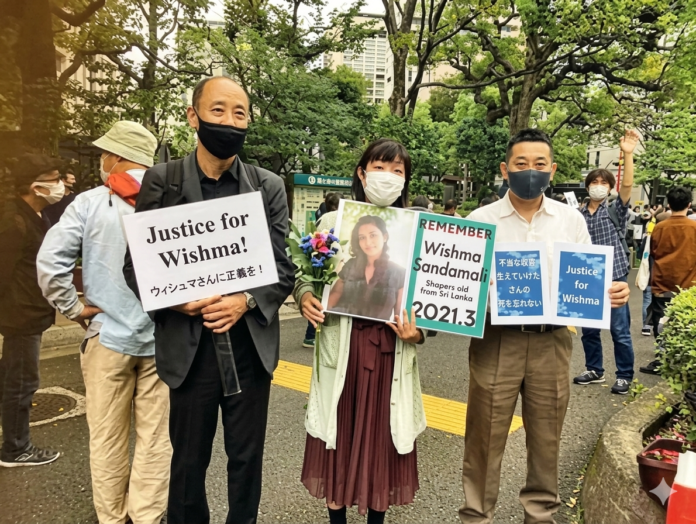
| 2021 | Wishma Sandamali | Immigration Detention Centre | Detained on visa expiry suspicion, refused medical treatment for months, leading to death. |
| 2026 (Current Incident) | Student Vichakshana (22 years old) | Tsuchiura Police Station | Detained for 3 months without sufficient evidence to prove the alleged suspicion, neglect of health condition, and refusal to accept complaints after death. |
This is not the first such tragedy involving Sri Lankans in Japan.
Japan has already faced international criticism over the death of Wishma, another Sri Lankan who died inside a detention facility.
Although the Japanese government expressed regret internationally over Wishma’s death, Vichakshana’s death raises the painful question of whether any real humane change has taken place.
His death suggests that Japan’s police detention procedures remain deeply troubling for vulnerable foreign nationals.
The blood of another Sri Lankan has now been added to this dark record.

Diplomatic Failure in Colombo and Tokyo
The role of the Sri Lankan Foreign Ministry and the Sri Lankan Embassy in Japan must also be questioned.
Why was a 22-year-old Sri Lankan youth allowed to remain in a police cell for three months without a stronger diplomatic challenge?
Why was there no urgent intervention when his case dragged on without clear evidence?
Why was his health condition not escalated at the highest level?
The Sri Lankan government must act immediately.
It must demand answers from Japan.
It must push for an independent investigation into Vichakshana’s death.
Embassies that fail to defend their own citizens in moments of life and death are of little use to the people they claim to serve.
The Real Test of Civilization
A country’s civilization cannot be measured only by skyscrapers, bullet trains, technology, wealth, or economic rankings.
It must be measured by how its system treats the weakest person under its control.
That includes foreigners.
That includes students.
That includes detainees who have not been proven guilty.
Vichakshana’s untimely death exposes the cruelty hidden behind the human rights image of so-called advanced democracies.
If international human rights organizations, the Sri Lankan government, and Sri Lankan society remain silent, this tragedy will not be the last.
Another innocent Sri Lankan child chasing the “Sakura Dream” may one day enter Japan with hope, only to leave in a coffin.