Trump tariff proposal targets Sri Lanka and dozens of economies over forced labor import concerns, raising fresh risks for exporters.
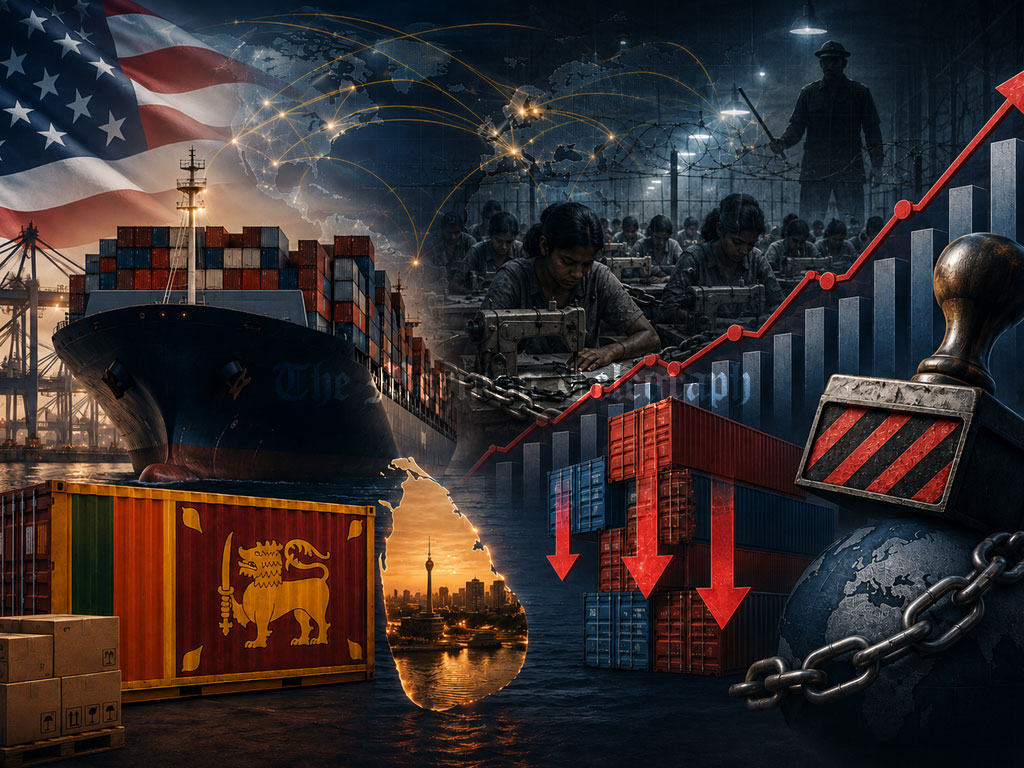
Trump tariff pressure has returned to the spotlight after the administration proposed new import duties on Sri Lanka and dozens of other economies over alleged failures to block goods made with forced labor.
The Trump administration on Tuesday proposed imposing an additional 10% or 12.5% import tariff on 60 economies, including Sri Lanka, after accusing them of failing to prevent forced-labor-linked goods from entering the market.
The Office of the US Trade Representative said the move followed its conclusion that conditions in these countries were unfair and had created a burden on US commerce.

The proposal marks the latest attempt by the Trump administration to revive the “emergency tariff” system, which was suspended by a US Supreme Court ruling last February, following an investigation into unfair trade practices under Section 301 of the Trade Act of 1974.
According to the USTR, 54 countries have been identified as failing to effectively enforce bans on imports made with forced labor. The list includes Sri Lanka, India, China, Japan, South Korea, Australia, and the United Kingdom.
For the purpose of imposing the new duties, the countries have been divided into two groups.
A 10% additional tariff would apply to six countries, including Canada, European Union member states, Mexico, and Pakistan. These economies have either already implemented a ban on forced labor imports or agreed to do so through trade agreements.
A higher 12.5% additional tariff has been proposed for the remaining 54 countries, including Sri Lanka, which the USTR says lack a proper ban or effective enforcement mechanism.
“We simply cannot tolerate our leading trading partners failing to block imports made with forced labor. This creates an uneven global playing field for American workers,” US Trade Representative Jamieson Greer said.
The USTR has also proposed a special textile mechanism that would allow certain quantities of apparel and textile products to enter the United States at reduced tariff rates.
This mechanism could be particularly important for garment-exporting countries such as Sri Lanka, whose apparel sector depends heavily on access to the US market. However, the specific tariff percentages or quota volumes under this mechanism have not yet been disclosed.
At the same time, the USTR has moved to exempt several product categories from the proposed tariffs.
These exemptions include energy products, rare earth elements, certain metals, beef, coffee, selected vegetables and fruits, pharmaceuticals, organic chemicals, and aircraft parts.
The latest tariff proposal comes after the February 20 Supreme Court ruling that nullified tariffs imposed by President Donald Trump under the International Emergency Economic Powers Act.
Following that ruling, the administration imposed a five-month temporary tariff arrangement, which is scheduled to expire on July 24.
Separately, following a Section 301 investigation into Brazil’s digital trade practices, the USTR on Monday also proposed a 25% tariff on many goods from Brazil.
The results of another major investigation into excess industrial capacity building by 16 trading partners, including China, are also expected to be announced soon.
The USTR has further stated that it will accept public and stakeholder comments on the proposed tariff revisions until July 6.
For Sri Lanka, the proposal introduces a fresh trade risk at a time when exports, especially apparel, remain crucial to foreign exchange earnings and economic recovery.