Presumption of innocence concerns grow as prosecutors, media reporting, and court privilege raise fresh questions over fair trial rights.
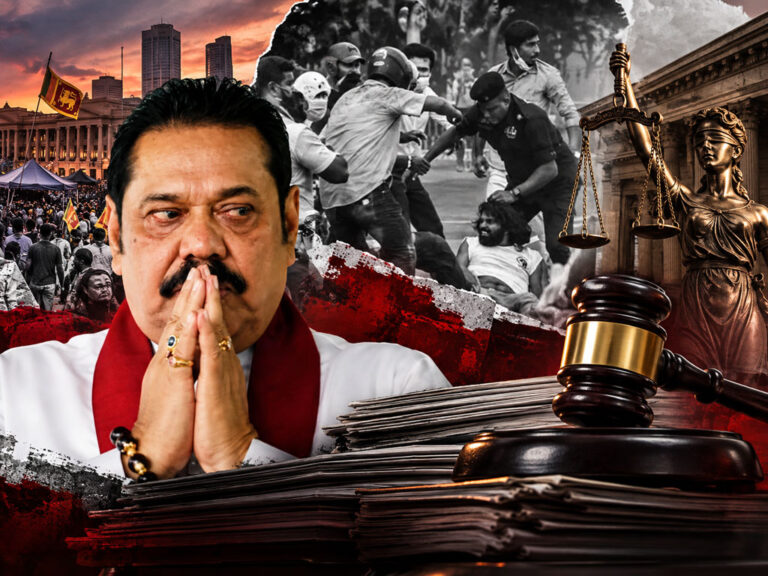
The presumption of innocence remains one of the strongest pillars of criminal justice, yet recent developments in Sri Lanka’s Magistrate’s Courts have raised disturbing questions about whether that principle is being weakened before trials even begin.
When a prosecution lawyer begins to act like a “hunter,” and when the representative of the Attorney General uses courtroom privilege in a way that prejudges innocence, the justice system itself enters dangerous territory. In a democratic society, justice is not built on personal opinion, political pressure, public anger, or media excitement. It is built on evidence, tested before an impartial court.
The golden rule of every criminal trial is clear: every person must be presumed innocent until proven guilty.
Yet in several controversial cases now being heard at Magistrate’s Court level in Sri Lanka, a troubling pattern appears to be emerging. The government prosecution side, represented through the Attorney General’s Department, and sections of the media appear to be creating a public image of the accused as an “extremely despicable criminal” before any formal conviction has taken place.
By expressing opinions that are not yet supported by evidence tested in open court, and by relying on individual statements that have not faced cross-examination, a prejudicial public mood is created against the accused. That process does not merely damage a person’s image. It strikes at the very foundation of justice.
Understanding this violation of rights in Magistrate’s Court proceedings, the local and international legal provisions that apply to it, and the remedies available to accused persons affected by such prejudice has now become a matter of urgent public importance.

The danger of police statements becoming “imaginary truths”
There is a basic principle known to anyone familiar with the Evidence Ordinance and the Criminal Procedure Code. Statements given to police by persons under Section 110 of the Criminal Procedure Code during a criminal investigation are not “substantive evidence” in law.
They are only information collected by investigating officers to guide the investigation. Until the persons who made those statements enter the witness box in open court, take an oath, and successfully face serious cross-examination by the defence, there is no legal basis to treat those statements as proven facts.
Unfortunately, what is happening in some courtrooms today appears to be the opposite. Some government lawyers treat these unproven police statements as if they are already complete truths. They then mix them with personal assumptions, emotional language, and imaginative additions before making lengthy speeches in open court.
They also know that such dramatic and one-sided courtroom statements are likely to be quoted word for word by journalists waiting outside, and later turned into major headlines. The result is devastating. Before the actual trial is heard, the accused is already declared guilty in the court of public opinion, and his or her dignity is permanently damaged.
Absolute privilege is not a shield for abuse
Government lawyers representing the Attorney General often make such broad statements in open court because they are protected by the doctrine of “absolute privilege.” This privilege prevents defamation or civil claims from being filed against them for statements made in court.
But privilege is not a licence to misuse the law.
In Premachandra v. Major Montague Jayawickrema [1994] 2 Sri L.R. 90, the Supreme Court held that in a country governed by the rule of law, there can be no unfettered discretionary power. Every power exercised by a state officer or law enforcement institution must be used for the public good, fairly, and in keeping with the public trust.
Similarly, in Channa Peiris and Others v. Attorney-General and Others [1994] 1 Sri L.R. 1, the Supreme Court held that state power and discretionary authority must be exercised in accordance with the rule of law and fundamental rights. State officers are not permitted to violate individual rights through arbitrary actions that go against natural justice.
Therefore, it is clear that the law does not allow the rights of accused persons to be trampled through media-driven courtroom spectacles.
The true meaning of this legal protection
The simple meaning of this principle is that a person does not become guilty merely because a criminal charge has been filed against him. The burden of proving guilt, and proving the charges beyond reasonable doubt, rests entirely on the prosecution.
Sri Lanka’s constitutional guarantees
Under Chapter III of the Constitution of Sri Lanka, which contains the country’s fundamental rights provisions, Article 13(5) clearly affirms this protection: “Every person shall be presumed innocent until proved guilty in accordance with law before a competent court.”
Article 13(3) of the Constitution further guarantees the right of any arrested or accused person to a fair trial. For such a trial to be meaningful, the judge must hear the case without preconceived conclusions or pressure created by external public opinion.
International human rights standards
Article 14(2) of the International Covenant on Civil and Political Rights, or ICCPR, to which Sri Lanka is a party, also recognises the right to be presumed innocent until legally proven guilty.
These protections have been brought into Sri Lanka’s domestic legal framework through the ICCPR Act No. 56 of 2007.
Attorney General: government lawyer or guardian of justice?
In Sri Lanka’s legal tradition, the Attorney General is not simply a partisan lawyer appearing for the government’s interests. The Attorney General is an officer of the court, entrusted with assisting in the delivery of justice on behalf of the public.
The prosecutor’s role is not conviction at any cost
The duty of a prosecutor in a criminal case is not to secure a conviction and send the suspect to prison at any cost.
In the landmark case of The King v. Seneviratne (1936) 38 N.L.R. 208, which went up to the British Privy Council, it was clearly stated that those conducting prosecutions on behalf of the state must not act unfairly by selecting only evidence favourable to the prosecution while suppressing or disregarding material useful to the accused.
Their duty is to present all evidence fairly before court so that the truth can be discovered.
This traditional principle was strongly reaffirmed for modern society in Karunarathne v. Attorney General (SC Appeal No. 32/2020). Delivering the judgment, Honourable Supreme Court Justice Buwaneka Aluwihare emphasized that a government lawyer conducting a prosecution is an officer of the court, not a person whose mission is to convict the accused at any cost.
His Lordship stated: “It is not the function of the government lawyer to convict the accused at any cost. His paramount duty is to assist the court to deliver justice by uncovering the truth.”
However, contrary to this settled position, it appears that the sole objective of some government lawyers is to secure convictions at any cost.
A breach of legal ethics
Under the Supreme Court Conduct and Etiquette Rules for lawyers, published in Gazette No. 538/23 dated December 30, 1988, no lawyer should make prejudicial statements in or outside open court that are misleading, not based on evidence, or likely to interfere with a fair trial.
In particular, Rule 53 of those Conduct and Etiquette Rules states that a lawyer shall not ask questions or make any statement for the sole purpose of insulting or degrading the opposing party, a witness, or any other person.
It must therefore be repeated that a government lawyer is a friend of the court, or Amicus Curiae. He is not a malicious private party whose role is to send the accused to prison at any cost.
Trial by media and its damaging impact
The conviction of a person through media and social media before the completion of a fair judicial process is one of the greatest threats to judicial independence today.
When one-sided statements made by the prosecution are publicized, the public often assumes that the accused is 100% guilty. Even if the accused is later acquitted after a long trial, the reputation, employment, social standing, and personal life destroyed before society may never be restored.
This danger was strongly criticized by the Indian Supreme Court in State of Maharashtra v. Rajendra Jawanmal Gandhi (1997) 8 SCC 386: “Trials by media constitute a serious affront to the rule of law. It corrupts the justice delivery process and can have an invisible impact on the minds of judges.”
Such media propaganda may amount to an abuse of the freedom of speech and expression guaranteed under Article 14(1) of the Constitution. Under Article 15(7), freedom of speech may be restricted to protect the reputation of others and to prevent contempt of court.
If a government lawyer contributes to media operations that destroy the entire life of an accused officer, there is also legal space to examine the matter under Article 11 of the Constitution, which protects persons from inhuman or degrading treatment.
The Supreme Court emphasized in Sriyani Silva v. Iddamalgoda [2003] 2 Sri L.R. 359 that a person’s dignity must be protected even after death.
In that case, Chief Justice Sarath N. Silva stated that the right to be free from torture, cruel or degrading treatment, guaranteed by Article 11 of the Constitution, is directly linked to human dignity. The Supreme Court emphasized that the inherent dignity and right to life, which belong to a human being by birth, are embedded within the fundamental rights set out in the Constitution of Sri Lanka.
Accordingly, when state officers publicize accusations based on unproven facts through the media and degrade a person’s dignity, such conduct can certainly amount to a violation of fundamental rights.
Contempt of court and statements on pending cases
Making statements about a pending case that could influence its hearing or outcome falls within the rule against prejudicial comment on matters that are sub judice. Such conduct can be punished as contempt of court.
The recently enacted Contempt of Court (Prevention and Punishment) Act No. 8 of 2024 in Sri Lanka also clearly restricts the issuing of statements that prejudice the judicial process.
Under the provisions of this Act, it is an offence to make communications that prejudice witnesses, judges, or accused persons in a pending case. Therefore, giving media publicity to a prejudicial statement made by a lawyer during court proceedings may also fall within the scope of this Act.
Remedies available to accused persons facing prejudice
If the Attorney General or investigating officers are weakening the presumption of innocence by spreading imaginative opinions against an accused person, silence is not the answer. The accused must act immediately.
Several legal strategies are available in such circumstances.
Steps available before the Magistrate’s Court
After lawyers place written submissions before the Magistrate’s Court regarding the prejudicial situation, the Magistrate has the power to take necessary steps.
In-camera proceedings
Under the Criminal Procedure Code or the Assistance to and Protection of Victims of Crime and Witnesses Act No. 4 of 2015, depending on the sensitivity of the case, the Magistrate has the authority to remove journalists and the public from the courtroom and conduct proceedings behind closed doors.
The court may also prohibit the publication of what takes place during in-camera proceedings, or the publication of information relating to witnesses, through newspapers, television, or social media.
If such an order is violated, the Magistrate may recommend that the relevant media be prosecuted before the Court of Appeal on contempt of court charges.
Seeking gag orders before the Court of Appeal
Lawyers for the accused may also use the Criminal Procedure Code and the inherent powers of the court to make a written application to the Court of Appeal, seeking steps to prevent malicious statements by the prosecution.
There is also the possibility of requesting restraining orders against investigating officers and government lawyers to stop the release of confidential information unrelated to the investigation, or unproven statements, to the media.
Filing a Fundamental Rights petition before the Supreme Court
If state officers, including officers of the Attorney General’s Department or the Police, violate constitutional rights, the accused can approach the Supreme Court under Article 126 of the Constitution.
The accused may seek a determination that Article 12(1), which guarantees equality before the law, and Article 13(5), which protects the presumption of innocence, have been violated. Compensation may also be claimed.
In the landmark cases involving Dr. Shirani Bandaranayake v. Attorney General, it was pointed out that if executive or administrative institutions act in a manner that damages a person’s reputation and right to a fair trial, the Supreme Court will intervene. This includes the Attorney General and other state officers.
Complaints on misconduct and professional ethics
If officers of the Attorney General’s Department intentionally act in breach of legal ethics, complaints can be made through available professional channels.
To the Bar Association of Sri Lanka, complaints can be filed regarding violations of the Supreme Court Conduct and Etiquette Rules that bind them as lawyers.
A complaint may also be made to the Supreme Court under its disciplinary powers. The inherent authority of the Supreme Court to cancel the registration of lawyers or take disciplinary action under Article 168 of the Constitution can be invoked.
International trends and Commonwealth guidance
It is useful to examine how advanced democracies respond to such situations.
In the United Kingdom, the Contempt of Court Act 1981 prohibits both the media and the prosecution from publishing material prejudicial to the accused from the moment a case becomes active.
Within the English common law tradition, several judgments, including Attorney-General v News Group Newspapers Ltd [1987] QB 1, have emphasized that trial by media is harmful to the judicial process.
Those judgments have also made clear that evidence in a case must be examined before a court, not by public opinion. The stage for justice is the courtroom, not newspaper pages. The prosecution’s evidence must be tested before a judge, not by a public vote.
Reforms needed to stop this trend
The court is sacred ground for the delivery of justice. It is not a stage for government lawyers to perform media spectacles showcasing eloquence, personal bias, or political emotion.
To weave imaginary stories based on unproven police statements that have not been tested by cross-examination, and to use them to destroy the dignity and professional life of an accused officer, is a dangerous and disgraceful practice that must end immediately.
To control this situation and protect the objectives of justice, urgent reforms are needed.
Court reporting guidelines
The Supreme Court and the Attorney General’s Department should immediately issue special guidelines setting out the limits that must be followed by the media and government lawyers when reporting or commenting on criminal investigations.
Direct intervention by Magistrates
Magistrate’s Court judges should act immediately to control political, personal, or imaginary statements made by government lawyers in open court when such statements go beyond facts and risk prejudicing the accused.
They must also take steps to prevent such statements from being reported by the media in a manner that damages the fairness of the proceedings.
Activation of legal remedies
State officers or citizens who are prejudiced by such conduct should use the legal remedies available to them, including fundamental rights petitions, gag orders, and professional misconduct complaints, to enforce the law against those responsible.
Correcting the course of justice
In a case pending before a Magistrate’s Court, the sole authority to decide whether an accused officer is guilty or not lies with the judge, after evidence is led according to the rules of the Evidence Ordinance.
Using the Attorney General’s broad powers and state resources to build public opinion through imaginary, evidence-free stories turns the rule of law into jungle law.
If an accused person is facing such a prejudicial situation, it is both his right and his duty to act immediately. That action is necessary not only to protect his own constitutional rights, but also to preserve the purity of the entire judicial system.
Such a person has the right to go before the Supreme Court or the relevant Magistrate’s Court to seek protection.
Justice must always be done. More importantly, it must also be seen by the public to be done.