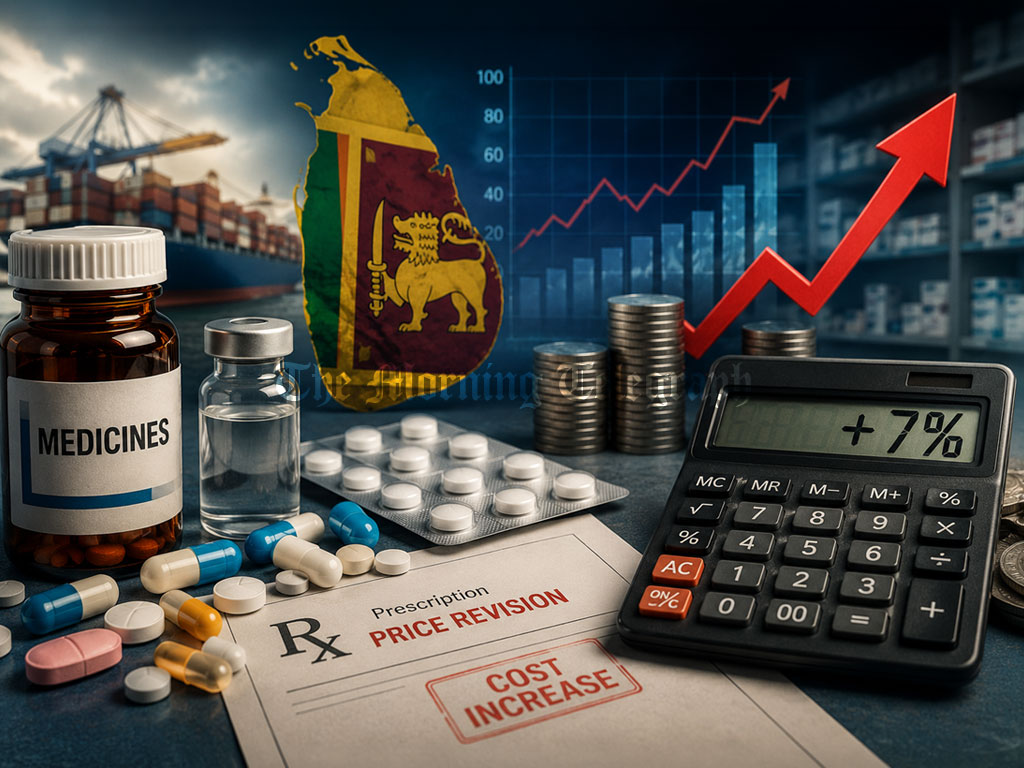
Drug prices in Sri Lanka may rise by up to 7% from June 30 as import costs climb and industry fears grow over potential medicine shortages.
Drug prices in Sri Lanka are likely to increase by between 6% and 7% from June 30, according to Health Minister Nalinda Jayatissa, as rising import expenses and production costs continue to place pressure on the pharmaceutical sector.
The proposed revision comes as the country faces higher operating costs across the health industry, with authorities permitted to review prices when exchange rate fluctuations exceed a specified threshold.

Sri Lanka can revise medicine prices when there is a change of more than 5% in the exchange rate following the previous adjustment. The last revision took place in 2023, when drug prices were reduced by 16%.
“The price revision will be considered on June 30. There could be a 6-7 percent price hike, but this has not been approved yet,” Minister Jayatissa told EconomyNext.
Industry stakeholders have expressed growing concern that Sri Lanka could face shortages of essential medicines if the National Medicines Regulatory Authority (NMRA) continues delaying price revisions despite rising costs.
According to industry representatives, the inability to adjust prices in line with market conditions has created increasing pressure on importers and suppliers operating within the pharmaceutical sector.
The concerns come as the Sri Lankan rupee has weakened in recent months, with the Central Bank’s indicative exchange rate declining by around 8% over the last six months.
As a country that relies heavily on imported medicines, Sri Lanka remains particularly vulnerable to exchange rate fluctuations and global supply cost increases.
Official data show that the island imported medicinal drugs worth US$ 667 million last year, representing approximately 85% of the total pharmaceutical market.
Under existing NMRA guidelines, the Authority may review and revise the maximum retail prices (MRPs) of medicines whenever exchange rate movements, whether upward or downward, exceed 5%.
While a pricing formula is currently in place to determine retail medicine prices, industry stakeholders maintain that the exchange rate remains the most significant factor influencing final costs.
With a decision expected on June 30, patients, healthcare providers, importers, and pharmacies are closely monitoring developments as authorities weigh the proposed increase against affordability concerns and the need to ensure a stable supply of medicines across the country.