By Roy Denish
Thirteen deaths exposed a system that looked away for years. As authorities rush to shut illegal elders’ homes, critics ask whether the real failure lies not with unlicensed operators alone, but with a state that relied on them while neglecting its most vulnerable citizens.
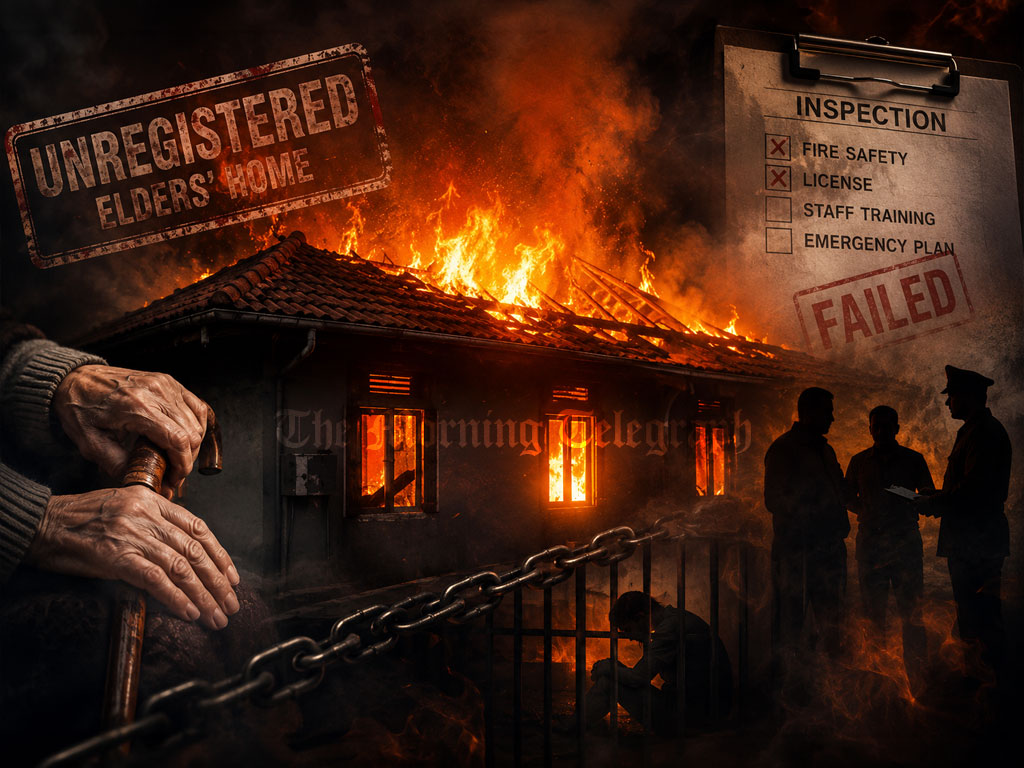
The devastating fire at an unregistered care facility in Galpatha, Kalutara, which claimed thirteen innocent lives, has finally forced the state into a flurry of retroactive enforcement. The subsequent nationwide crackdown on unlicensed elders’ homes, announced with great bureaucratic fanfare by the National Secretariat for Elders and the Ministry of Social Welfare, is a textbook case of locking the stable door after the horse has bolted. While officials mandate audits and threaten immediate closure for facilities failing to meet strict safety codes, the entire exercise rings hollow against the backdrop of a system that actively relied on these very institutions to mask its own profound failures.
For years, these unregistered homes operated in a regulatory twilight zone, known to all but ignored by those holding the pens of authority. The true scandal lies not merely in the horrific malpractice discovered within the charred remains—where staff admitted that psychiatric patients were routinely chained—but in the dark irony that state mechanisms were the primary beneficiaries of this illegal infrastructure. Local courts, police departments, and even the premier national mental health hospital regularly referred vulnerable individuals to these uncertified grounds, effectively outsourcing state responsibility to the cheapest, most dangerous bidder due to a chronic, systemic shortage of state-run specialized beds.
To observe government doctors regularly visiting an unregistered establishment to administer care, while the administrative arms of the same government look the other way on licensing, is to witness institutional hypocrisy at its absolute peak. The arrest of the facility’s chief manager on charges of criminal negligence is a necessary act of justice, but it must not serve as a convenient lightning rod to deflect attention from the institutional complicity of the state. If the ongoing provincial audits are to achieve anything beyond a temporary media diversion, they must address the gaping void in social infrastructure that created a market for these perilous sanctuaries in the first place, rather than simply penalizing the desperate operators who filled the vacuum.