By Roy Denish
The architecture of Sri Lankan sports administration remains chained to an era that the rest of the sporting world has long outgrown.
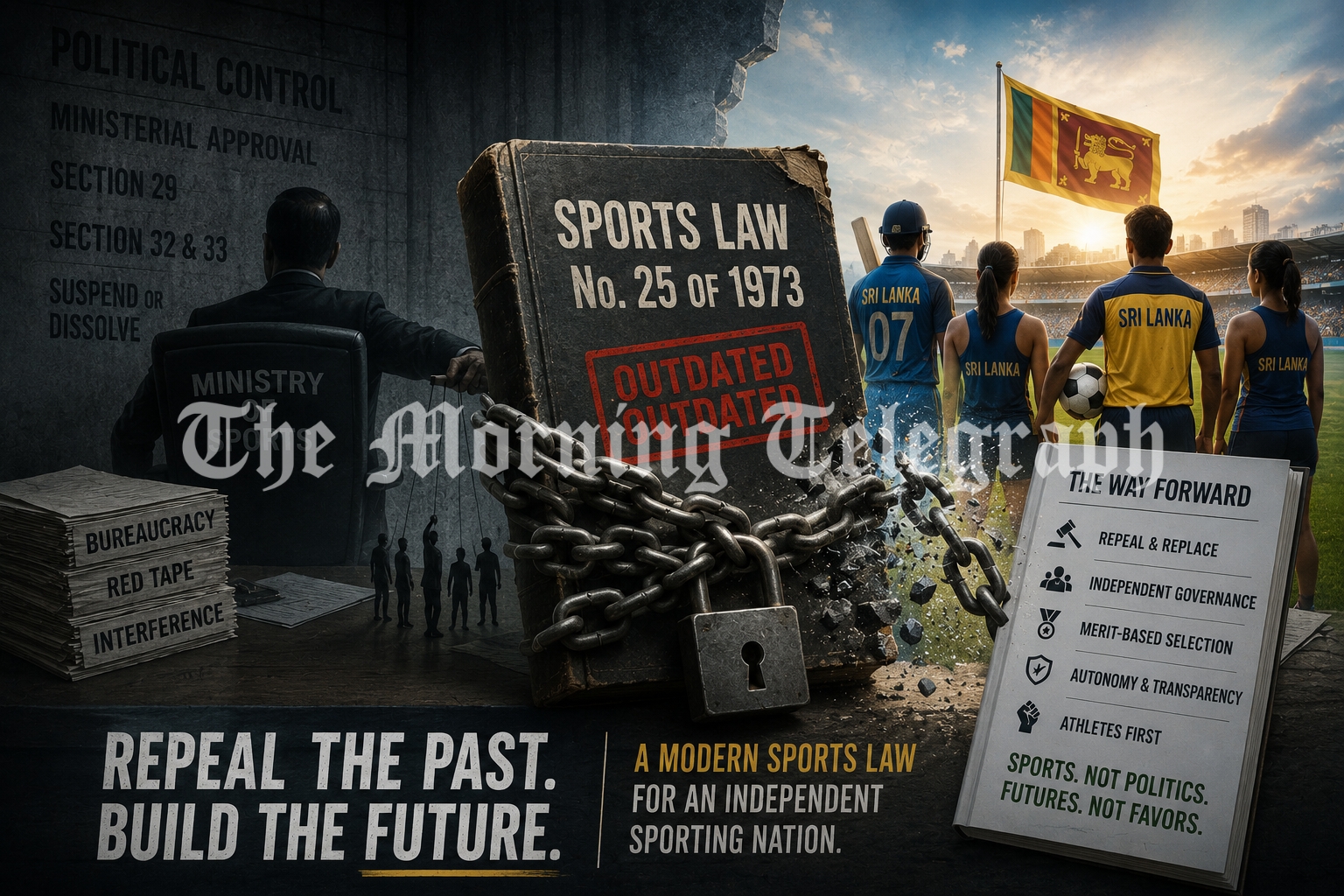
Enacted more than fifty years ago, the Sports Law No. 25 of 1973 was designed to foster development and manage resources for a young republic. Instead, it has evolved into a mechanism of political overreach, functioning as a bureaucratic chokehold that stifles independent governance and compromises the integrity of athletic selection. If the nation is to safeguard its sporting future, its governing bodies must stop seeking minor regulatory adjustments and collectively demand that the Ministry of Sports repeal this antiquated statute.
The most glaring flaw of the 1973 Act lies in its concentration of absolute authority within a political office. Under Section 29, national sports associations cannot legally exist without ministry registration, while Sections 32 and 33 grant the Minister of Sports the unilateral power to suspend or dissolve elected boards. This structural vulnerability has repeatedly placed Sri Lanka on a collision course with global governing bodies like the International Cricket Council and FIFA, whose charters strictly forbid government interference. When political maneuvers trigger international suspensions, it is the athletes, rather than the politicians, who pay the price through lost opportunities and derailed careers.
Equally damaging is the statutory requirement that any team or athlete selected to represent Sri Lanka abroad must receive final, written ministerial approval. This converts a matter of pure athletic merit into a political decision, undermining the authority of independent selection panels and exposing national teams to allegations of nepotism and favoritism. While recent gazette amendments have introduced well-intentioned updates regarding financial audits, age caps, and term limits, these changes are merely cosmetic. They treat the superficial symptoms of mismanagement while leaving the root cause—systemic political dependency—entirely untouched.
The path forward requires a fundamental shift in how sports are governed. National sports bodies must unite, shedding their compliance-driven mindset, to advocate for a complete legislative overhaul. They must urge the Ministry of Sports to dismantle the 1973 framework and replace it with a modern, independent statutory model. Sri Lanka needs an administration where experts, educators, and athletes manage sports according to international best practices, completely insulated from the shifting tides of political appointments. Only by repealing this outdated law can the nation build a sustainable, transparent ecosystem that truly respects the autonomy of its sporting institutions and unlocks the full potential of its athletes.