By Roy Denish
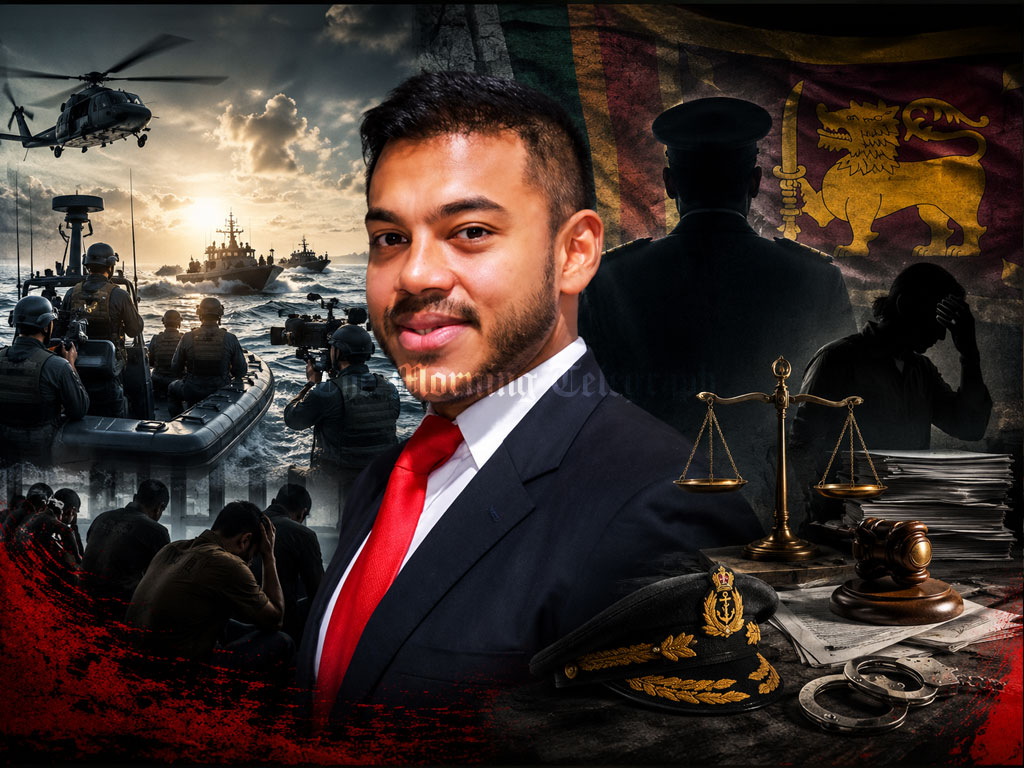
A former elite Navy sailor has made explosive allegations that exhausted frontline crews were used to stage a wartime propaganda video for Yoshitha Rajapaksa, exposing what he describes as a culture of political favoritism within the military hierarchy.
Veteran Sailor Breaks Silence On Wartime Conduct
A first-hand account from a veteran of the Sri Lanka Navy’s elite Special Combat Craft Squadron has exposed how the military hierarchy allegedly manipulated naval ethics to manufacture a wartime persona for Yoshitha Rajapaksa, the son of former President Mahinda Rajapaksa, during the final weeks of the nation’s civil war.
The whistleblower, identified as sailor Nuwan Munasinghe, detailed what he described as a culture of deep-seated sycophancy where top commanders prioritized political bootlicking over the welfare, morale, and operational realities faced by frontline personnel.

Special Treatment During Naval Training
According to Munasinghe, the favoritism began well before the war’s climax during Rajapaksa’s training period at the Trincomalee Navy camp.
While ordinary sailors were subjected to standard military discipline and conditions, Rajapaksa allegedly commuted to training from Colombo via helicopter whenever he wished.
“We were told that the water in Trincomalee was not suitable for him, so water was brought all the way from Colombo in a separate bowser solely for his personal use,” Munasinghe stated.
He further alleged that the institutional culture of favoritism extended to senior leadership.
“When he went jogging in the morning for exercise, the camp’s Commanding Officer would run behind him carrying his phone,” he said.
Exhausted Sailors Ordered Back To Sea
Munasinghe claims the situation escalated during the final two weeks of the war in May 2009, when intense fighting off the coast of Mullaitivu and Nayaru was reaching its peak.
At the time, he was deployed aboard the P-436 Dvora fast attack craft under the 4th Fast Attack Flotilla.
He described his crew as being “practically half-dead from exhaustion,” operating with minimal food, water, and sleep while only returning briefly to port for refueling before being sent back into combat operations.
Propaganda Video Allegedly Filmed During Combat Operations
During one such refueling stop in Trincomalee, the fleet was met by then Navy Commander Vice Admiral Wasantha Karannagoda and a state television media crew.
Rather than allowing the exhausted crews an opportunity to rest, Karannagoda allegedly ordered ten Dvora fast attack craft to immediately return to sea to facilitate the filming of a video featuring the President’s son.
Munasinghe recalled the Navy Commander allegedly acknowledging the sailors’ exhaustion while directing them to proceed.
“I know you are all exhausted, but what can we do? Ignore the fatigue and get ready,” he recalled Karannagoda telling the crews.
Fifteen-Minute Mission To Create Combat Image
According to Munasinghe, Rajapaksa then boarded his vessel before the fleet sailed just beyond the harbor entrance.
The boats remained at sea for approximately fifteen minutes while footage was recorded.
Munasinghe alleges the purpose of the operation was to create the impression that Yoshitha Rajapaksa was actively involved in directing maritime combat operations during the closing stages of the war.
“Because of him, morale in the Navy did not improve. In fact, almost all the officers were fed up during those days,” Munasinghe stated.
He named several senior officers, including Lieutenant Commanders Walgampaya, Annathugoda, Dasanayake, Hemantha, and Perera, as individuals who allegedly witnessed the incident.
Allegations Raise Questions About Military Integrity
The account paints a damaging picture of what Munasinghe describes as a period in which military leadership compromised institutional values in service of political interests.
His allegations suggest that naval resources, personnel, and operational priorities were used to support a political narrative rather than the immediate needs of frontline combat units.
Yoshitha Rajapaksa Faces Bribery Commission Investigation
The revelations emerge as members of the Rajapaksa family face increasing legal scrutiny across multiple fronts.
The Commission to Investigate Allegations of Bribery or Corruption recently arrested Yoshitha Rajapaksa over allegations connected to the origins of his naval career.
Investigators claim that his 2006 enlistment into the Navy’s Executive Branch and subsequent high-cost training in the United Kingdom bypassed standard qualification procedures and involved the unlawful use of state funds.
Following his arrest, the Colombo Chief Magistrate’s Court released him on three personal sureties of Rs. 5 million each while imposing a foreign travel ban.
Multiple Legal Challenges Facing Rajapaksa Family
Meanwhile, former Minister Basil Rajapaksa faces an active arrest warrant issued by the Colombo Fort Magistrate’s Court over the alleged misappropriation of Rs. 7.8 million from tourism bureau funds used to print political T-shirts during the 2014 election campaign.
He also faces a separate warrant from the Matara Court for failing to appear in proceedings relating to alleged illicit land purchases and remains subject to a travel ban.
Former President Gotabaya Rajapaksa has filed an urgent writ application before the Court of Appeal seeking to prevent the Criminal Investigation Department from carrying out any potential arrest actions against him.
In addition, the anti-corruption commission has filed a ten-count indictment in the Colombo High Court against former State Minister Shasheendra Rajapaksa.
He is accused of unlawfully pressuring the Office for Reparations to obtain Rs. 8.8 million in state compensation for an unauthorized structure that was destroyed during the Aragalaya protests.
Growing Demands For Accountability
The convergence of military-related allegations, corruption investigations, and ongoing court proceedings has intensified public scrutiny of the Rajapaksa family’s conduct in public office.
As legal processes continue, the latest claims by a former frontline sailor have added a new dimension to questions surrounding wartime conduct, institutional integrity, and the use of state resources during one of the most critical periods in Sri Lanka’s modern history.