Katunayake Melwa cement project faces scrutiny as UDA approvals, environmental risks and public protests raise serious legal questions.
Big Money Slipping Through Legal Gaps
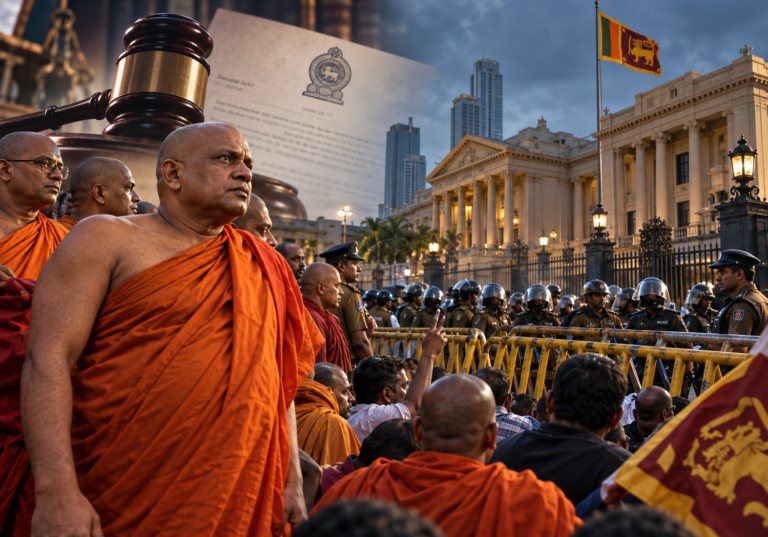
Katunayake Melwa cement project has triggered a major public backlash, raising serious questions that go beyond one environmental dispute and into the power of large-scale capital over state institutions.
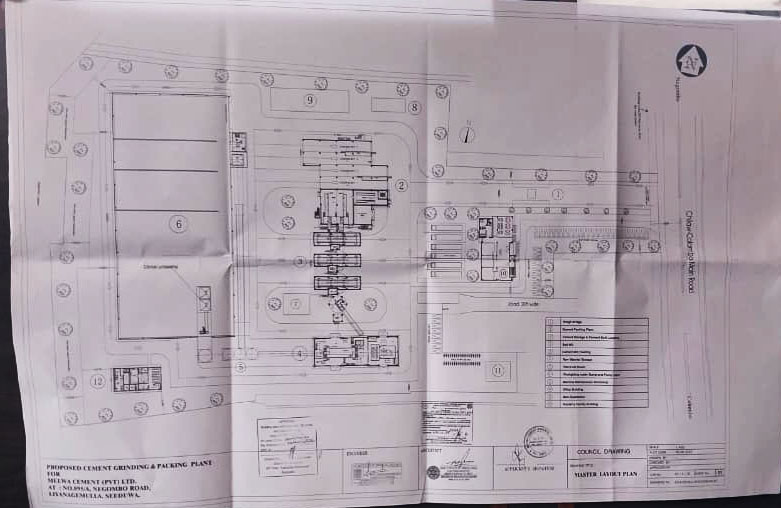
The controversy surrounds the proposed “Melwa Cement” manufacturing and packaging factory, allegedly being built under the guise of a tourist hotel in the Liyanagemulla area near the Katunayake 18th Mile Post. The protest has exposed deeper concerns over capital dominance and the way the state mechanism appears to function when powerful investors are involved.

The Melwa Group, operating as a family company including Periyasami Pillai Anandaraja, has already built major economic strength. It purchased a 4-acre plot in Colombo Port City for US$ 57.6 million and launched a massive mixed development project. That expansion now stands as strong evidence, critics say, that regulatory bodies such as the Urban Development Authority (UDA) and Central Environmental Authority (CEA) have set aside legal responsibilities and become flexible according to investor needs.
UDA Approval That Expanded Fast
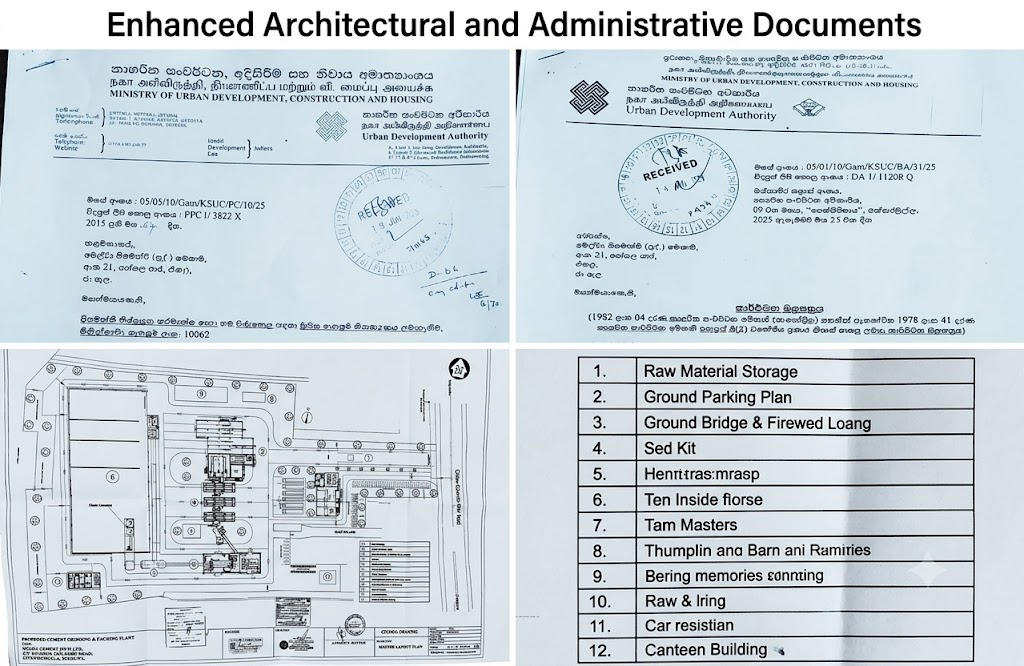
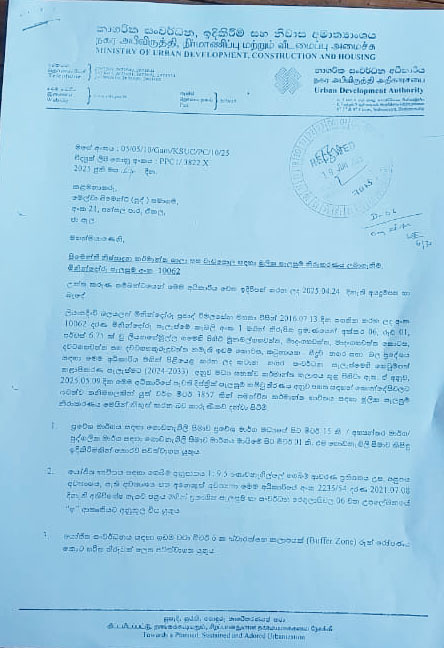
The conduct of the Urban Development Authority has now come under serious legal suspicion. According to documented evidence, on May 9, 2025, the UDA initially approved only a single-story building covering 3,857 square meters.
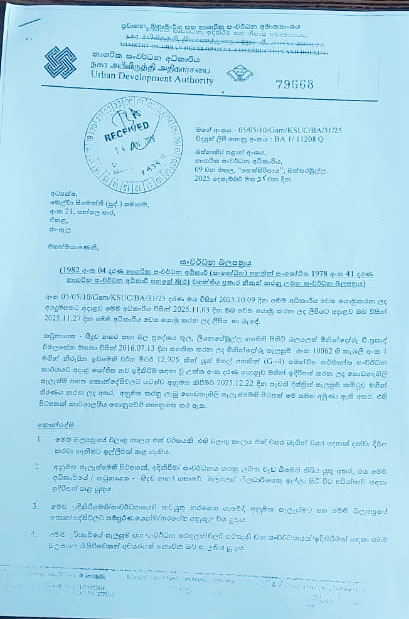
However, within just six months, the same authority granted permission to expand the project into a massive five-floor factory complex, marked as G+4, covering 12,925 square meters.
By approving such a major structural change despite public opposition, the UDA appears to have used legal loopholes to provide legal cover for large-scale business interests. The absence of a public information board at the construction site also amounts to a complete breach of mandatory transparency expected under urban planning law.
Environmental Law Under Pressure
Under the National Environmental Act, a cement factory of this scale must undergo a transparent Environmental Impact Assessment (EIA). The concern is even more serious because the facility borders the Liyanagemulla mangrove system, declared a protected zone through a special gazette, as well as the Negombo Lagoon and the sensitive Muthurajawela zone.
The alleged failure to properly consider cement dust impacts on Katunayake airport operations, children in nearby schools, the fishing community and investment zone workers is deeply troubling. It also raises questions over violations of the Precautionary Principle in Sri Lankan environmental law and the Public Trust Doctrine, which requires state institutions to protect the environment.
Ultimately, the Katunayake Melwa cement factory crisis is not merely about one factory. It reflects how multi-sector business giants may use capital power to influence the state mechanism and policy makers. As such dominance expands into projects such as Port City, ordinary people’s livelihood rights and environmental sustainability risk being sacrificed for investors. In the interest of public justice, the entire process must face an immediate independent legal and environmental audit.