Cardinal Ranjith death penalty stance raises questions over consistency, Nilantha Jayawardena and unproven mastermind claims after Easter Sunday.
The Cardinal Ranjith death penalty position has reopened an uncomfortable debate over consistency, evidence and the language surrounding Sri Lanka’s seven-year search for Easter Sunday justice.
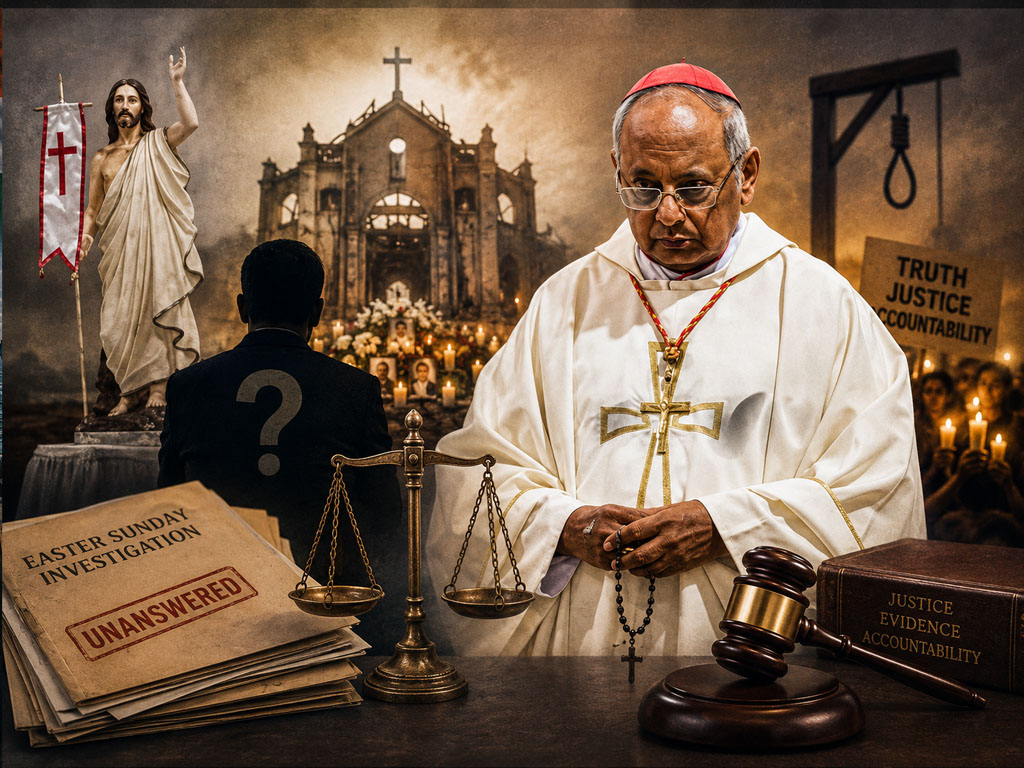
Cardinal Malcolm Ranjith has reaffirmed the Catholic Church’s opposition to capital punishment while continuing to demand answers over those ultimately responsible for the April 21, 2019 attacks.
That demand for truth remains legitimate.
But another question has become increasingly difficult to avoid. Has the pursuit of justice become entangled with an unproven theory of a hidden mastermind, even as Sri Lanka’s courts establish specific and legally defined forms of responsibility?
More than 260 people died when suicide bombers attacked three churches and three luxury hotels on Easter Sunday in 2019. The attacks also killed dozens of foreign nationals and left hundreds injured.
Seven years later, many of the questions haunting victims remain.
Who planned the bombings? Who assisted them? Who knew beforehand? Who failed to act? And was the extremist network responsible for carrying out the massacre acting alone, or did a wider conspiracy exist?
Get
Breaking News
First
on WhatsApp
Follow The Morning Telegraph for instant alerts, top stories and exclusive updates delivered straight to your phone.

Nilantha Jayawardena and What Courts Have Actually Established
Those questions become especially sensitive when discussing former State Intelligence Service chief Nilantha Jayawardena.
Jayawardena has repeatedly appeared in legal proceedings and public debate over failures preceding Easter Sunday.
However, the legal record must be described precisely.
The Supreme Court’s January 2023 fundamental-rights determination found senior state officials, including Jayawardena, responsible for failures connected to the attacks and ordered compensation for victims.
Jayawardena was ordered to pay Rs. 75 million. Subsequent proceedings have dealt with his compliance with that order.
That is an extremely serious judicial finding.
It is not, however, a finding that Jayawardena masterminded the Easter Sunday attacks, joined the terrorist conspiracy or deliberately helped the bombers execute their plan.
Father Rohan Silva and another petitioner have separately pursued Court of Appeal action seeking implementation of recommendations made against Jayawardena by the Presidential Commission of Inquiry. Their petition concerns alleged omissions and dereliction of duty.
That distinction matters.
There is a profound legal difference between intelligence failure, negligence, failure to communicate intelligence, deliberate facilitation and active participation in terrorism.
Each allegation carries a different evidentiary burden.
Public anger cannot erase those distinctions.
Easter Verdict Establishes a Specific Form of Responsibility
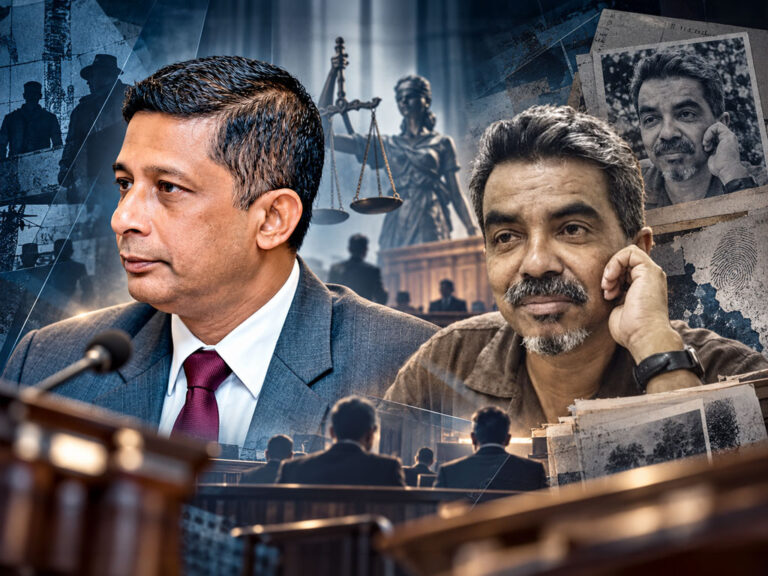
The issue became even more important after former Inspector General of Police Pujith Jayasundara and former Defence Secretary Hemasiri Fernando received death sentences on July 31, 2026.
The Colombo Permanent High Court Trial-at-Bar convicted them over criminal negligence connected to their failures to act adequately on intelligence concerning the Easter Sunday attacks. The verdict came through a majority decision of the three-judge bench.
The judgment therefore established a particular form of criminal responsibility.
It should not be transformed into something it did not establish.
The verdict against Jayasundara and Fernando does not prove the existence of a hidden political mastermind. Nor does it establish that every intelligence officer criticised over the security failures deliberately assisted the terrorist network.
Yet Cardinal Ranjith has continued to raise questions about whether those already identified represent the whole story.
In April, he again questioned whether political forces may have been involved and highlighted unanswered questions surrounding the identity of “Abu Hind” and the handling of intelligence material.
Those suspicions deserve investigation.
But suspicion remains different from proof.
Cardinal Ranjith Death Penalty Position Creates a Consistency Test
The Church’s position on capital punishment itself is not ambiguous.
Paragraph 2267 of the Catechism states that the death penalty is inadmissible because it attacks the inviolability and dignity of the person. The Vatican says the Church works for its abolition worldwide.
That principle should apply regardless of who stands accused.
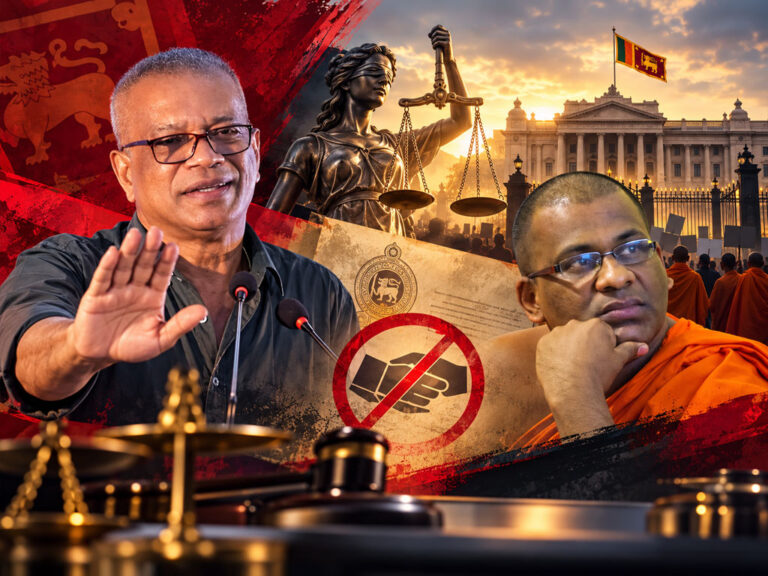
This is where a reported statement attributed to Catholic priest Father Rohan Silva becomes relevant.
The supplied account alleges that Father Rohan publicly called for Nilantha Jayawardena to be hanged.
The Morning Telegraph could not independently locate a primary recording, transcript or official Church document verifying the exact reported wording. Therefore, the allegation should not be presented as independently established fact.
What is documented is Father Rohan’s active legal campaign seeking action against Jayawardena over the Easter Sunday failures. He is a petitioner in proceedings asking authorities to implement recommendations against the former intelligence chief.
If the reported death-penalty statement is authentic, however, it creates an obvious question for Church leadership.
Can an institution insist that capital punishment violates human dignity while remaining silent when one of its priests publicly demands hanging for a person who has not been convicted of masterminding the attacks?
That question is about consistency, not guilt.
Justice Cannot Depend on Who the Accused Is
The answer cannot change depending on whether the accused is politically popular, unpopular, powerful or convenient to condemn.
The Easter Sunday victims deserve to know who planned the attacks.
They deserve to know who knowingly assisted the perpetrators.
They deserve to know whether officials deliberately obstructed investigations.
And they deserve to know whether a wider conspiracy existed.
But they also deserve a process that separates proven fact from theory.
If evidence exists showing a mastermind beyond those already identified, investigators should establish it.
If evidence proves a political conspiracy, prosecutors should bring it before court.
If evidence demonstrates that an intelligence officer deliberately assisted terrorists, authorities should prosecute that offence.
Until then, descriptions of criminal responsibility must remain tied to what the evidence and courts establish.
Vatican Speculation Cannot Replace Evidence Either
The same standard should apply to speculation surrounding Cardinal Ranjith himself.
The original commentary suggests that his latest reaffirmation of Catholic opposition to capital punishment may have followed pressure or reminders from the Vatican’s diplomatic presence in Colombo.
No evidence has been identified establishing that such intervention occurred.
The Church’s formal position does not require an external explanation anyway. Vatican teaching against capital punishment has been explicit since the 2018 revision of paragraph 2267.
Cardinal Ranjith’s rejection of the death penalty is therefore entirely consistent with established Catholic doctrine.
The legitimate question is whether that doctrine is applied consistently throughout the Church’s Easter Sunday campaign.
Financial Transparency Questions Also Require Evidence
The Easter tragedy has generated substantial fundraising and assistance efforts over several years.
The Archdiocese publicly provided bank accounts for donations intended to assist victims shortly after the attacks.
The original article also questions whether comprehensive audited accounts covering money collected in the victims’ name have been publicly disclosed.
That is a legitimate transparency question, but it should not become an allegation of misuse without documentary evidence.
If audited accounts exist, publishing them would help remove suspicion.
If they do not, explaining how contributions were received, allocated and monitored would strengthen public confidence.
Transparency protects institutions as much as it protects donors and victims.
Evidence Must Remain the Final Standard
The Catholic Church has every right to challenge governments and demand that the Easter investigation continue.
Cardinal Ranjith has every right to ask whether the complete truth has emerged.
Father Rohan Silva and victims have every right to pursue judicial remedies against officials they believe should face further investigation.
But religious authority cannot replace evidence.
Neither can political pressure.
If there is evidence of a mastermind, produce it.
If there is evidence of a wider conspiracy, establish it.
If an intelligence officer deliberately assisted the attackers, prosecute that case.
But where courts establish negligence, constitutional violations or dereliction of duty, those findings must not automatically be rewritten as terrorism or conspiracy.
The Cardinal Ranjith death penalty debate is therefore about something larger than punishment.
It is a test of whether the campaign for Easter Sunday justice will subject every accusation, including the allegation of a hidden mastermind, to the same evidentiary standard it demands from the state.
The victims deserve nothing less.
SOURCE:- SRI LANKA GUARDIAN