By Roy Denish.
Matale mass grave allegations revisit Gotabaya Rajapaksa’s command role, missing youth, forensic disputes and Sri Lanka’s impunity.
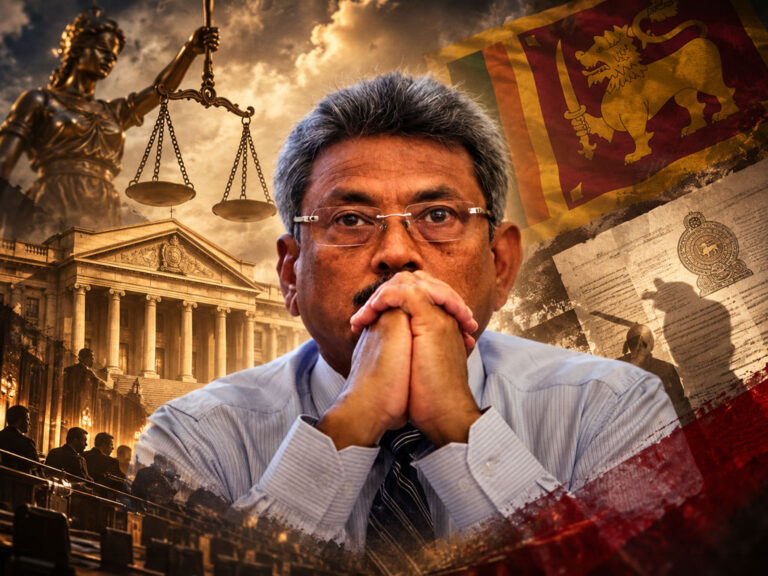
The Matale mass grave remains one of Sri Lanka’s darkest unresolved crime scenes, linking alleged state killings, missing youth, and accusations surrounding Gotabaya Rajapaksa’s command role.
K.G.G. Kamalawathie, a grieving mother from Sri Lanka’s central hills, carried one memory for decades. During the Marxist nationalist insurrection of the late 1980s, soldiers arrived at her home and dragged away her two young sons. She never saw them alive again.
Her search for answers took her from temporary military camps to local police stations. Over time, she identified the commanding authority of the Matale district camp as a young army colonel named Gotabaya Rajapaksa.
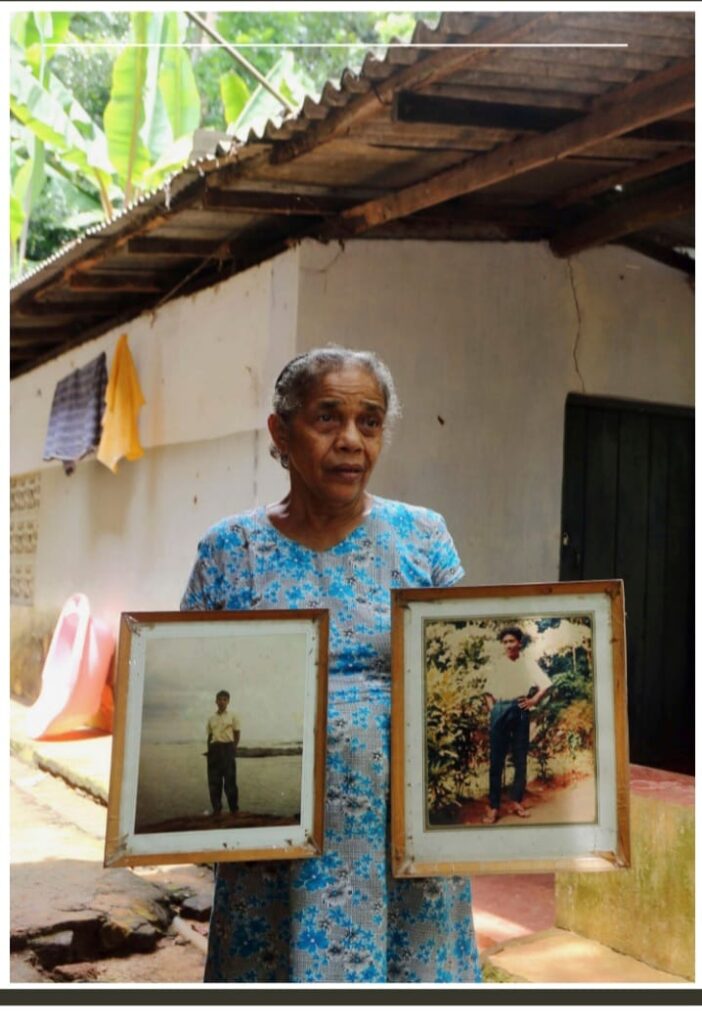
When construction workers accidentally unearthed 155 skeletal remains at the Matale Base Hospital in late 2012, Kamalawathie and hundreds of other aging mothers believed justice had finally moved within reach. Instead, they watched another state process bury their hopes.
A parallel presidential commission sent bone samples to a laboratory in Miami for carbon dating. That process produced a pre-1950 timeline. However, local forensic archaeologists had already noted signs of modern extrajudicial execution, including remains bound with modern metal wiring and skulls pierced by iron nails.
Allegations Around Gotabaya Rajapaksa’s Command Role
A comprehensive dossier compiled by the International Truth and Justice Project presents a grave allegation of command responsibility against Gotabaya Rajapaksa. It argues that his role in Matale placed him at the center of a security structure linked to disappearances, torture, and extrajudicial killings.
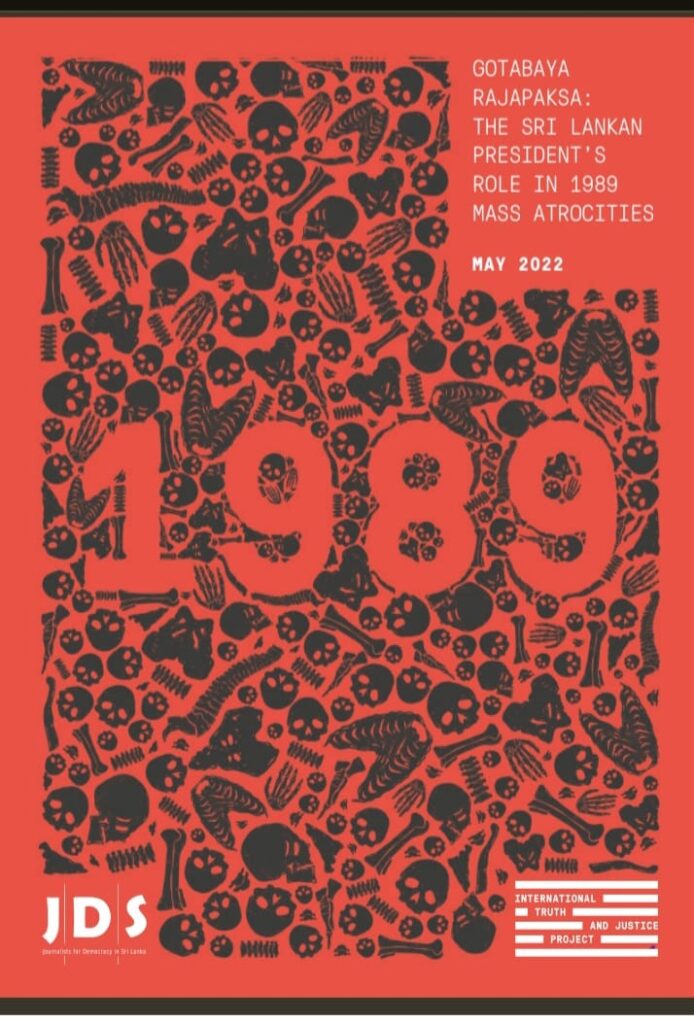
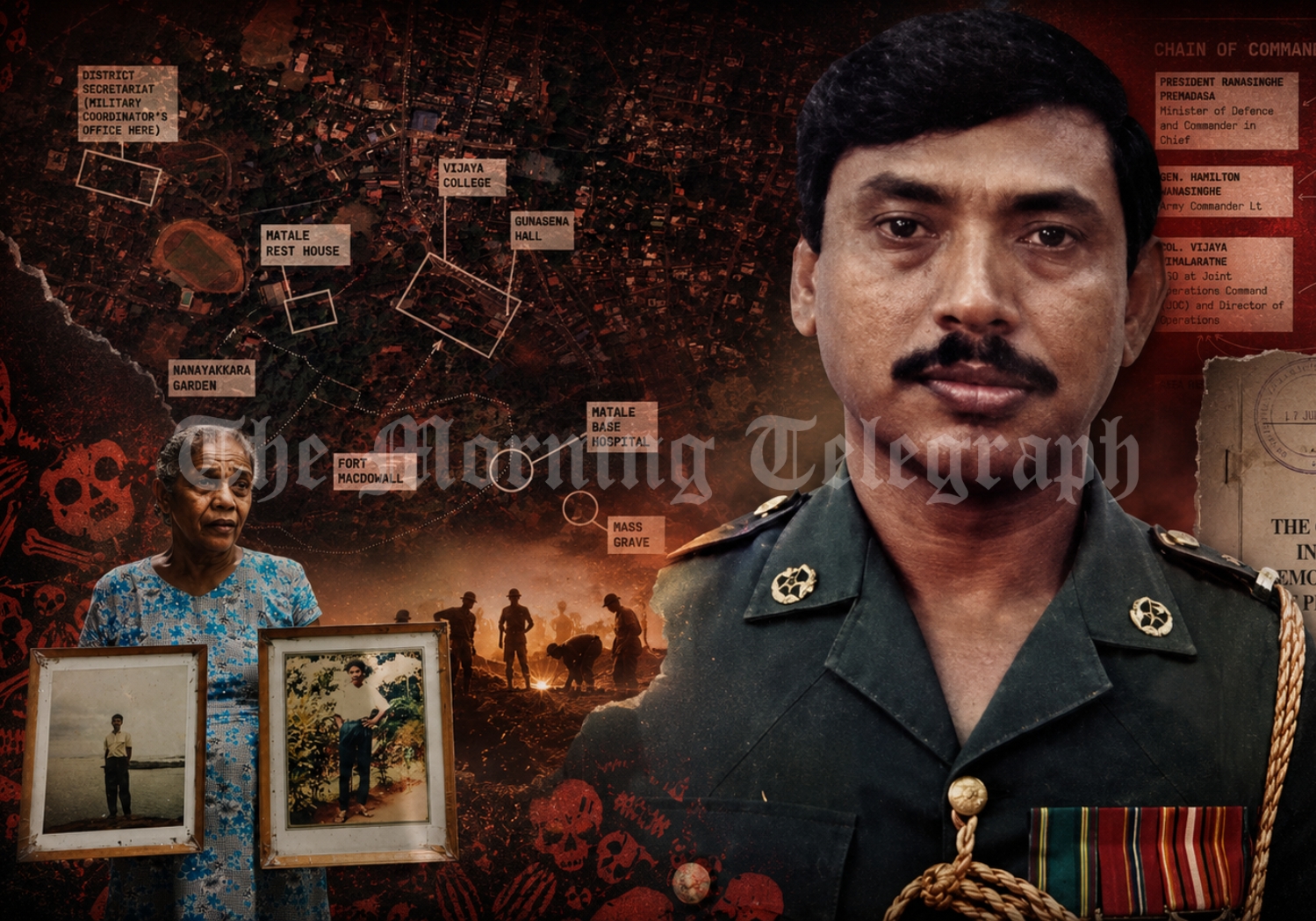
According to that dossier, Rajapaksa served as the Military Coordinating Officer and commanding authority for the Matale District from May 1989 to January 1990. During that period, he allegedly operated at the top of a decentralized counterinsurgency system.
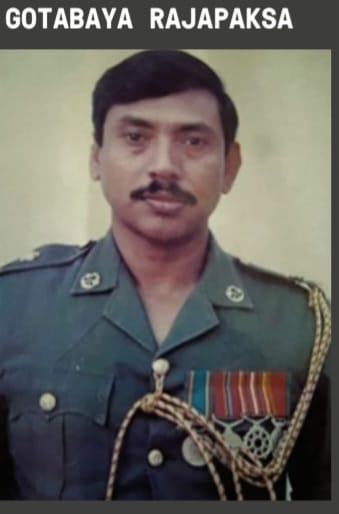
The investigation relies on insider military accounts and survivor testimony. It says his position gave him effective control over regular infantry units from the Gajaba Regiment, specialized police teams, and paramilitary squads.
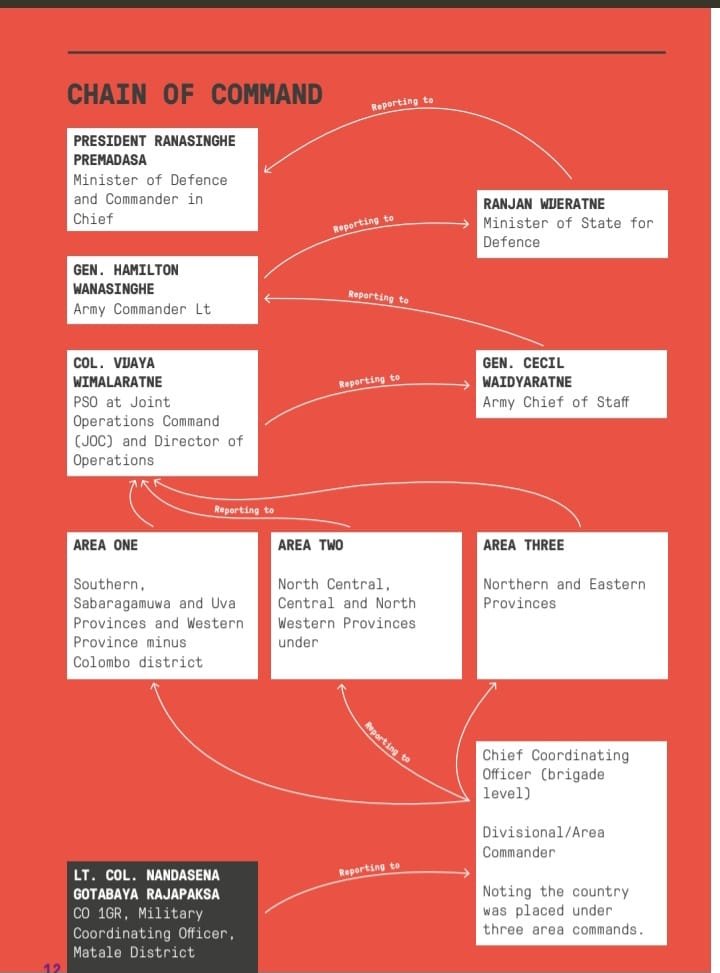
Because counterinsurgency deployments, search operations, and regional detention centers reportedly answered to his headquarters, the report argues that systematic detention, execution, and disposal of detainees could not have occurred without institutional clearance.
That allegation remains central to the Matale mass grave controversy. It turns the burial site from a forensic mystery into a question of command responsibility, state structure, and political protection.
A Hospital Grave Becomes A Forensic Crime Scene
The physical reality of those alleged crimes emerged decades later at the Matale Base Hospital. A quiet medical terrace became a chilling forensic site after construction workers clearing soil for a biogas unit uncovered human remains.
The 97-square-meter pit contained the packed, stacked, and layered skeletal remains of 155 individuals. Domestic forensic experts who led independent excavations reported that the victims had been stripped of clothing and personal belongings before burial.
The bodies appeared in unnatural, tight vertical rows. That arrangement suggested a deliberate disposal process rather than ordinary burial practice.

The remains also carried physical signs that matched survivor accounts from alleged detention centers in the district. Those locations included the Matale Rest House and the Administrative Secretariat, both repeatedly cited by human rights investigators.
Several skeletons emerged with thick modern metal wiring twisted around lower leg bones. Others appeared alongside heavy iron chains and links. Skulls showed blunt-force trauma, sharp cuts consistent with decapitation tools, and fractures that investigators linked to iron nails driven into palms, feet, and heads.
These findings made the grave impossible to dismiss as a routine historical burial. For the families, the bones looked like evidence of their children’s final hours.
The Scale Of The Missing
Determining how many people vanished or died under Rajapaksa’s various tenures remains difficult. Rights groups say state records were destroyed, concealed, or never properly maintained.
During his nine-month command in Matale, local human rights networks estimate that thousands of youths faced arbitrary arrest, torture, and extrajudicial execution. They place the broader death toll in the Central Province above 10,000 lives.
Decades later, Rajapaksa became Secretary to the Ministry of Defence from 2005 to 2015. During that period, the scale of alleged state violence expanded during the final stages of Sri Lanka’s civil war.
United Nations-linked assessments and human rights estimates have placed the number of civilian deaths and unaccounted deaths in the final months of 2009 in the tens of thousands, with figures often cited between 40,000 and 70,000 Tamil civilians.
Meanwhile, the United Nations Working Group on Enforced or Involuntary Disappearances has treated Sri Lanka as one of the world’s gravest disappearance cases. Broader estimates place unresolved missing persons cases between 60,000 and 100,000 since the late 1980s.
A large portion of those cases arose from intense military security sweeps, surrenders, and detention processes. Many families still do not know whether their loved ones died, survived, or disappeared into state custody.
The Kumaratunga Commissions And Lost Accountability
The survival of this culture of impunity did not belong to one regime alone. Successive administrations protected the military apparatus when accountability threatened state stability.
President Chandrika Kumaratunga came to power in the 1990s on a human rights platform. She promised accountability for state excesses and appointed three regional Zonal Commissions of Inquiry in 1994.
Those commissions investigated disappearances and extrajudicial killings that occurred between 1988 and 1994. They processed more than 27,000 formal complaints and established over 16,000 cases of state-linked enforced disappearance.
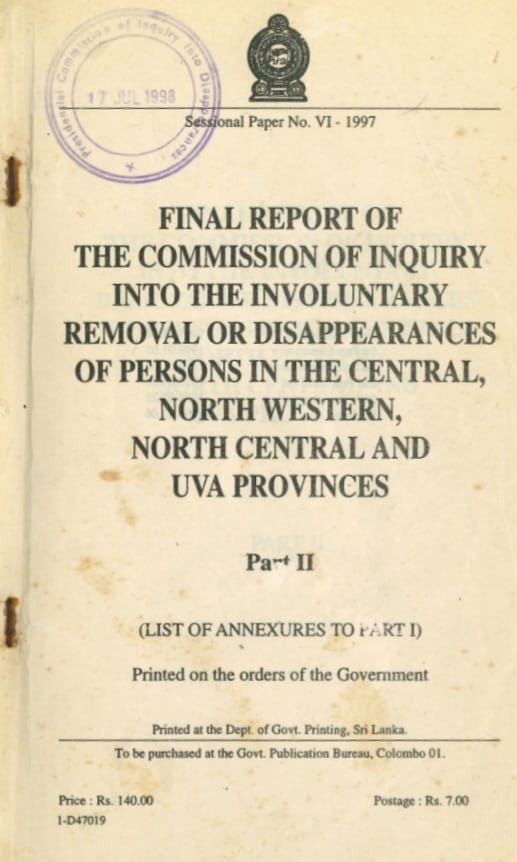
They also identified 1,681 specific military and police perpetrators. Those findings carried serious legal and political consequences.
However, the Kumaratunga administration did not fully publish the detailed final reports. It also did not aggressively empower the Attorney General’s Department to prosecute the military and police officers named in the investigations.
Instead, her government delayed, concealed, and archived sensitive files. Officials feared that mass prosecutions would damage the armed forces while the state fought the Liberation Tigers of Tamil Eelam in the north and east.
That decision broke the continuity of legal accountability. It allowed alleged perpetrators from the late 1980s to remain in uniform, rise through the ranks, and shield themselves behind the state.
How The Security State Evolved
The legacy of Gotabaya Rajapaksa is inseparable from the structural evolution of Sri Lanka’s security state. The country moved from localized counterinsurgency to a more industrialized apparatus of mass violence.
To understand that transformation, one must return to the operational mechanics of the late 1980s. The second JVP insurrection threatened to destabilize the southern and central political order. The state responded by suspending normal civilian safeguards.
Emergency Regulations and the Prevention of Terrorism Act gave military commanders sweeping administrative power. In Matale, that authority converged under Rajapaksa’s command structure, according to the allegations made by investigators.
His administrative directives allegedly shaped the life and death of citizens inside his geographic area. Arrest, interrogation, detention, transfer, and disappearance all moved through a militarized chain.
The International Truth and Justice Project and domestic human rights defenders have mapped the detention geography under his command. They argue that the operation did not resemble chaos by rogue units. Instead, they describe a disciplined and bureaucratic system of abduction, interrogation, and extermination.
Young men and women were allegedly taken from villages by plainclothes operatives in unmarked vehicles. Survivors repeatedly recalled green or white local government vans, a precursor to the later “white van” terror associated with the post-2005 period.
Detention Centers And The Machinery Of Fear
After abduction, detainees reportedly moved into regional holding centers. At the Matale Rest House, which the state had requisitioned as an interrogation hub, investigators say detainees faced a strict internal system.
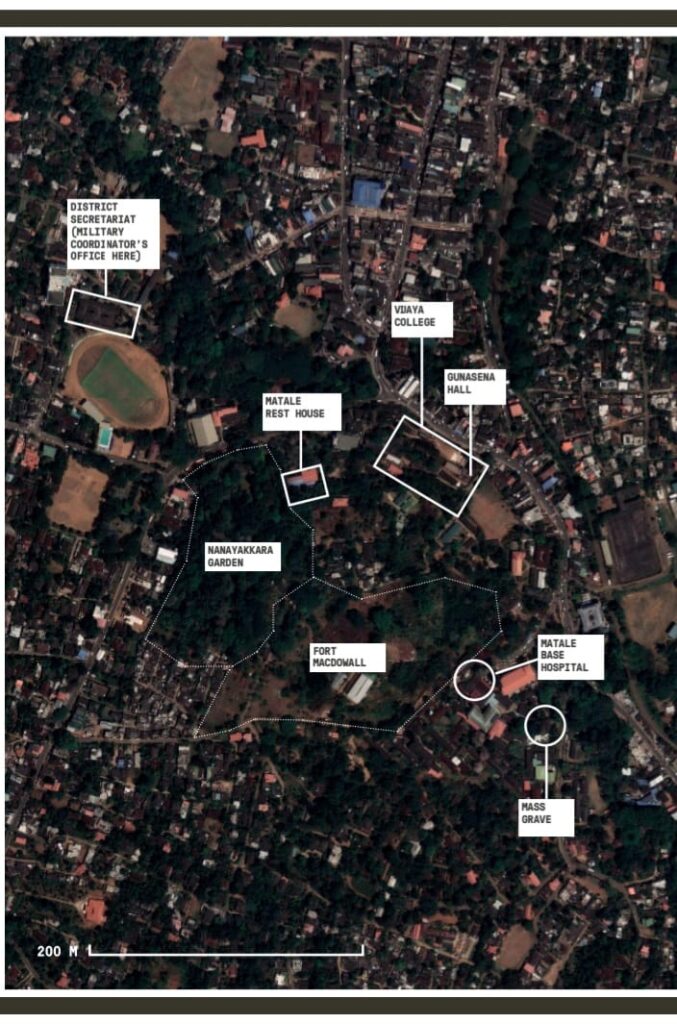
Logbooks, rooms, and physical sectors allegedly divided detainees according to intelligence value. Some were questioned for information. Others were marked for prolonged torture or death.
Survivors who escaped or bribed their way out described an environment where the sounds of suffering became part of daily military life. They said interrogations occurred with the knowledge of officers inside the command system.
The alleged torture had two main purposes. First, interrogators wanted operational intelligence about local JVP cells. Second, they sought to destroy the detainee physically and psychologically.
One method, known as the “sky swing,” became notorious. Detainees had their hands tied behind their backs, their ankles bound, and their bodies lifted upside down by ropes attached to a ceiling beam.
While suspended, they were beaten with thick polyvinyl chloride pipes filled with river sand. Rights groups say interrogators used the method to crush muscle tissue and rupture internal organs while reducing visible wounds.
That cruelty served a purpose. It prolonged interrogation while minimizing open injuries that could cause a detainee to die too soon.
Torture Allegations And Forensic Echoes
For detainees judged uncooperative, the violence allegedly escalated to permanent mutilation. Interrogators used rusted pliers to extract fingernails and toenails.
If detainees remained silent, they allegedly forced concentrated chili powder slurry into eyes, nostrils, ear canals, and genitals. The method caused suffocating chemical burns and pushed victims into extreme trauma.
Witness testimony preserved in international legal archives describes these practices as part of a chain of command. Intermediate officers allegedly reported progress back to the central military coordinating office.
The Matale hospital pit gave those testimonies a physical echo. Investigators found iron nails intertwined with bone fragments. Those findings supported allegations that crucifixion-style torture occurred inside the district.
The grave also carried signs of blunt-force trauma, binding, stripping, and organized disposal. For families, those details did not feel abstract. They resembled the final stage of a system they had heard about for decades.
The state, however, did not treat the findings as a direct path to prosecution. Instead, the legal battle shifted toward dates, samples, and scientific interpretation.
Why The Hospital Grounds Mattered
The move from torture to execution required an organized system for disposing of human remains. The choice of the Matale Base Hospital grounds appeared strategic.
A hospital perimeter provided state control, medical cover, and reduced public suspicion. It also helped mask the odor of decomposition. Because hospitals processed biological waste, night-time digging and vehicle movement could pass with less attention.
Forensic evidence also showed that the bodies had been stripped before burial. That detail mattered deeply.
By removing sarongs, shirts, amulets, and identification documents, those responsible made future identification far more difficult. If the pit surfaced years later, the remains would appear as an anonymous mass of bone.
That is exactly what happened. Families recognized the pattern, but the domestic system demanded scientific certainty. Without clothing, documents, or personal effects, investigators faced a deliberate barrier.
The burial method showed planning. It suggested that the perpetrators expected future discovery and tried to prevent the dead from returning as named victims.
The Carbon Dating Dispute
The legal strategy used by successive Sri Lankan administrations has relied on parallel processes, scientific disputes, and administrative delay. The response to the 2012 excavation offers a clear example.
The Mahinda Rajapaksa administration appointed a presidential commission after the grave became public. That move created a process that operated alongside the magistrate’s criminal case.
Bone samples later went to a Miami laboratory for carbon dating. The report suggested a pre-1950 timeline. State-linked narratives quickly used that result to argue that the grave had no connection to the late 1980s disappearances.
For the families, the conclusion felt like another act of erasure. It contradicted the findings of local forensic experts who had examined the site, artifacts, and trauma patterns.
Human rights groups also challenged the conclusion. They argued that sample selection and environmental contamination could distort radiocarbon dating.
According to critics, groundwater near the old hospital environment may have exposed porous bone to older organic carbon. That contamination could mask modern radiocarbon signals and artificially age the samples.
The state’s reliance on the carbon report also ignored physical artifacts inside the grave. Critics argued that a pre-1950 burial could not easily explain modern industrial metal wire, standardized iron links, and cut marks consistent with later tools.
The Matale Mass Grave And State Denial
The Matale mass grave therefore became more than a forensic dispute. It became a test of whether the Sri Lankan state would confront evidence against itself.
The official narrative pushed through state-controlled and sympathetic outlets framed the site as a historical anomaly. That story attempted to sever the burial pit from the late 1980s.
Families of the disappeared saw something different. They saw the state using science selectively to deny memory, block prosecution, and discredit testimony.
International scientists and human rights groups did not accept the state’s conclusion as final. They argued that carbon dating could not stand alone when other evidence pointed toward modern execution.
The dispute also exposed a familiar pattern. When physical evidence threatened powerful military or political figures, the state created a new body, delayed the legal process, and moved the argument into technical terrain.
That strategy did not clear the names of the missing. It only made justice harder to pursue.
Rival Regimes, Shared Protection
The suppression of accountability cannot be viewed as the work of one regime alone. Rival political factions repeatedly protected the security state when truth threatened military morale or political survival.
Kumaratunga’s rise carried a powerful moral promise. She campaigned on the grief of mothers like Kamalawathie and vowed to confront the deep structures accused of killing thousands of youths.
Her Zonal Commissions initially appeared to mark a major turn toward transitional justice in South Asia. They gathered testimony, identified perpetrators, and created a documentary foundation for prosecutions.
Yet the tragedy unfolded after the commissions completed their work. The names and evidence carried explosive consequences for the armed forces.
The administration feared that mass prosecutions would trigger an institutional crisis while the war against the LTTE continued. To protect army morale and state stability, political leaders chose delay over justice.
As a result, a historic opening became a sealed archive. The decision damaged public trust for decades.
It also helped create a political culture in which commissions investigated crimes, families testified, perpetrators were named, and prosecutions rarely followed.
From Matale To The Defence Ministry
By shelving the Zonal Commission findings, the Kumaratunga government effectively gave alleged perpetrators from the late 1980s an unwritten guarantee of immunity.
Officers accused of commanding torture centers or directing mass burials were not removed from rank in any large-scale process. Many remained inside the state system. Some gained further operational experience.
This continuity became most visible in Gotabaya Rajapaksa’s career. After early retirement in 1991, he spent more than a decade in Southern California as an information technology administrator.
In 2005, he returned to Sri Lanka and became Secretary to the Ministry of Defence under his brother Mahinda Rajapaksa’s presidency.
As Defence Secretary, Rajapaksa inherited a military structure that had largely escaped accountability for earlier abuses. Rights groups argue that methods refined during the JVP crackdowns later reappeared during the final years of the civil war.
Unacknowledged detention, systematic torture, enforced disappearance, and intimidation of dissidents returned in a more modern form. The “white van” abductions that terrorized Colombo and Jaffna between 2006 and 2015 echoed the earlier green and white van abductions reported in Matale.
The Final War And The Disappeared
This certainty of immunity shaped the final offensive in Mullaitivu in 2009. United Nations investigations documented credible allegations that government forces shelled hospitals, food distribution points, and designated safe areas.
Civilians trapped inside Tiger-controlled territory became disposable in military calculations. The state described the campaign as a rescue operation, but survivors and rights groups described mass civilian death.
The most haunting allegations involve surrender. Thousands of people, including political administrators and surrendered combatants, walked out of the conflict zone carrying white flags.
Some had reportedly surrendered through arrangements involving international intermediaries. After reaching military-controlled screening points, many disappeared.
Their fate remains unacknowledged. Families still seek lists, remains, detention records, and answers.
The pattern resembled the older architecture of disappearance. The state denied custody, withheld records, and forced families into an endless search.
For critics, the line from Matale to Mullaitivu is not symbolic. It reflects institutional continuity. A system that escaped justice in the late 1980s later operated at national scale.
An Unresolved National Wound
Sri Lanka’s unresolved disappearance crisis places the country under permanent international scrutiny. The minimum scale alone is staggering.
United Nations mechanisms and human rights bodies have documented thousands of cases. Broader estimates suggest between 60,000 and 100,000 people may have disappeared across different phases of conflict and political violence.
That number represents more than a statistic. It is an ongoing war against memory.
Families do not only demand compensation. They demand bodies, names, records, prosecutions, and truth. They want the state to admit what happened after arrest, surrender, interrogation, and transfer.
In Matale, relatives of those believed to be buried in the hospital grave remain trapped in suspended grief. The domestic legal system has not moved the case toward meaningful criminal accountability.
Successive Attorneys General have not transformed the forensic files into a major prosecution process. Meanwhile, the Office on Missing Persons, created under international pressure, has faced sustained criticism from victim groups.
Families argue that administrative recognition and compensation cannot replace criminal truth. Money cannot substitute for the name of a grave.
Citizenship, Exile And Legal Evasion
Gotabaya Rajapaksa’s citizenship history also shows how modern political actors move across legal systems to preserve immunity.
He acquired United States citizenship in 2003. Rights groups later argued that this complicated some legal pathways when activists tried to pursue accountability during his international travel.
In 2019, he had to renounce his United States citizenship to meet constitutional requirements for Sri Lanka’s presidency. That decision helped him run for office, but it also removed one layer of international protection.
In 2022, after an economic collapse triggered a historic civilian uprising, Rajapaksa lost executive power. Protesters overran symbols of state authority, and he fled the country before resigning.
His stays in Singapore and Bangkok exposed the limits of his global mobility. Foreign governments treated his presence as temporary. No clear democratic safe haven emerged as a permanent solution.
After that fall, reports said Rajapaksa sought to restore his United States citizenship. Human rights advocates warned that any reversal of a voluntary renunciation could create a haven for a former commander accused of mass atrocities.
The issue remains larger than immigration law. It asks whether powerful figures can move between passports, offices, and jurisdictions while victims remain trapped at grave sites.
The Architecture Of Impunity
The story of the Matale mass grave is not only about one burial pit. It is a case study in how state power can kill citizens, erase evidence, and freeze justice for generations.
The alleged crimes began with abduction. They moved through detention, torture, execution, stripping, burial, record destruction, scientific dispute, and political delay.
At each stage, the state retained control. It controlled the vehicles, camps, documents, grave sites, commissions, samples, and legal files.
That is the architecture of impunity. It does not depend only on one officer or one president. It survives because rival governments protect the same security apparatus when accountability becomes politically dangerous.
For Gotabaya Rajapaksa, the allegations surrounding Matale remain central to his contested legacy. They connect his early military career to later accusations from the civil war period and to wider claims about Sri Lanka’s unresolved disappearances.
For families like Kamalawathie’s, the issue is simpler. Their sons vanished. A grave appeared. The state still has not told them the truth.
As long as the Matale mass grave remains outside a fully independent international forensic process, and as long as command hierarchies avoid criminal scrutiny, the dead will not rest. The ghosts of 1989 will continue to haunt Sri Lanka’s future.
#MataleMassGrave #GotabayaRajapaksa #SriLankaDisappearances #HumanRights #JusticeForTheMissing #SriLankaNews #CommandResponsibility #MassGraves #TransitionalJustice #TheMorningTelegraph