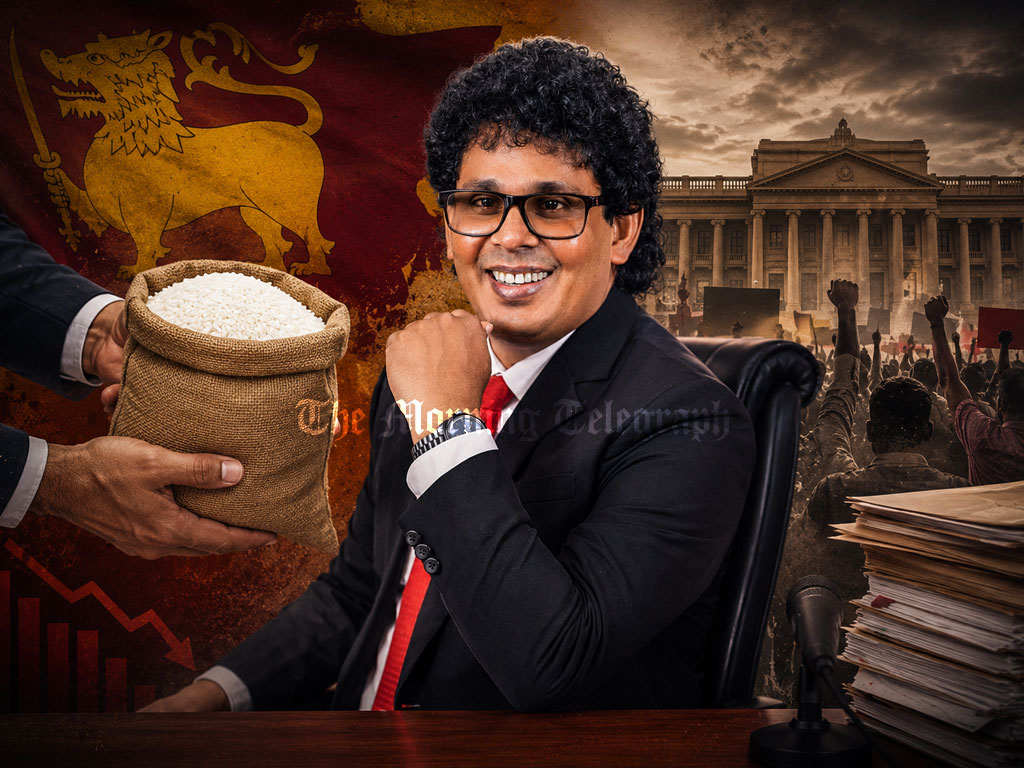
The NPP government’s rice distribution scheme and growing disputes with public servants, farmers and trade unions are raising questions about its political direction.
The NPP government is facing mounting criticism after its controversial rice distribution scheme reignited political debate, with opponents claiming the administration is alienating many of the very groups that helped bring it to power.
Trade Minister Wasantha Samarasinghe has sparked widespread discussion by announcing a scheme to provide 20 kilograms of rice to state employees on concessionary payment terms. Opposition politicians have seized on the initiative, describing it as an insult to public servants. They argue that before the election the National People’s Power (NPP) promised to make Japanese vehicles affordable for ordinary government employees, yet is now offering subsidized bags of rice instead.

The government may have hoped to achieve two objectives simultaneously, clearing surplus rice stocks that could otherwise remain unsold and result in significant financial losses while also winning favour among public sector workers. However, the strategy appears to have backfired. An old pre-election video of Samantha Vidyaratne has resurfaced online, showing him criticizing the previous administration for distributing rice to state employees under similar circumstances.
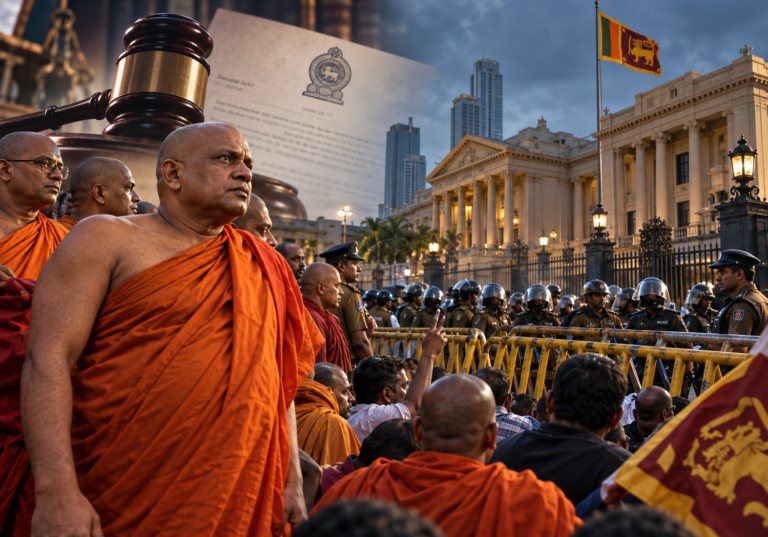
Sri Lankan governments have often been accused of abandoning the very political forces that helped them secure power. S.W.R.D. Bandaranaike, the founding leader of the Sri Lanka Freedom Party (SLFP), successfully mobilised what became known as the Pancha Maha Balavegaya, or Five Great Forces, to win the historic 1956 election. These groups comprised the Buddhist clergy, Ayurvedic physicians, teachers, farmers and workers.
Over time, however, the SLFP gradually lost the support of these influential groups as its ideology and policies evolved under successive leaders. Many shifted their allegiance to other political parties, particularly the United National Party (UNP), contributing to the SLFP’s repeated electoral setbacks. The UNP also built strong support across both urban and rural communities before eventually experiencing a similar decline. Today, both the SLFP and the UNP remain shadows of their former political strength. Likewise, the Sri Lanka Podujana Peramuna (SLPP) alienated much of its support base through allegations of corruption and abuse of power and is now struggling to regain political relevance.
Critics argue that the JVP-led NPP may also be underestimating its own political vulnerability. The Janatha Vimukthi Peramuna secured only about three percent of the national vote at the 2020 General Election. Its dramatic rise to power just four years later was largely driven by an overwhelming protest vote against the previous administration. Many of the floating voters who helped elect Maithripala Sirisena in 2015 and Gotabaya Rajapaksa in 2019 are widely believed to have shifted their support to the NPP during the 2024 elections.
Sri Lanka’s proportional representation electoral system generally favours coalition politics, leaving no single political party with a permanently dominant vote base. Floating voters continue to determine election outcomes, making it essential for governments to maintain the confidence of swing voters while also retaining the backing of organised groups such as farmers’ associations, trade unions, professional bodies and religious organisations.
Although the Opposition may struggle to convince state employees that the rice distribution initiative itself is offensive, critics argue that the government has unsettled public servants in other ways. Trade unions claim state employees have increasingly become convenient scapegoats whenever government policies encounter criticism or fail to achieve expected results. Last year, Minister K.D. Lal Kantha described the public service as a “den of thieves” shortly after the NPP granted a substantial salary increase to state workers.
Government leaders, including President Anura Kumara Dissanayake, have also publicly criticised state employees on several occasions. While such remarks may be intended to demonstrate accountability and resonate with the wider public, critics argue that they have instead demoralised many government workers who overwhelmingly supported the NPP at the last three elections, as reflected in the large number of postal votes it received.
The administration has also found itself in confrontation with several trade unions and professional organisations voicing dissent. The Government Medical Officers’ Association (GMOA) remains engaged in a dispute with the government, claiming its concerns have been ignored. Rather than addressing the issues raised, NPP politicians have repeatedly criticised the GMOA whenever it resorts to trade union action. University academics have likewise expressed dissatisfaction, arguing that taxes leave them with little disposable income. Some have remarked that they may eventually qualify for Aswesuma welfare benefits intended for low-income families.
Among the government’s strongest critics today are paddy farmers. They accuse the administration of failing to ensure affordable fertilizer supplies, purchase their harvests or protect them from the dominance of powerful rice millers. Deputy Minister T.B. Sarath further fuelled tensions by stating that genuine farmers were not protesting and that those demonstrating were illicit liquor drinkers pretending to be farmers. Although he later clarified that his remarks were aimed at Opposition supporters allegedly infiltrating farmer protests rather than genuine cultivators, his explanation failed to calm widespread anger.
Sri Lankan political history has repeatedly demonstrated how governments often fall victim to the arrogance that accompanies power. Many administrations have weakened themselves long before their political opponents regained strength. Critics argue that the NPP government now risks following a similar path. Whether it recognises these warning signs and changes course remains one of the key political questions facing the country.