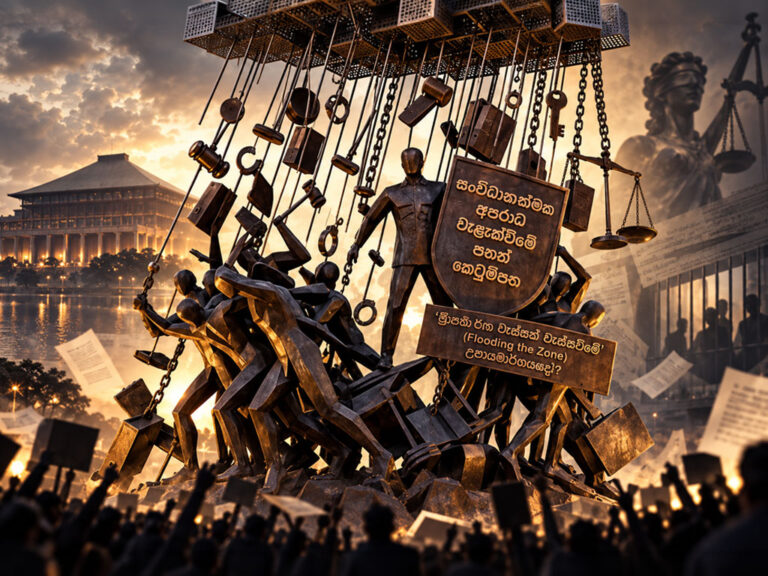
Judicial Service Association meeting proceeds amid resignations, transfers and claims of pressure over plans to extend the Chief Justice’s tenure.
The Judicial Service Association meeting scheduled for today (11) has become the centre of a deepening crisis within Sri Lanka’s judiciary.
The special general meeting is expected to take place at the Kaduwela Magistrate’s Court premises, according to journalist Saroj Pathirana through his “Sandeshaya” YouTube channel.
The controversy follows the government’s reported effort to introduce a constitutional amendment extending the Chief Justice’s tenure by two years.
A majority of Judicial Service Association judges reportedly oppose the proposal. They view it as a serious threat to judicial independence and the separation between the executive and judiciary.

Judicial Service Association Meeting Follows Resignation
The crisis intensified after JSA President Pasan Amarasena resigned from his position.
Reports suggest that Amarasena supported the government’s proposal. However, opposition from the Executive Committee and a majority of members reportedly led to his resignation.
In his resignation letter, Amarasena made serious allegations against the Secretary and other officials.
He accused them of attempting to conduct an “unlawful” meeting without following proper procedures or confirming the membership.
JSA Secretary Suranga Munasinghe rejected those claims. He also confirmed that the meeting would proceed as scheduled.
The internal dispute has exposed deep divisions within the association at a time when judges are preparing to discuss one of the most sensitive constitutional issues affecting the judiciary.
Claims of Pressure, Threats and Sudden Transfers
Saroj Pathirana has also reported that judges opposing the tenure extension face several forms of pressure.
These reportedly include the suspension of salary increments, the cancellation of overseas travel and threats of disciplinary inquiries.
Senior judicial officers Isuru Nettikumar and Uddala Suwandurugoda, who allegedly opposed the proposal, have also received sudden transfers.
The meeting was originally planned for the Colombo Magistrate’s Court premises. However, organisers moved it to Kaduwela after authorities denied permission to use the original venue.
Members are expected to hold a secret ballot on the proposal to extend the Chief Justice’s tenure.
The ability of the association to conduct the vote despite the venue change and the President’s resignation will test its internal strength.
Key Figures in the Judicial Crisis
President Anura Kumara Dissanayake is identified in the report as the political authority behind the proposed constitutional amendment.
The proposal reportedly seeks to extend the tenure of current Chief Justice Preethi Padman Surasena.
Pasan Amarasena has resigned as JSA President, while Secretary Suranga Munasinghe insists that the special meeting remains valid.
Meanwhile, Isuru Nettikumar and Uddala Suwandurugoda have become central figures in the dispute following their transfers.
The Judicial Service Association now faces the challenge of representing judges who oppose the proposal while managing a serious internal leadership conflict.
Judicial Independence Faces a Critical Test
Several major concerns now surround the controversy.
Critics view the proposed constitutional amendment as executive interference in the judiciary.
The resignation and internal accusations have also raised questions about whether established procedures for handling dissent have broken down.
Reported pressure tactics and transfers have created fears that judges who oppose the proposal could face retaliation.
The Judicial Service Association meeting itself has therefore become more than an internal gathering. It is now a test of whether judicial officers can freely debate changes affecting the country’s highest courts.
The outcome could shape the future of judicial independence in Sri Lanka.
It may also determine whether the dispute develops into a wider confrontation between the executive and judicial branches.