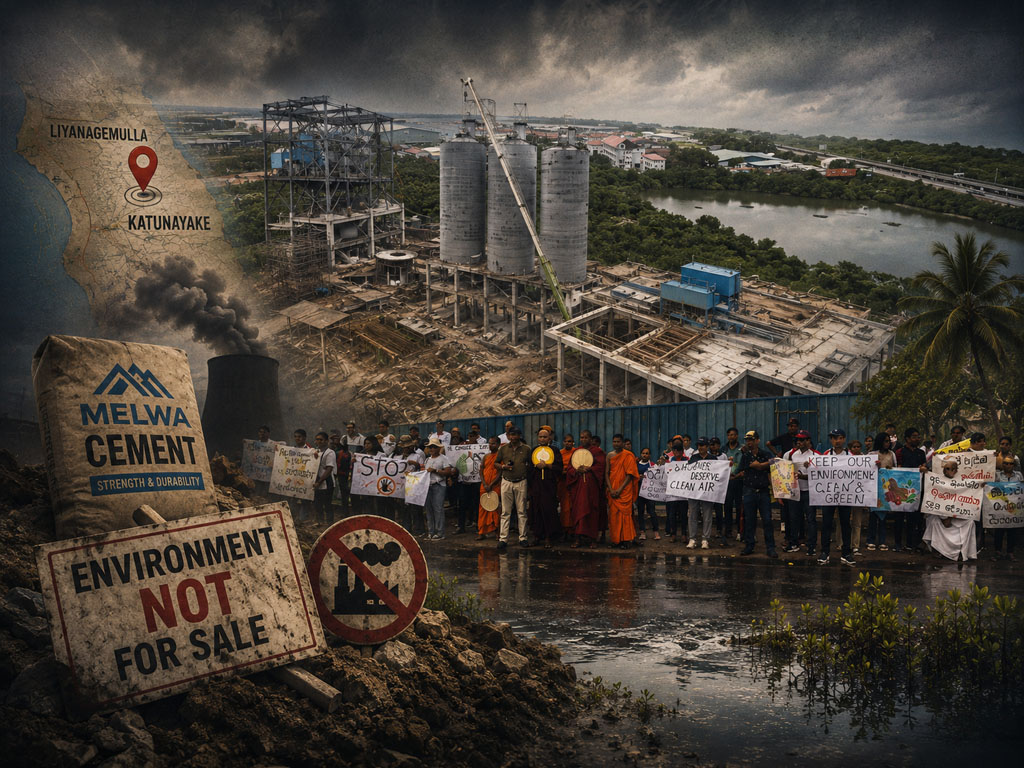
The Katunayake cement factory protest raises questions over approvals, lagoon encroachment, pollution risks and a project allegedly presented as a hotel.
The Katunayake cement factory protest drew a large crowd near the 18th Post Junction in Liyanagemulla on the morning of the 19th. Demonstrators alleged that Melwa Cement (Pvt) Ltd was constructing a major cement packaging and manufacturing facility under approvals originally connected to a star-class tourist hotel.
Buddhist and Catholic clergy joined fishermen, environmentalists and social activists at the protest. Senior citizens, local hotel operators and parents of children attending nearby international schools also participated.
The protesters described the dispute as more than an environmental campaign. They argued that it raised serious questions about whether state institutions had fulfilled their legal responsibilities when dealing with a large commercial investor.
The claims in this article are based on information presented by protesters and project opponents. The Morning Telegraph has not independently verified every document or allegation. Melwa Cement and the authorities named should receive an opportunity to respond.

UDA Approvals Come Under Scrutiny
Questions have centred on the Urban Development Authority’s handling of the proposed development.
According to documents cited by campaigners, authorities initially granted approval on May 9, 2025, for a single-storey building measuring 3,857 square metres.
However, opponents claim that within six months, the project had secured a development permit for a five-storey, or G+4, industrial complex. They say the revised structure covered 12,925 square metres on a property measuring six acres and one perch.
A letter reportedly issued to Melwa on December 25, 2025, allegedly approved the land for industrial use. The document carries the name of Y.A.G.H. Gunathilaka, identified as the UDA’s Western Provincial Director.
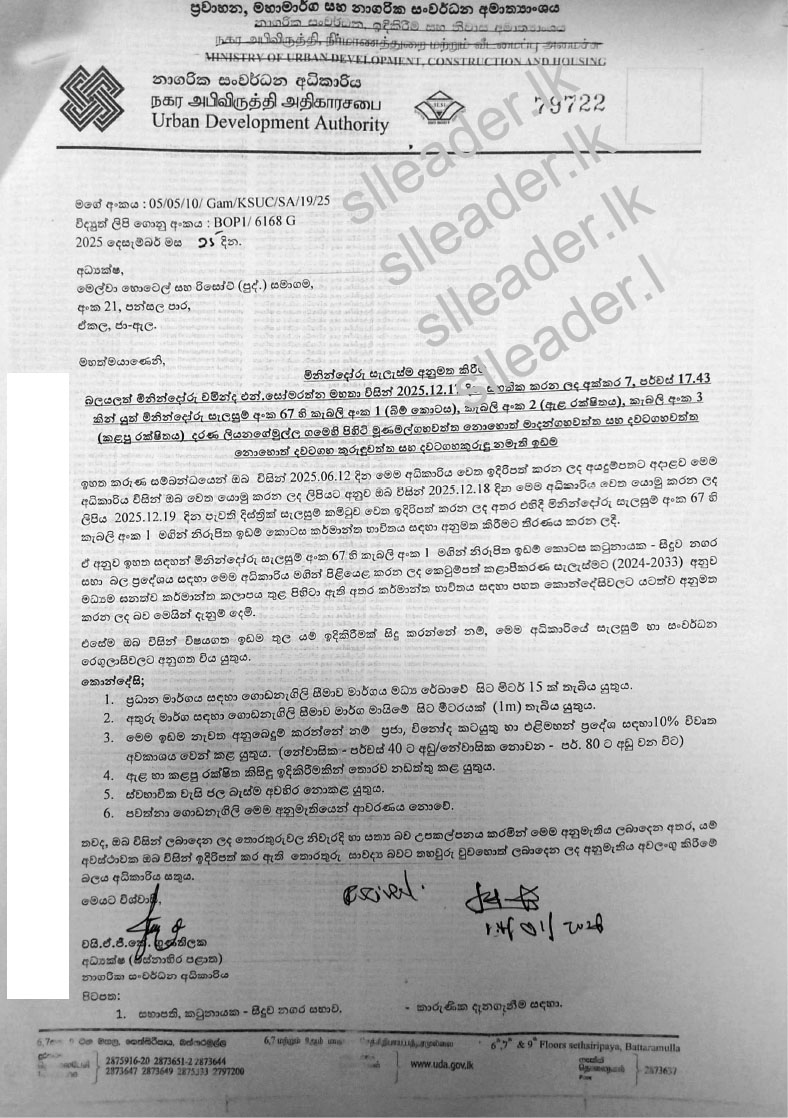
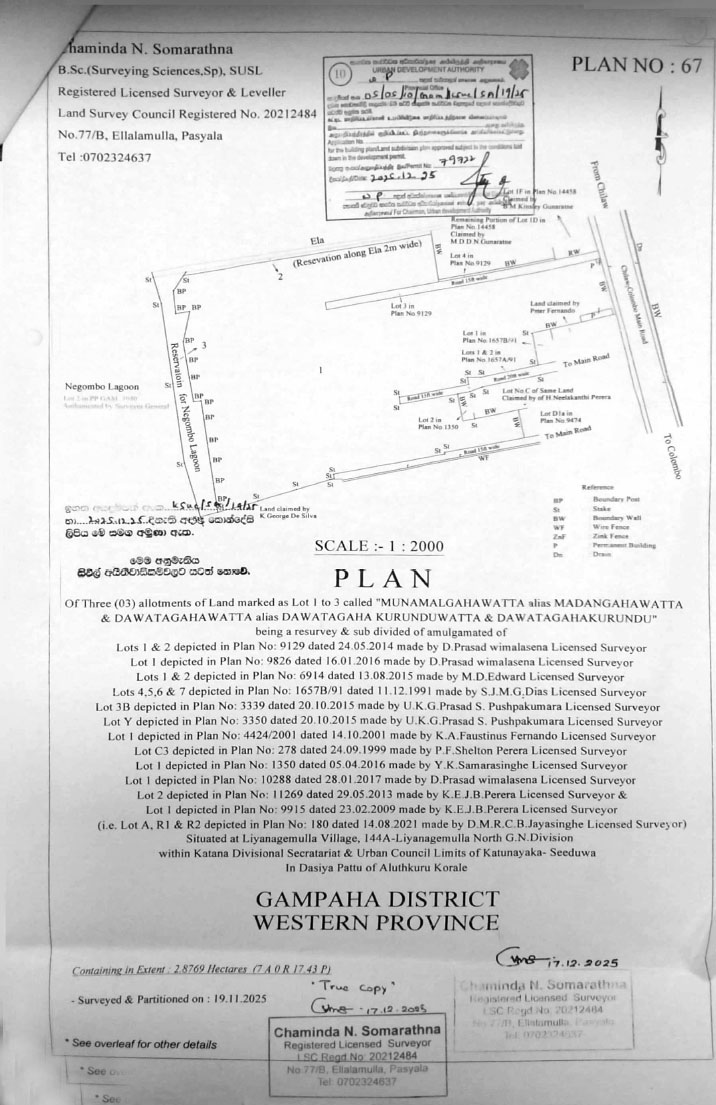
Campaigners say the approval referred to Survey Plan No. 67, prepared by licensed surveyor Chaminda N. Somarathna.
However, they further claim that the official named in the document denied issuing such approval when questioned by the media.
That contradiction has prompted demands for an immediate investigation into the document’s authenticity. Protest organisers say investigators should establish whether the letter, signature and official letterhead are genuine.
No official finding of forgery has been cited. Therefore, the authenticity of the document remains a matter requiring formal investigation.
Project opponents argue that such a major change in scale and purpose should not have proceeded without greater public scrutiny.
Environmental Approval and Muthurajawela Concerns
The Katunayake cement factory protest has also focused on the Central Environmental Authority’s role.
Opponents argue that a cement facility of this scale should have undergone an Environmental Impact Assessment or Initial Environmental Examination under the National Environmental Act No. 47 of 1980.
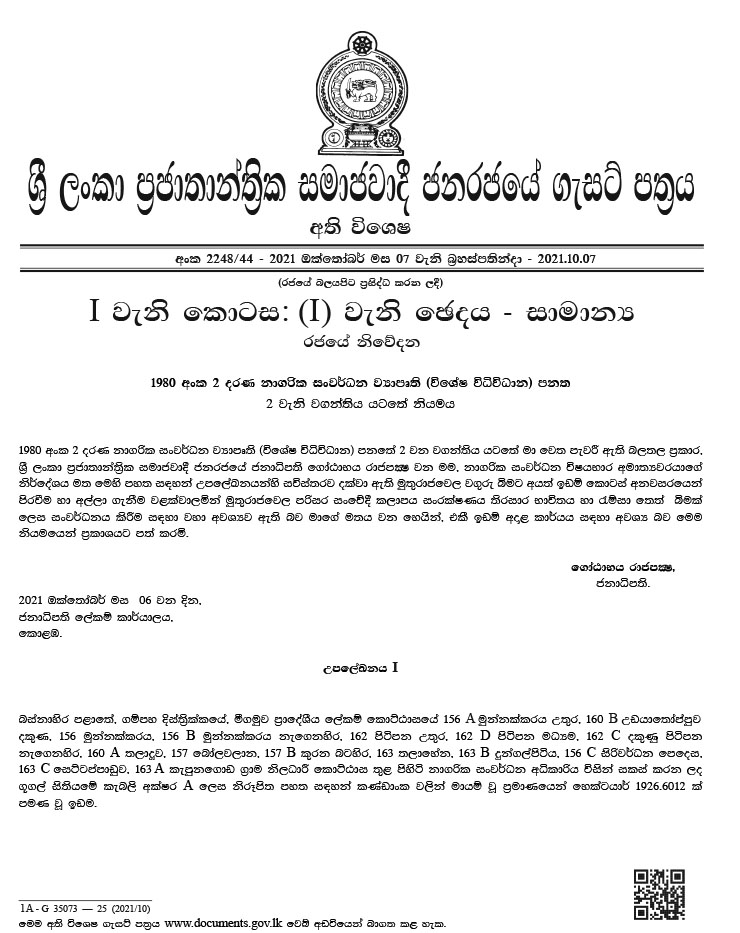
They allege that the CEA instead issued an environmental recommendation after using an internal questionnaire.
According to the documents cited, the CEA approved the relevant building plan on December 10, 2020, for a star-class tourist hotel.
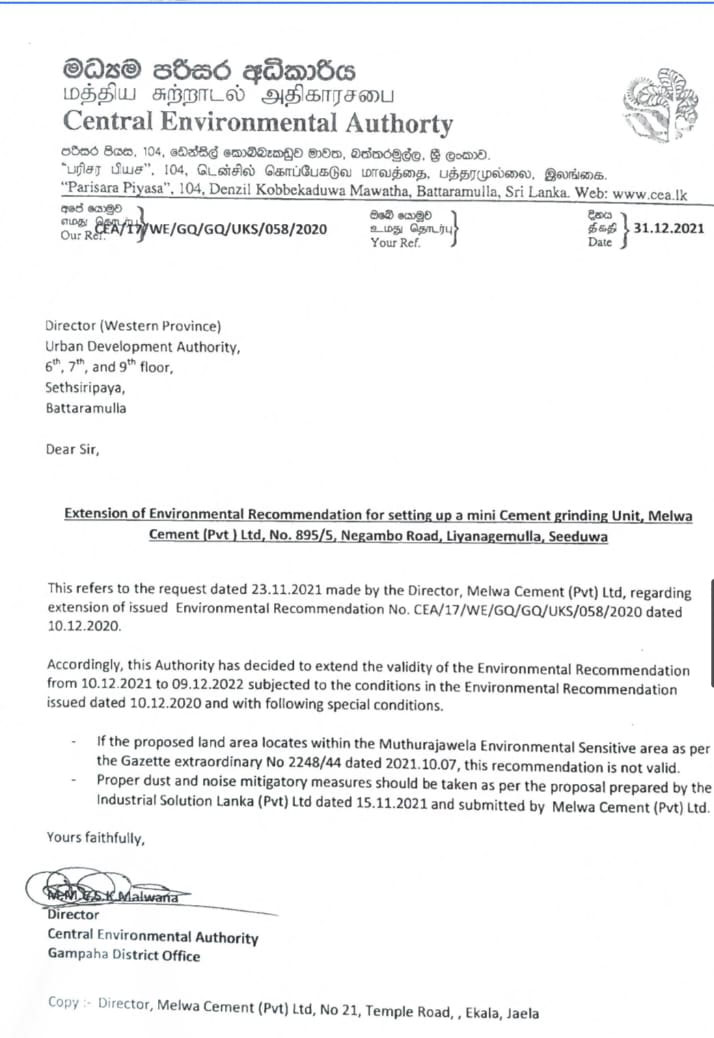
The recommendation was later extended for another year. Campaigners say N.M.U.S.K. Malwana, Director of the CEA’s Gampaha District Office, signed the extension.
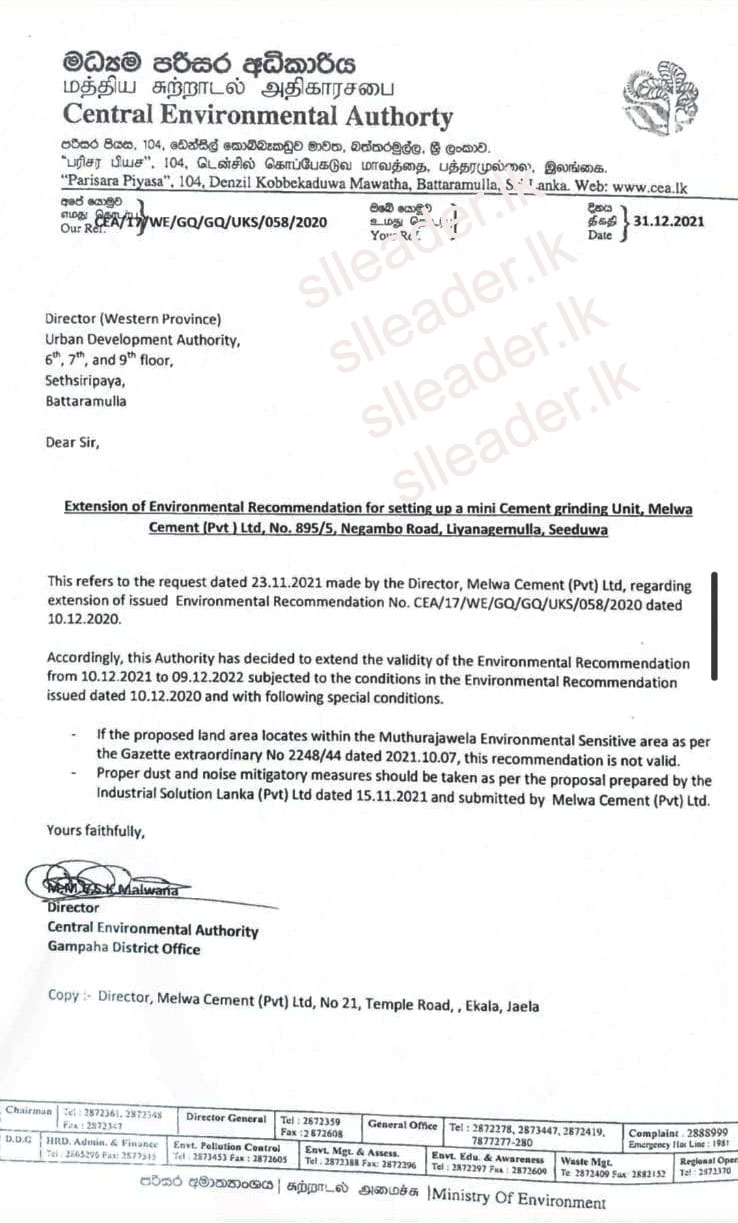
However, the recommendation reportedly included the following condition:
“As per the Extraordinary Gazette Notification No. 2248/44 dated October 7, 2021, if the proposed land is situated within the Muthurajawela Environmental Sensitive Zone, this recommendation shall not be valid.”
Project opponents claim the site lies within the protected Muthurajawela sensitive zone. On that basis, legal representatives argue that the recommendation may have no legal effect.
That interpretation has not yet been confirmed through a court ruling cited in the material provided.
Alleged Negombo Lagoon Encroachment
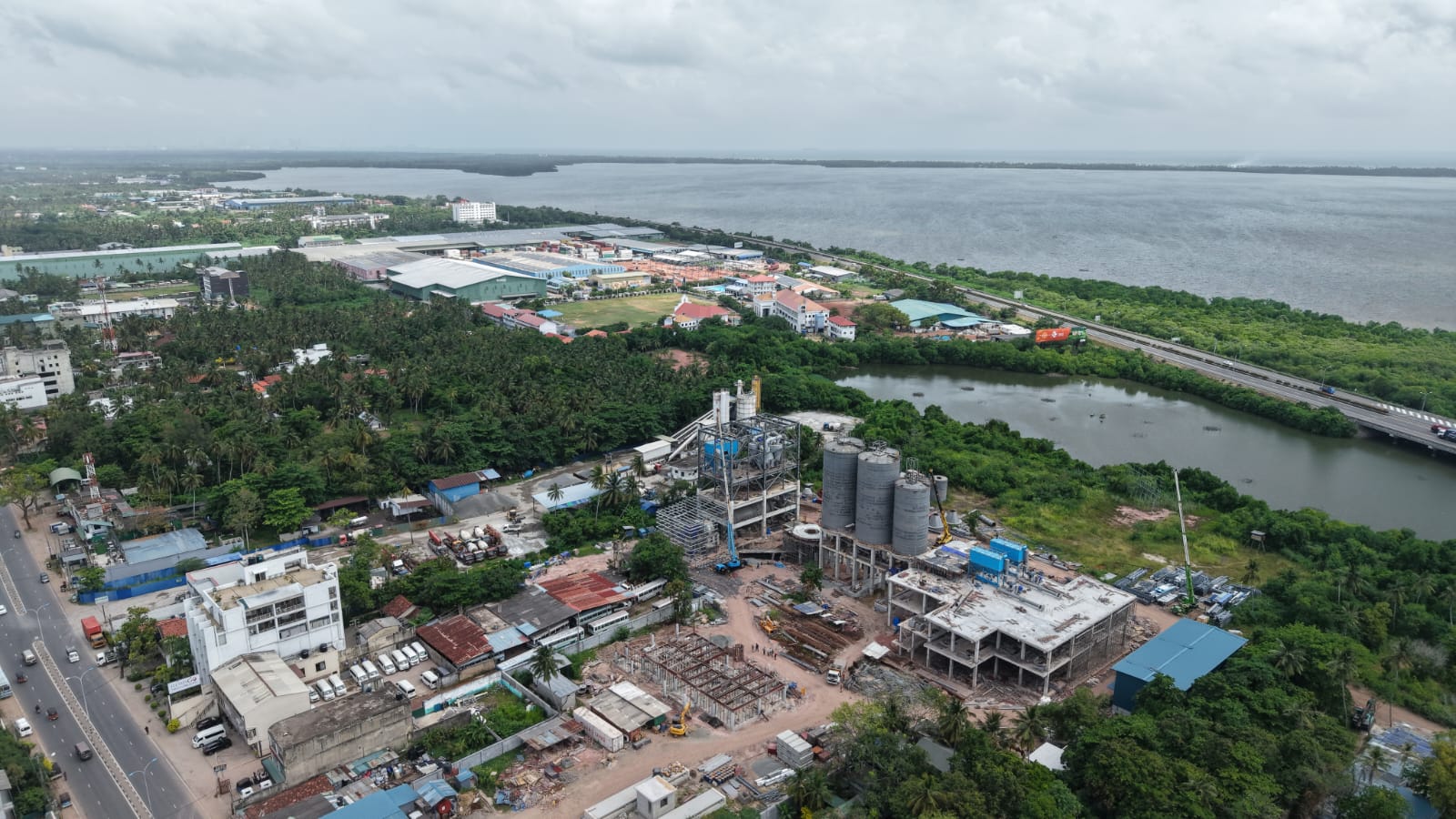
The project site reportedly stretches from the Colombo-Katunayake highway towards the Negombo Lagoon.
Campaigners say the property directly adjoins an environmentally sensitive lagoon and mangrove reserve.
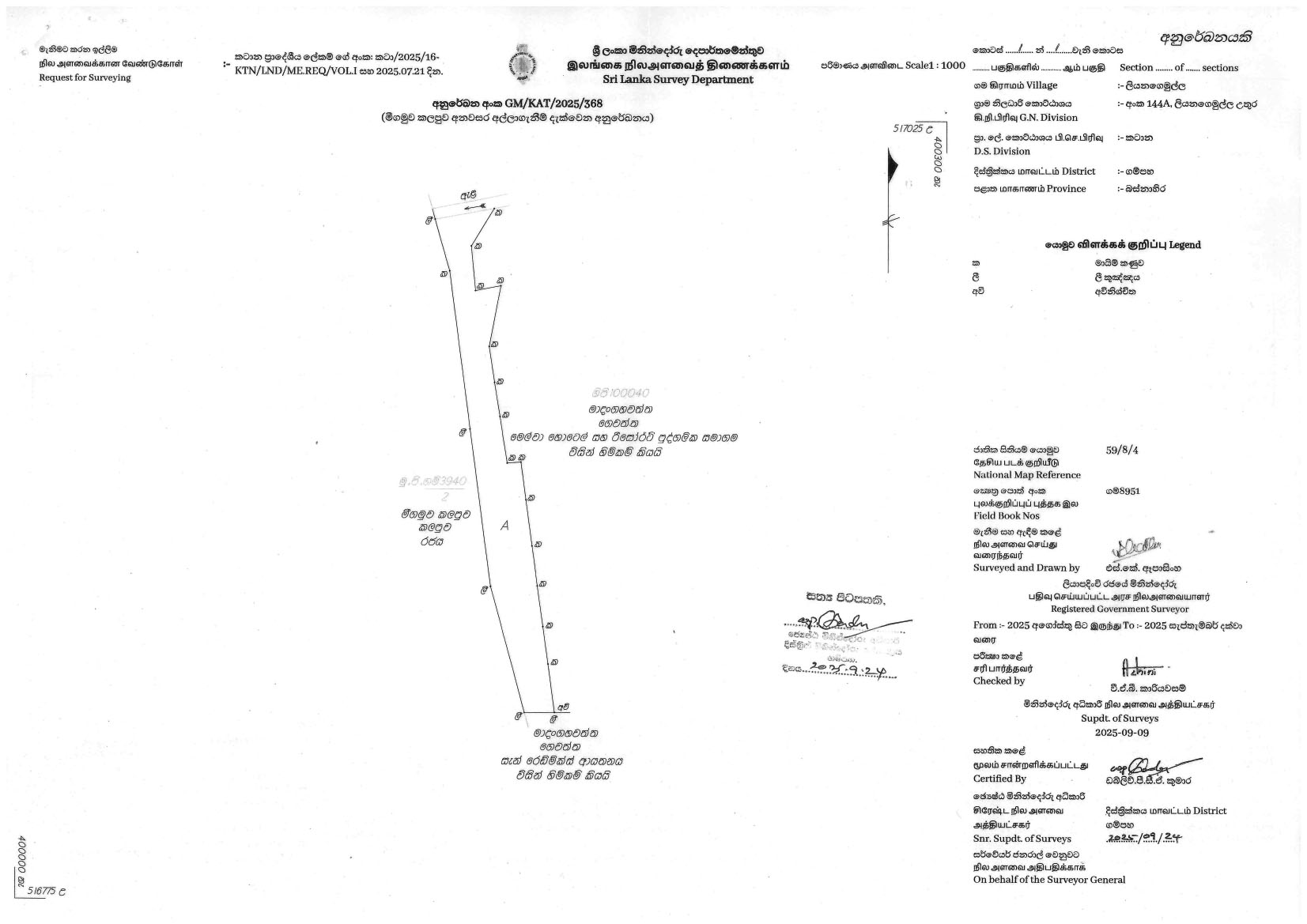
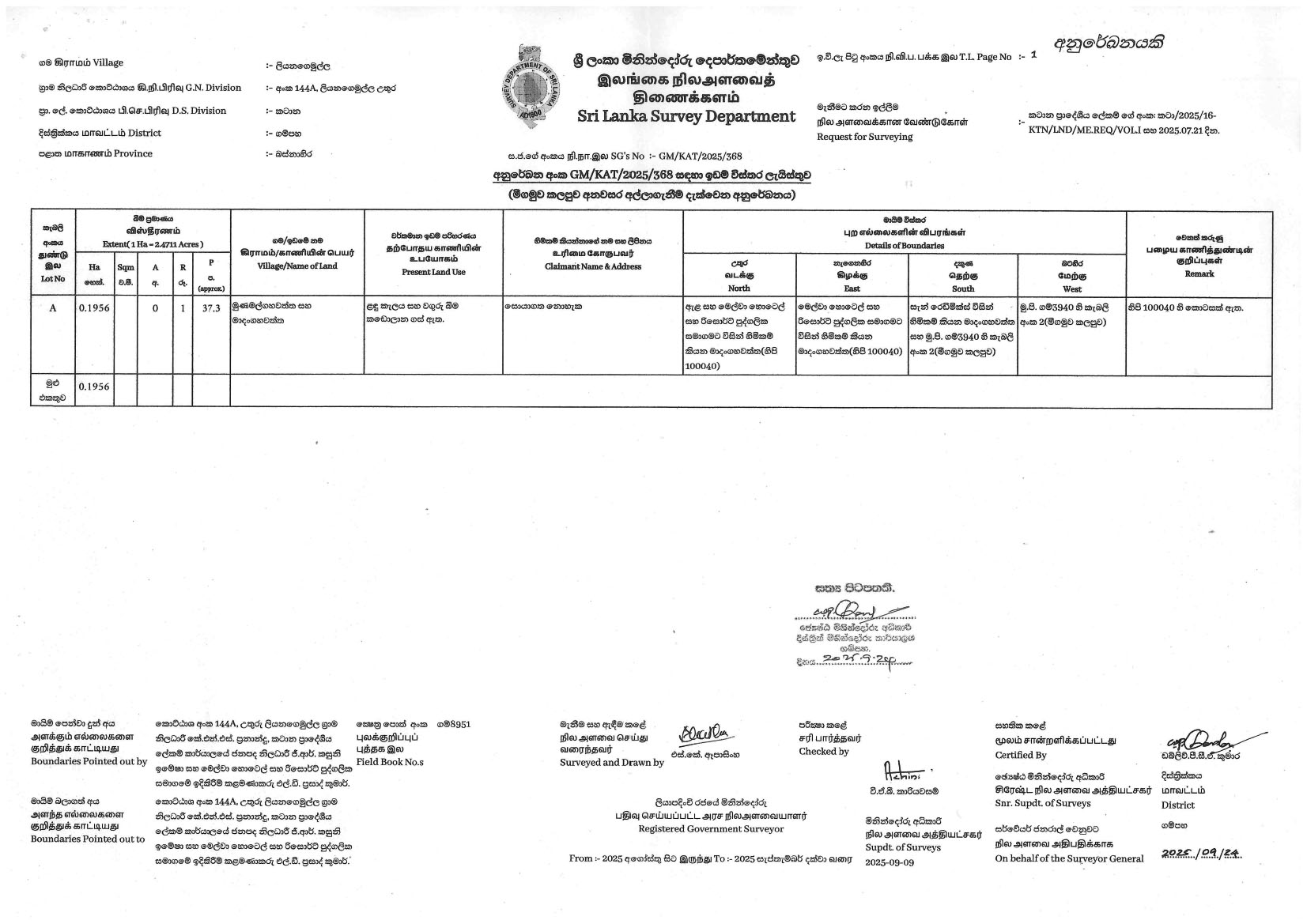
They cite Survey Department tracing No. GM/KAT/2025/368. According to their interpretation, it identifies 0.1956 hectares claimed by Melwa as unauthorised encroachment into the Negombo Lagoon Reserve and mangrove system.
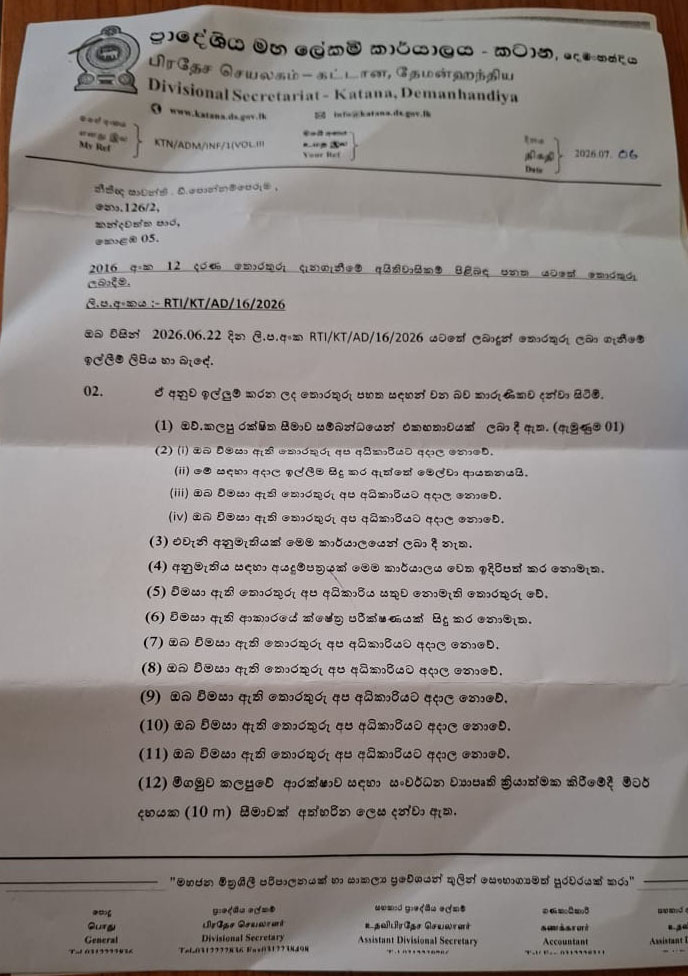
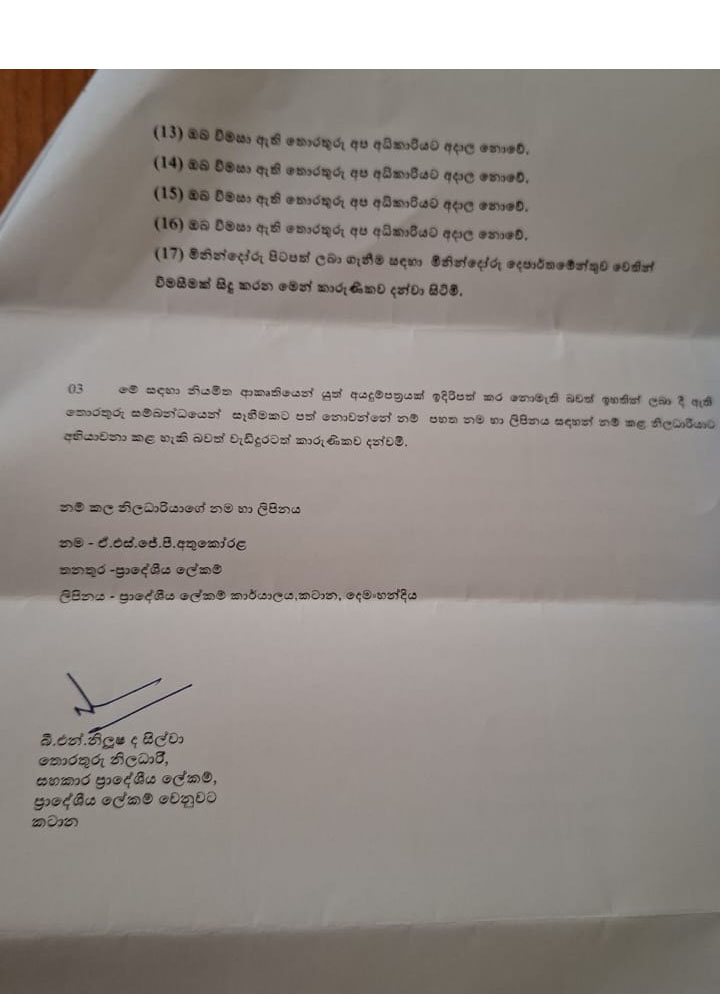
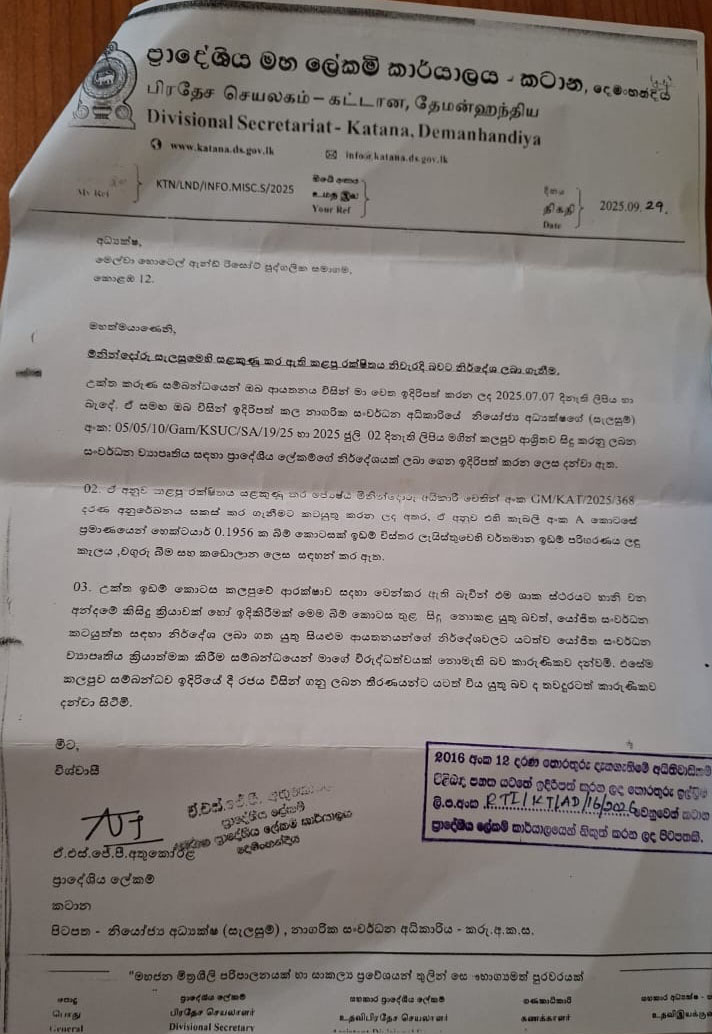
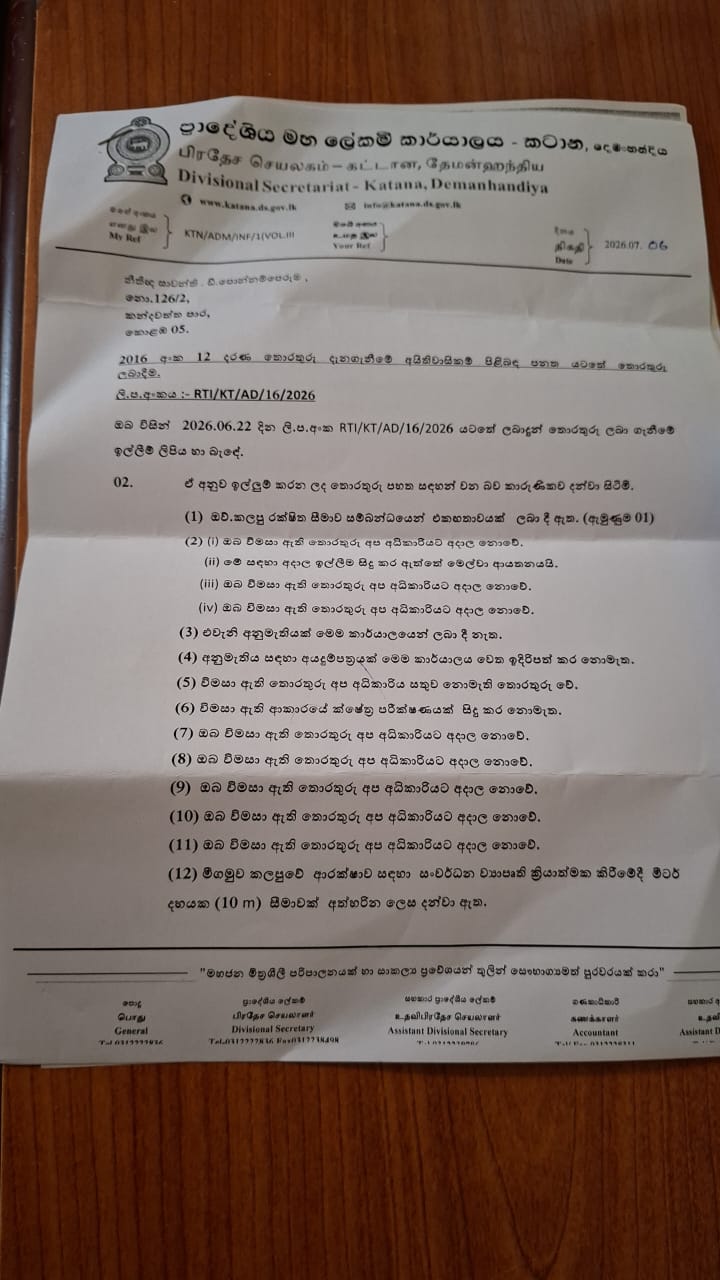
Letters reportedly issued by the Katana Divisional Secretariat under the Right to Information Act also refer to a mandatory 10-metre buffer zone around the lagoon.
Opponents allege that the company has not obtained approval to build within that protected buffer.
These claims require confirmation from the Survey Department, Katana Divisional Secretariat and relevant environmental authorities.
Residents Warn of Health and Economic Damage
Protesters say cement dust and industrial noise could threaten nearby communities, businesses and ecosystems.
Aircraft engineers cited by the campaigners reportedly warned that airborne cement dust close to the Katunayake Airport runway could affect aircraft engines.
However, no formal aviation safety assessment was included in the material provided.
Parents and residents also fear possible health effects on children attending three international schools in the area.
The concerns extend to workers living in dormitories connected to the Katunayake Free Trade Zone.
Environmental groups warn that construction and industrial activity could damage the Liyanagemulla mangrove reserve. The area reportedly falls under an extraordinary Gazette declaring it environmentally protected.
Fishermen argue that pollution could threaten their livelihoods in the Negombo Lagoon.
Local hoteliers and tourism operators also fear damage to the area’s hospitality sector and Muthurajawela boat-tour businesses.
Legal Notices Sent to State Authorities
Lawyers representing project opponents have reportedly sent Letters of Demand to the chairmen of the Central Environmental Authority and Urban Development Authority.
The notices seek the suspension of the disputed approvals and permits within 30 days.
They warn that failure to act could result in further legal proceedings.
Campaigners also say they plan to complain to the Commission to Investigate Allegations of Bribery or Corruption over the approval process.
No finding of bribery, corruption or unlawful conduct has yet been cited against any named official.
The protesters argue that the project approval process may have breached the Precautionary Principle and Public Trust Doctrine associated with environmental law.
They are calling for an independent legal and environmental audit covering every approval, recommendation and permit issued for the development.
The Katunayake cement factory protest now places pressure on Melwa Cement, the UDA and the CEA to publicly clarify the project’s approved purpose, environmental status and legal basis.
Until those questions receive documented answers, residents say concerns over pollution, lagoon protection, aviation safety and public health will continue.
SOURCE:- SRI LANKAN LEADER