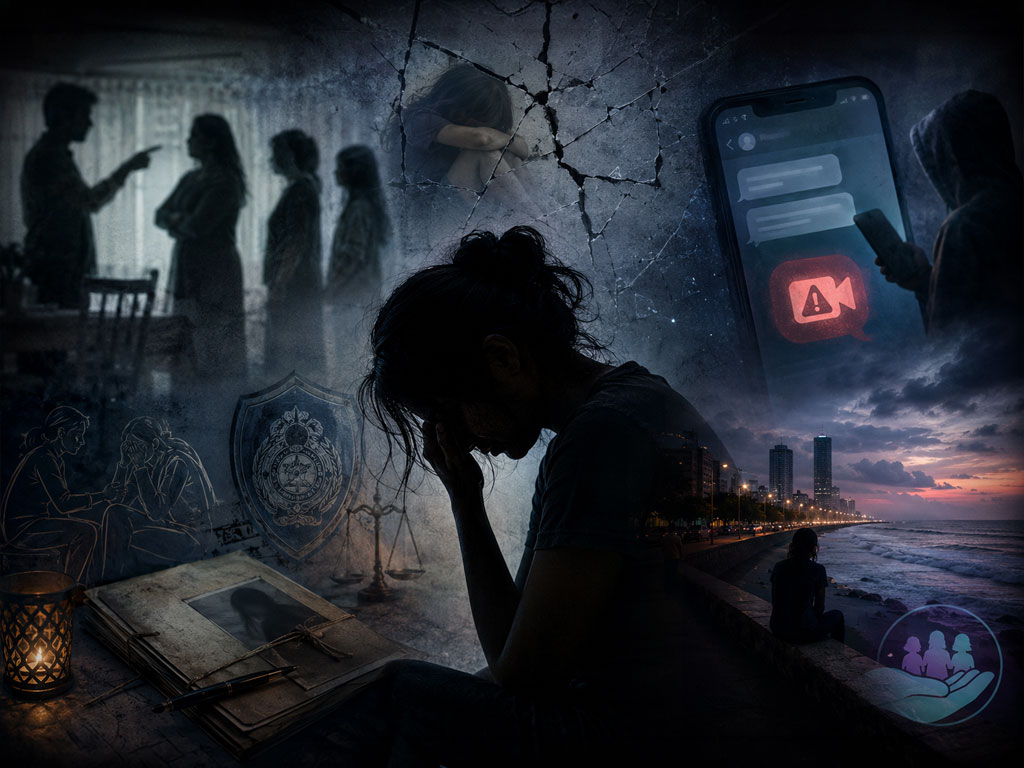
Sexual abuse in families, cyber blackmail and social stigma leave young victims like Senuri trapped in silence and lasting trauma.
Sexual abuse in families often remains hidden behind closed doors, protected by shame, fear and traditions that place reputations above the safety of victims.
Even while sitting comfortably inside our homes, we may never hear about crimes taking place within families regarded as safe and protective.
Hundreds of girls and young women reportedly face sexual abuse and psychological harassment in Sri Lanka. Yet only a small number of cases reach the courts.
Families often bury these experiences beneath social stigma and pressure to protect relatives. The latest “Break the Silence” feature examines a reality that many parents and communities continue to overlook.
Get Breaking News First
on WhatsApp

A talented young woman carrying childhood trauma
Senuri is a 21-year-old student at a private university. She is creative, artistic and highly talented in her studies.
To outsiders, she appears to be a fortunate young woman with a promising future. However, behind her smile are painful memories from childhood.
While Senuri’s father served in the military, her mother became involved in relationships with other men.
According to Senuri’s account, her mother sometimes took her to secret meetings. She would give the child a packet of Milo, move her aside and engage in inappropriate conduct in her presence.
Those experiences inflicted deep psychological harm on Senuri at a young age.
Her suffering intensified when her maternal uncle allegedly attempted to sexually assault her. Senuri resisted him and later told her mother what had happened.
However, she said her mother offered no compassion or protection. Instead, Senuri felt that her mother and uncle maintained a shared silence over the incident.
Her mother later left the family home and began living elsewhere.
The people who should have protected Senuri instead left her feeling that her childhood had been taken from her.
Betrayal and blackmail disguised as love
Without safety or affection from her family, Senuri later trusted a neighbour of her own age.
She believed he would understand her vulnerability and the wounds she carried from childhood. Instead, the relationship brought another devastating betrayal.
The young man allegedly exploited her trust and secretly recorded their intimate moments.
He then used WhatsApp to show her the recordings and began blackmailing her with them.
“I lost everything I had… I have no way to leave him now, he has my videos,” Senuri said tearfully.
The person who claimed to love her allegedly used her vulnerability to control her. The blackmail deepened her fear and left her feeling trapped.
Her experience reflects another form of abuse faced by young people who trust partners with intimate information, images or videos.
Such threats can isolate victims and prevent them from seeking help because they fear exposure, humiliation and social rejection.
A career opportunity lost to psychological distress
Later, Senuri’s mother worked in a physically demanding occupation, driving a taxi to support the family.
Through the efforts of someone her mother met, Senuri received a valuable employment opportunity at a prominent media institution.
The position offered her a possible path towards independence and a more secure future.
However, the psychological harm she had experienced since childhood continued to affect her. The neighbour’s alleged blackmail added another layer of fear and emotional pressure.
Senuri became deeply anxious that colleagues or strangers might discover her past.
Unable to cope with that fear, she sometimes avoided returning home. Instead, she spent hours alone at Galle Face beach.
Eventually, she abandoned the employment opportunity. She also withdrew from the future that the job might have helped her build.
Rather than moving forward, she returned to isolation and the darkness of a closed room.
Sexual abuse in families rarely reaches court
The article’s observations on abuse involving children and young women reveal a disturbing pattern.
It states that fathers, stepfathers, uncles and other close relatives may commit sexual abuse inside homes. Families then conceal incidents to avoid shame or protect their reputations.
According to the figures presented, fewer than 15 out of every 100 such cases reach the legal system.
The article also states that fewer than 10 out of every 100 victims of cyber or video blackmail seek legal assistance.
Fear, threats and the possibility of public exposure often prevent victims from filing complaints.
Meanwhile, society has little reliable information about the severe psychological trauma children may suffer after witnessing inappropriate parental behaviour.
The absence of reports does not mean that these experiences are rare. Instead, silence can prevent society from understanding their true scale.
Breaking the silence around abuse and blackmail
Senuri represents only one victim. Many girls and young women reportedly suffer inside their homes, among relatives or under the control of abusive partners.
Society must recognise that a family environment is not always safe. Parents, teachers and communities should pay closer attention to sudden changes in a child’s behaviour.
Victims threatened with photographs or videos should seek immediate legal help through the Child and Women’s Bureau and the Computer Crimes Investigation Division.
They also need professional psychological counselling, rather than sympathy that offers no practical protection or recovery.
The choice now belongs to society. It can continue sacrificing young lives to protect family reputations, or it can confront sexual abuse in families, expose those responsible and finally break the silence.
SOURCE:- HARI DESHAYA