By Roy Denish.
Hambantota Port geopolitics reveals how Sri Lanka can reclaim agency through transparent governance, balanced diplomacy and sound planning.
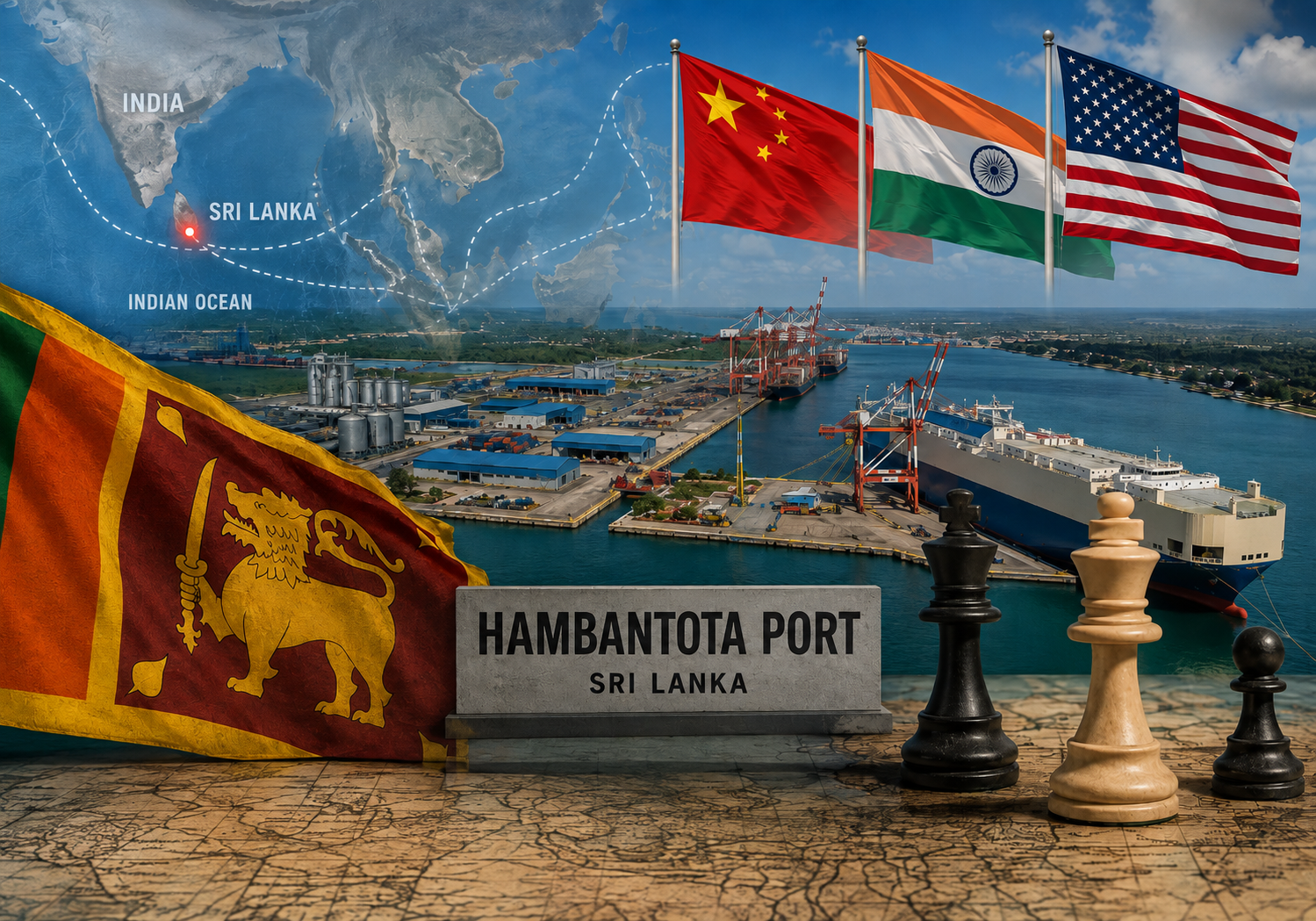
The Hambantota Port geopolitics debate has become a powerful symbol of Sri Lanka’s place in the Indo-Pacific. For years, international commentary has described the southern district as a “white elephant,” a debt-trap warning, or a pawn in the rivalry between Beijing and New Delhi.
However, that narrow framing overlooks Sri Lanka’s own role in creating the crisis. Hambantota is not only a story about Chinese lending or Indian security concerns. It also reflects domestic political ambition, weak economic planning, and the difficulty of protecting sovereignty while navigating pressure from larger powers.
Get
Breaking News
First
on WhatsApp
Follow The Morning Telegraph for instant alerts, top stories and exclusive updates delivered straight to your phone.

Political Ambition Behind Hambantota Port
When Sri Lanka began building Hambantota Port and its surrounding megaprojects, leaders presented the development as a bold attempt to decentralise growth away from Colombo.
In practice, political calculations shaped the project from the beginning. National leaders sought to transform their home region into a major commercial centre. Yet poor feasibility assessments, limited commercial demand, and unsustainable borrowing weakened that ambition.
It aimed to create long-term economic value, but lacked a strong foundation for immediate commercial viability. As repayment pressures grew and Sri Lanka faced acute foreign exchange shortages, the government agreed to lease the port for 99 years to a Chinese state-owned enterprise in 2017.
That decision caused alarm in regional and Western capitals. Many analysts portrayed the lease as proof of predatory Chinese expansion. Yet this interpretation can strip Sri Lanka of responsibility for its own choices.
Hambantota was not simply “invaded” by an outside power. Instead, it became a monument to domestic miscalculation. China provided financing when Western markets and traditional multilateral lenders showed little interest in supporting high-risk infrastructure during Sri Lanka’s civil war.
Hambantota Port and the Indo-Pacific Rivalry
Sri Lanka cannot ignore Hambantota’s geopolitical importance. The port lies close to some of the world’s busiest maritime routes, which carry energy supplies from the Middle East toward East Asia.
As a result, the port and its surrounding industrial zones carry strategic significance beyond their commercial value. India views developments in Hambantota through the lens of national security, geography, and its long relationship with Sri Lanka.
A deep-water port with strong foreign involvement near India’s southern maritime approaches will naturally attract scrutiny in New Delhi. Meanwhile, the United States and its allies view Hambantota within wider efforts to respond to Beijing’s expanding Indian Ocean presence.
Sri Lanka must avoid two dangerous extremes. It cannot dismiss legitimate security concerns as foreign interference. At the same time, it should not allow outside powers to define every domestic infrastructure decision.
Neutrality must become an active policy rather than a passive slogan. Colombo must protect transparency, commercial independence, and national control while maintaining balanced relations with competing powers.
From Political Vanity to Commercial Discipline
Future megaprojects must pass a test of commercial sanity, not political vanity. Infrastructure should respond to measurable national needs and support exports, logistics, and industrial development.
Sri Lanka should also connect major projects with established economic engines, including the Port of Colombo. Isolated facilities cannot succeed simply because governments announce ambitious plans or attach national prestige to them.
This requires stronger feasibility studies, open decision-making, realistic financing, and clear accountability. It also requires leaders to separate genuine development from projects designed to reward political constituencies or create personal legacies.
The people of Hambantota understand this gap better than most. They watch wild elephants cross rural roads while waiting for sustainable industries and lasting employment to emerge. Their experience exposes the deepest truth behind the controversy.
The real trap was never only external. It was also the internal governance deficit that placed political gain above economic discipline and mortgaged future choices.
Sri Lanka must now reclaim agency over the Hambantota Port geopolitics debate. Through diversified diplomacy, transparent governance, and sound economic management, the country can turn a symbol of vulnerability into one of strategic confidence.
A small island at the crossroads of global power does not have to become anyone’s backyard. But preserving that independence requires discipline at home, clarity abroad, and a refusal to repeat the mistakes that made Hambantota a global warning.