Sri Lanka severe weather has killed eight people and affected more than 16,000, with floods and landslides damaging hundreds of homes.
Sri Lanka severe weather has killed eight people and affected more than 16,000 as heavy rain, floods and landslides continue to disrupt communities across the country.
The Disaster Management Centre said 16,345 people from 4,151 families had been affected by the prevailing weather conditions.
The incidents were reported from 383 Divisional Secretariat divisions across 11 districts, highlighting the widespread impact of the emergency.

Sri Lanka Severe Weather Hits Nuwara Eliya Hardest
Nuwara Eliya remains the worst-affected district, with 7,288 people from 1,912 families impacted by the severe conditions.
Six of the eight weather-related deaths were reported in Nuwara Eliya. One person died in Kandy, while another death was recorded in Puttalam.
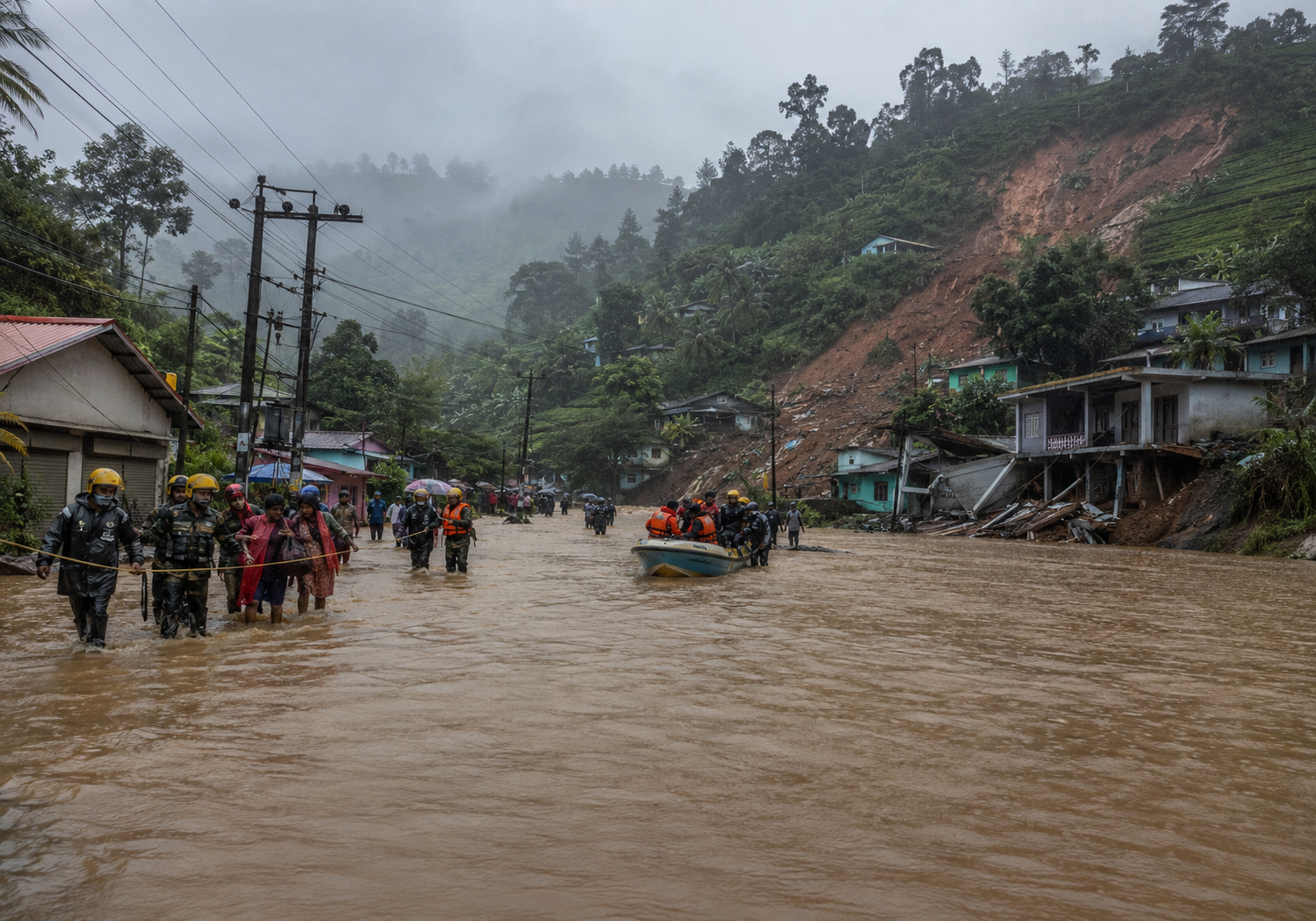
Several victims were killed after landslides struck houses in Sri Lanka’s central highlands. Others drowned after becoming trapped in floodwaters during the initial stages of the emergency.
The mountainous tea-growing regions have experienced some of the most serious damage following days of persistent rainfall.
According to the Disaster Management Centre, one house was completely destroyed and 581 houses suffered partial damage.
Meanwhile, 2,504 people from 682 families were being accommodated at 43 designated safety centres after leaving vulnerable areas.
Rescue Teams Deployed to Flooded Areas
Army and Navy personnel have been deployed to support rescue and relief operations in affected communities.
Security forces and local authorities have helped residents trapped by floodwaters. Teams have also worked to clear roads blocked by mud, rocks, fallen trees and damaged electricity poles.
Some schools in affected areas were temporarily closed because of unsafe weather and road conditions.
Authorities have warned that rain and strong winds could intensify in southwestern parts of Sri Lanka as the active southwest monsoon strengthens.
Rainfall exceeding 100 millimetres has also been forecast in several areas. Flood warnings were issued for low-lying communities, including locations near the Mahaweli River.
Residents living near rivers, unstable slopes and other high-risk locations have been urged to remain alert.
The public should follow evacuation and safety instructions issued by the Disaster Management Centre, the National Building Research Organisation and local authorities.
People have also been warned against crossing flooded roads, bridges or streams because water levels and currents can rise rapidly during heavy rainfall.
Emergency teams continue to monitor vulnerable areas as relief operations proceed across the affected districts.