By Roy Denish.
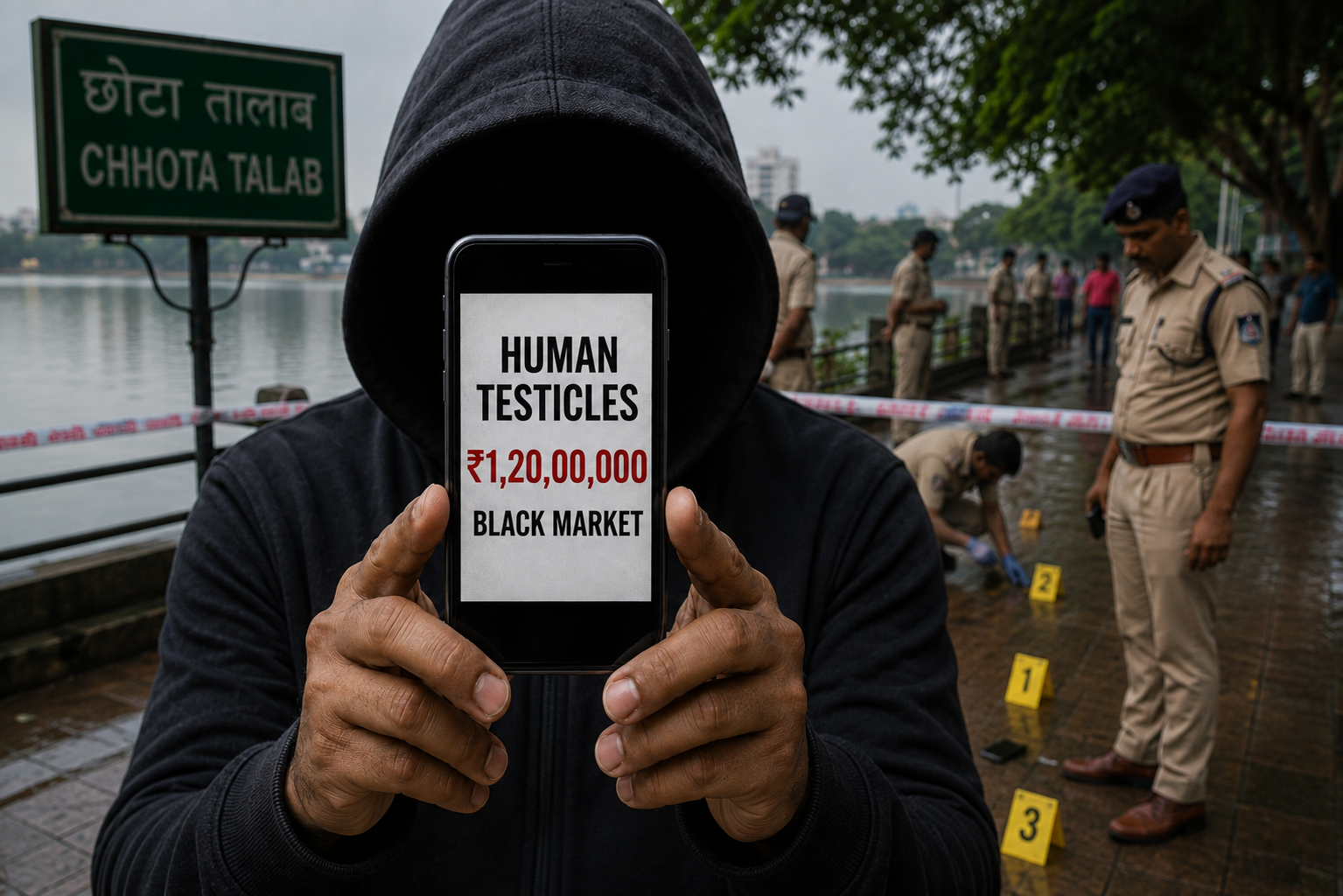
Bhopal teen murder case shocks India after police say a viral Reel falsely claimed human testicles could be sold for Rs 1.20 crore.
A deadly Bhopal teen murder is being linked by police to a viral social media myth claiming human testicles could fetch 12 million Indian rupees, about $144,000, on the black market.
Police arrested 20-year-old Zoheb Khan and 18-year-old Aamir Qureshi and detained three minors in connection with the killing. Investigators say Khan, a business administration student who allegedly posed as a doctor in a white lab coat, convinced local youths that body parts from a teenage boy could be sold for a huge payout. Police said the claim came from an Instagram Reel and found no medical basis or evidence of a genuine buyer or trafficking network.
Bhopal Teen Murder Began With Rs 100 Lure
The victim, identified as 17-year-old Rehan, helped support his poor family by selling pens and keychains around public areas in Bhopal.
On August 6, two minors allegedly approached Rehan and offered him 100 rupees, around $1.20, to help settle a staged dispute. They then lured him towards a secluded area near Chhota Talab lake. Police say the group attacked Rehan from behind and stabbed him repeatedly.

Investigators allege the group then removed the teenager’s body parts while following instructions from Khan by telephone. They placed the tissue in a plastic bag and began searching for someone willing to buy it.
Police Trace Suspects After Body Identified
The suspects allegedly kept the severed body parts for several days but could not find a buyer. Police say they eventually dumped the remains into the lake after realizing no such market existed.
Authorities recovered Rehan’s decomposed body with multiple sharp-force injuries on August 10. Five days later, his mother identified him through a distinctive tattoo on his hand.
Police then reconstructed Rehan’s final movements, identified the five suspects and recovered the alleged murder weapon. Investigators are now examining the origin of the social media video and whether it amounted to extreme misinformation or was deliberately designed to encourage violence.
Credit: NDTV