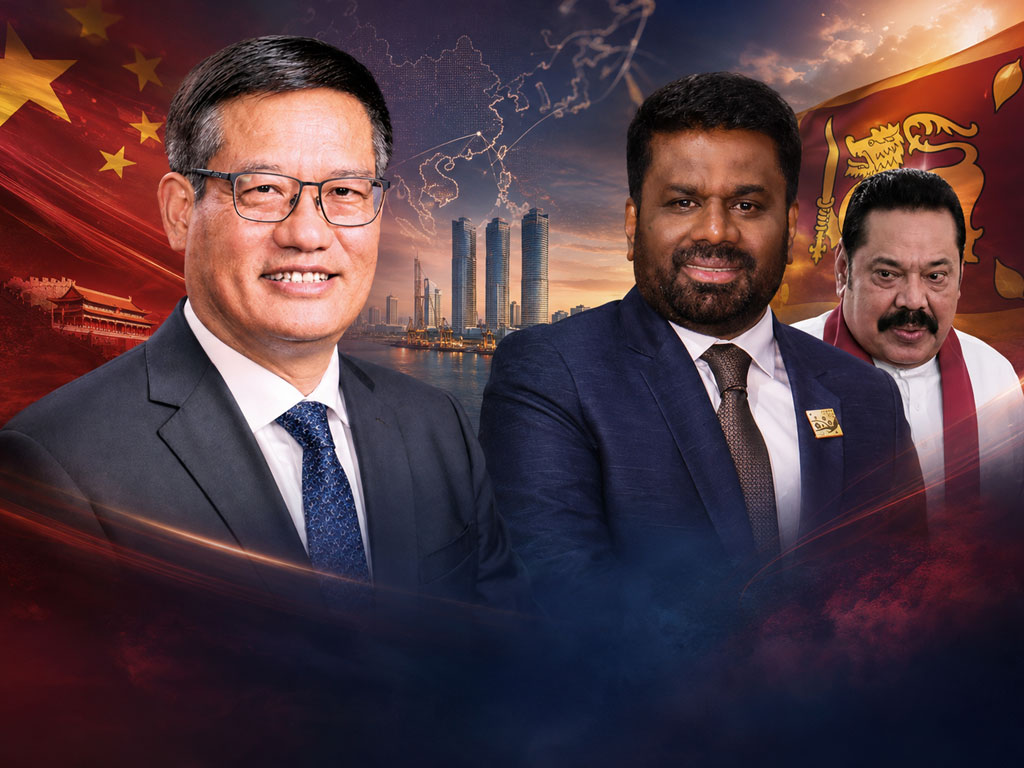
China Sri Lanka relations enter a new phase as Ambassador Wei Huaxiang arrives amid questions over Beijing’s ties with the JVP and Rajapaksas.
China Sri Lanka relations could enter a new phase following the arrival of Wei Huaxiang, Beijing’s new Ambassador to Sri Lanka, amid expectations over how he will engage the government and opposition.
As Wei arrived to assume duties, a delegation from the China Communications Construction Company met President Anura. Reports said the delegation discussed launching eight investment projects in Colombo Port City. The timing suggests the government has placed considerable expectations on the new ambassador.
His predecessor, Qi Zhenhong, served in Sri Lanka for a lengthy period and worked closely with several former presidents. In particular, he developed close relations with the Rajapaksa family.
Qi arrived when Gotabaya Rajapaksa was President and Mahinda Rajapaksa was Prime Minister. During that period, he built strong ties with the family.

Rajapaksa Ties Complicated China Sri Lanka Relations
After Anura’s government came to power and Mahinda Rajapaksa lost his official residence, Qi visited the former president while he was moving his belongings out.
Rumors also circulated that the ambassador served as a communication channel between Anura’s government and the Rajapaksa family over court cases involving them. However, those reports were never confirmed.
What became apparent was that the former ambassador’s close relationship with the Rajapaksas created difficulties for Anura’s government.
At party level, the Communist Party of China maintained close ties with the JVP. At state level, however, China remained close to the Rajapaksas. Qi continued that approach.
China did not appear to expect the JVP to eventually take power. As a result, the ambassador found himself balancing Beijing’s state-level relationship with the Rajapaksas against party-level links with the JVP.
New Ambassador Faces a Different Political Landscape
The main reason Qi had to leave Sri Lanka was his failure to secure the removal of the ban on Chinese research vessels. Unofficial sources claim he informed the Sri Lankan government about the issue.
China reportedly decided to appoint a new ambassador only after studying the challenges faced by his predecessor.
According to Chinese sources, Wei is expected to strengthen ties with the government while maintaining opposition contacts without creating difficulties for the administration.
China’s diplomatic tradition has generally focused on working closely with governments in power. Previous ambassadors engaged opposition parties only within a limited framework.
However, the former ambassador departed from that practice by developing close relationships with the opposition.
The government now appears to expect Wei to return to Beijing’s more traditional diplomatic approach. That would mean maintaining China Sri Lanka relations primarily through close engagement with the government, while keeping opposition relationships within a more limited framework.