Sri Lanka GSP+ 2028 plans raise questions over reform readiness, export certainty and whether waiting until the deadline could create unnecessary risk.
Sri Lanka GSP+ 2028 plans may fall within the European Union’s permitted timeline, but waiting until the final stretch could create unnecessary uncertainty for exporters.
Foreign Affairs Minister Vijitha Herath has said Sri Lanka expects to reapply for GSP+ under the EU’s revised framework by the end of 2028. He has expressed confidence that outstanding requirements can be addressed before then.
At first glance, that timetable appears comfortable. However, the EU’s revised GSP framework demands considerably more than simply submitting another application.
The European Commission states that the new GSP Regulation will take effect on January 1, 2027. Existing GSP+ beneficiaries, including Sri Lanka, receive a two-year transitional period and may submit reapplications until the end of 2028.
They will also continue receiving trade preferences during that transition.
Therefore, Sri Lanka is not technically missing a 2027 deadline by targeting December 2028. However, meeting the legal deadline does not necessarily make the strategy commercially sound.

Sri Lanka GSP+ 2028 Requires More Than an Application
GSP+ is not simply a tariff concession.
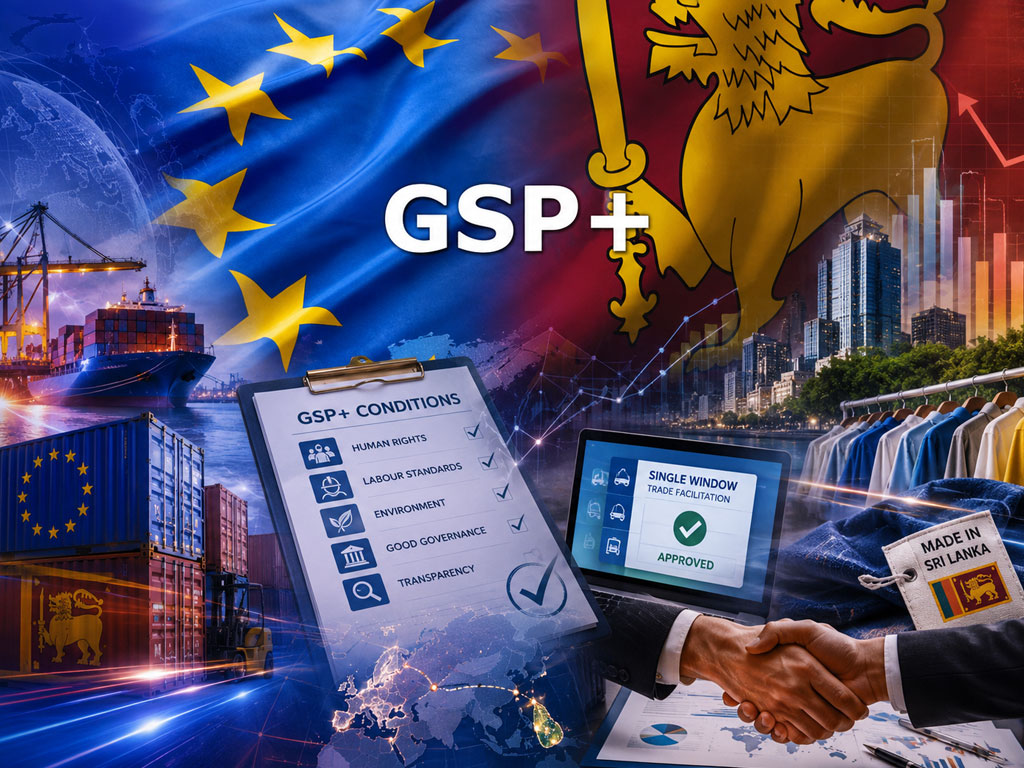
Eligibility depends on compliance with international commitments covering human rights, labour standards, good governance, environmental protection and other areas.
Under the revised rules, existing beneficiaries must meet additional requirements. These include six new international conventions and an action plan setting out how they will be implemented.
That makes the timing especially significant for Sri Lanka.
The Government itself acknowledges that several major legal reforms remain incomplete.
These include the proposed repeal of the Prevention of Terrorism Act and its replacement with new counter-terrorism legislation.
Amendments to the Online Safety Act, stronger anti-corruption mechanisms and continued work on democratic institutions and reconciliation also remain part of the reform agenda.
The Government says it has established an Inter-Ministerial Standing Committee on Human Rights to monitor, coordinate and report on Sri Lanka’s international human-rights obligations.
Those measures could become important evidence when the EU assesses compliance.
Export Competitiveness Raises the Stakes
The economic implications are significant.
The European Union remains one of Sri Lanka’s most important export markets. Preferential GSP+ access has traditionally given Sri Lankan exporters an advantage over competitors facing higher tariff barriers.
At the same time, Sri Lanka is trying to rebuild foreign exchange reserves, increase exports, attract investment and diversify its export base after the economic crisis.
That makes GSP+ more than a diplomatic achievement. It is also an instrument of export competitiveness.
The Government points to macroeconomic stabilisation, debt restructuring, progress under the IMF programme, recovering tourism and improving international confidence.
The IMF has completed its fifth and sixth reviews, releasing a further US$695 million. The seventh review is expected in October.
The Government also cites the reduction of the US tariff applicable to Sri Lankan exports to 10 percent and the World Bank’s return of Sri Lanka to upper-middle-income status.
However, economic recovery alone will not secure GSP+.
The European Commission’s framework continues to place sustainable development, human rights, labour rights, environmental protection and good governance at the centre of eligibility.
The Risk Is Waiting Too Long
The real danger is therefore not the Sri Lanka GSP+ 2028 deadline itself.
The danger is waiting until 2028 to demonstrate readiness.
Exporters already competing in difficult international markets would benefit from greater certainty through a proactive compliance strategy.
By contrast, a last-minute application could turn GSP+ into another crisis-management exercise rather than a carefully prepared trade strategy.
Sri Lanka still has time to complete the required reforms and demonstrate compliance.
The central question is whether that time will be used effectively, or whether the country will discover too late that meeting the deadline is easier than meeting the standards.