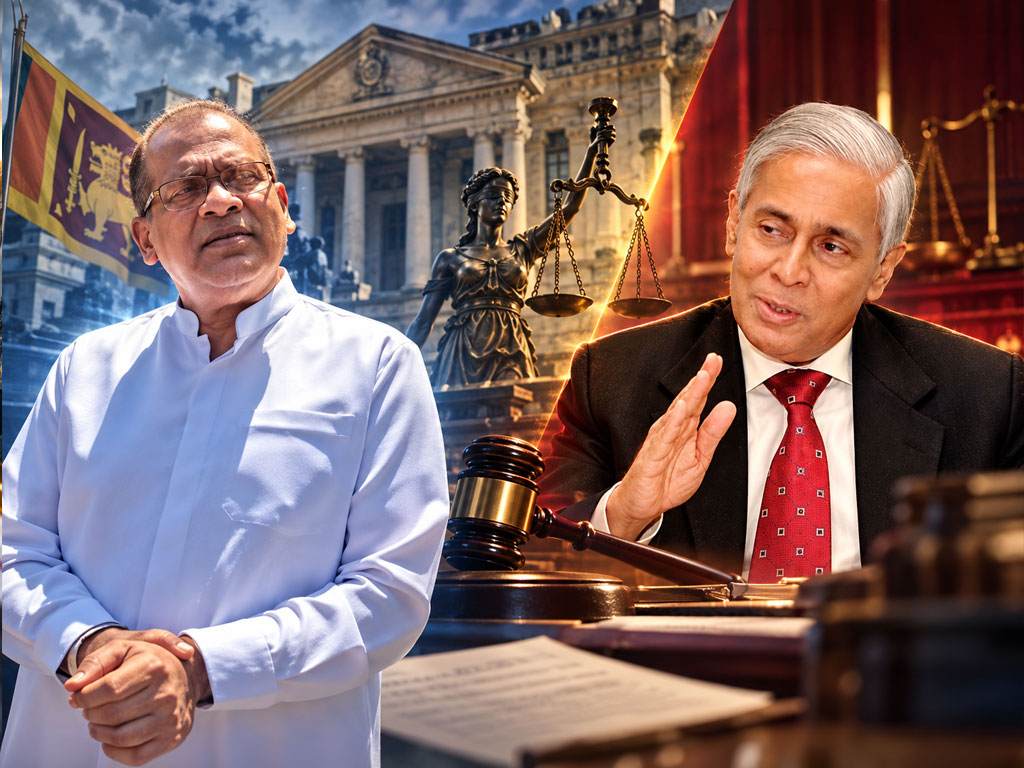
Gnanasara Thero contempt sentence is challenged by former Chief Justice Sarath N. Silva, who says the six-year punishment exceeded the law.
COLOMBO – Former Chief Justice Sarath N. Silva has challenged the legality of the prison sentence imposed on Ven. Galagodaaththe Gnanasara Thero for contempt of court, arguing that the punishment exceeded the legal limits applicable to the conduct at issue.
Silva made the remarks while addressing the “National Conference on the Responsibility of Protecting and Nurturing the Buddha Sasana and Safeguarding Sinhala Buddhist Heritage”, organised in Colombo by the All Ceylon Buddhist Maha Sammelanaya.
His comments centred on the six-year prison sentence previously imposed on Gnanasara Thero following contempt proceedings arising from conduct before a Magistrate’s Court.
Silva argued that, under the law applicable to contempt of a Magistrate’s Court, the maximum punishment was a fine of Rs. 1,500 and 18 months’ imprisonment.
On that basis, he described the substantially longer sentence imposed on the Thero as unlawful.

Former Chief Justice Questions Court of Appeal Sentence
Silva said the matter had originated before a Magistrate, who referred it to the Court of Appeal by letter.
He argued that the six-year prison sentence subsequently imposed by then Court of Appeal President Justice Preethi Padman Surasena was contrary to law.
According to Silva, the legal framework did not permit the Court of Appeal to impose such a punishment for conduct that occurred in another court, except where the contempt related directly to the Court of Appeal itself.
His remarks amount to a legal interpretation advanced by a former Chief Justice and should not be confused with a fresh judicial ruling overturning or invalidating the original sentence.
No new court order setting aside the conviction or sentence is identified in the material supplied for this report.
Presidential Pardon Defended
Silva also defended the presidential pardon granted to Gnanasara Thero by former President Maithripala Sirisena.
He argued that, given his view that the original punishment had been imposed outside the proper legal limits, Sirisena’s decision to pardon the monk was justified.
The pardon had previously generated considerable public and legal debate because of the nature of the contempt proceedings and the broader questions surrounding the use of presidential clemency.
Silva’s intervention places the focus back on the legal basis of the punishment rather than merely on the political merits of the pardon.
Claims of Hostility Towards Monks and National Leaders
The former Chief Justice went further, alleging that contempt of court proceedings against national leaders and Buddhist monks were becoming increasingly common.
He described the trend as spreading like a “virus” and said such legal measures were being used in a manner hostile towards members of the Maha Sangha and Sinhala Buddhist leaders.
That characterisation represents Silva’s opinion and allegation.
The material supplied does not establish that contempt proceedings are being systematically or deliberately used against Buddhist monks or Sinhala Buddhist political figures as a class.
Nevertheless, his remarks reflect a broader debate over how contempt powers should be exercised, what safeguards should apply and whether proceedings can become entangled with political or religious tensions.
Legal Action Urged
Silva called for the situation to be addressed through lawful means.
He said steps should be taken within the legal framework to prevent what he views as the misuse of contempt proceedings.
His comments are likely to add to the wider debate over the treatment of Buddhist clergy within the justice system, particularly at a time when the handling of Gnanasara Thero has already become the focus of religious and political controversy.
The central legal distinction remains important: Silva has publicly argued that the sentence was unlawful, but his view does not itself constitute a judicial determination setting aside the earlier decision.
Any definitive legal challenge to the sentence or to the wider interpretation of contempt powers would ultimately have to be resolved through the courts or through legislative clarification.