By Dwayne Ferreira.
Sri Lanka’s 238-member Asian Games delegation returns with three medals, prompting questions over performance, preparation and sporting investment.
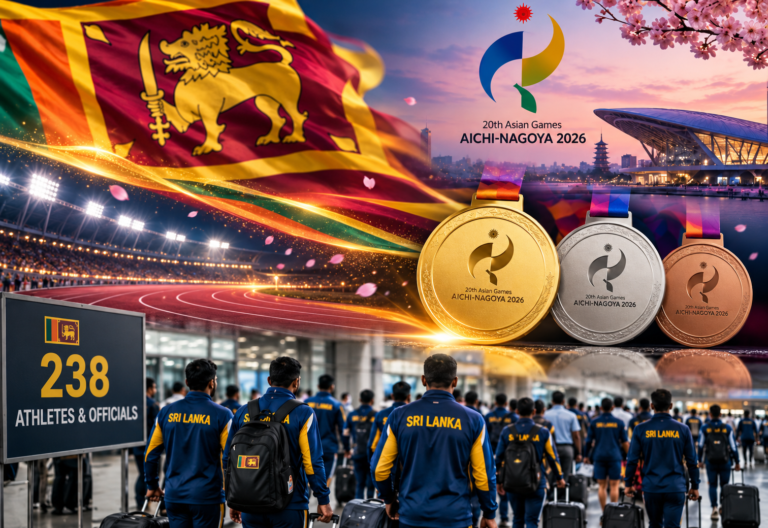
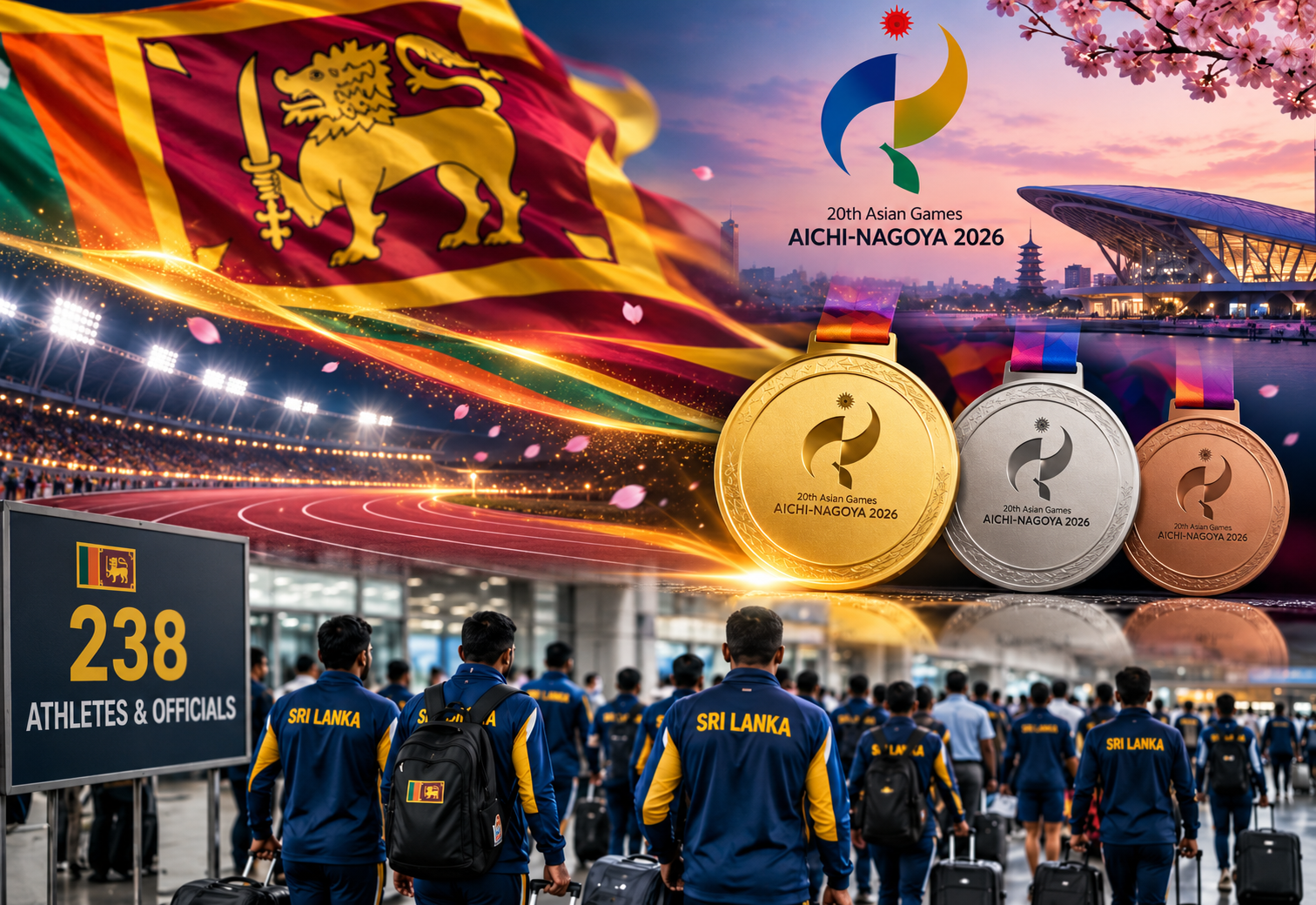
COLOMBO – Sri Lanka’s performance at the 2026 Asian Games has raised fresh questions about the country’s sporting priorities after a delegation of 238 athletes and officials returned from Japan with only three medals.
The 20th Asian Games, held in Aichi-Nagoya from 19 September to 4 October, saw Sri Lanka finish 28th in the medal standings.
Despite fielding 156 athletes across numerous disciplines, the country managed just one gold, one silver and one bronze medal.

The results have prompted debate over athlete preparation, the size of the accompanying delegation and the effectiveness of national sports development programmes.
A Historic Gold Amid Disappointing Results
The standout achievement came from javelin thrower Rumesh Tharanga Pathirage, who delivered a remarkable performance to win gold in the men’s event.
His throw of 88.55 metres secured a historic victory and provided Sri Lanka’s sole gold medal of the Games.
Sri Lanka’s women added a silver medal in T20 cricket, while the men’s cricket team claimed bronze.
However, success in those two cricket events and the men’s javelin could not disguise the absence of medals across the remaining sports.
Sri Lanka’s overall tally also represented a decline from the five medals won at the previous Asian Games in Hangzhou.
Questions Over the Size of the Delegation
According to figures reported by the Daily Mirror, Sri Lanka sent 156 athletes and 82 officials to the Games.
The athlete contingent comprised 100 men and 56 women.
The official delegation included coaches, managers, medical personnel and representatives connected to the country’s sporting administration.
While support personnel play essential roles in elite competition, the ratio of officials to athletes has attracted scrutiny.
With 82 officials accompanying 156 athletes, there was approximately one official for every 1.9 competitors.
That figure alone does not establish unnecessary expenditure or misconduct. Different sporting disciplines have distinct coaching, medical and logistical requirements.
Nevertheless, it strengthens the case for greater transparency about how delegations are selected and how public funds are allocated.
Are Sri Lanka’s Sporting Investments Delivering Results?
International sporting success rarely happens by accident.
Countries that consistently produce medal-winning athletes generally invest in long-term preparation, specialised coaching, sports science and opportunities for international competition.
Sri Lanka’s results suggest that the effectiveness of its current development structures deserves further examination.
Important questions include whether athletes received adequate overseas exposure, whether preparation programmes were properly funded and whether performance targets were realistic.
The authorities should also consider whether resources were distributed according to measurable development needs.
A disappointing medal tally cannot automatically be blamed on athletes who have committed years to representing their country.
Responsibility for improving performance extends to administrators, national sporting associations and the institutions responsible for developing talent.
Public Accountability Should Be Part of the Review
The Ministry of Sports, the National Olympic Committee of Sri Lanka and the participating sporting federations all have roles in evaluating the Games.
A comprehensive post-Games assessment could examine expenditure, delegation selection, preparation programmes and the performance of individual disciplines.
The findings would help establish whether changes are required ahead of future international competitions.
Such scrutiny should be conducted fairly, with governing bodies given an opportunity to explain their decisions and the operational requirements of each sport.
The objective should be to improve athlete performance rather than assign blame without evidence.
Rumesh Tharanga Shows What Is Possible
Tharanga’s historic gold medal provides an important reminder that Sri Lankan athletes can compete successfully against Asia’s strongest performers.
His achievement deserves recognition, but it should also inspire a closer examination of the structures that help exceptional athletes emerge.
Sri Lanka’s challenge is to develop more athletes capable of competing at that level.
The country has produced internationally successful competitors in athletics, cricket and other disciplines.
What remains uncertain is whether the existing sporting system can consistently identify, prepare and support the next generation.
With the Asian Games now concluded, public attention should shift towards a measurable plan for improvement.
Sri Lanka’s athletes deserve more than an evaluation based solely on medal counts. They deserve a development system capable of giving them the best possible chance of success.