By Roy Denish.
A Jaffna mango auction at Murugaiya Devasthanam saw a sacred fruit fetch Rs. 1.1 million, with proceeds supporting the temple.
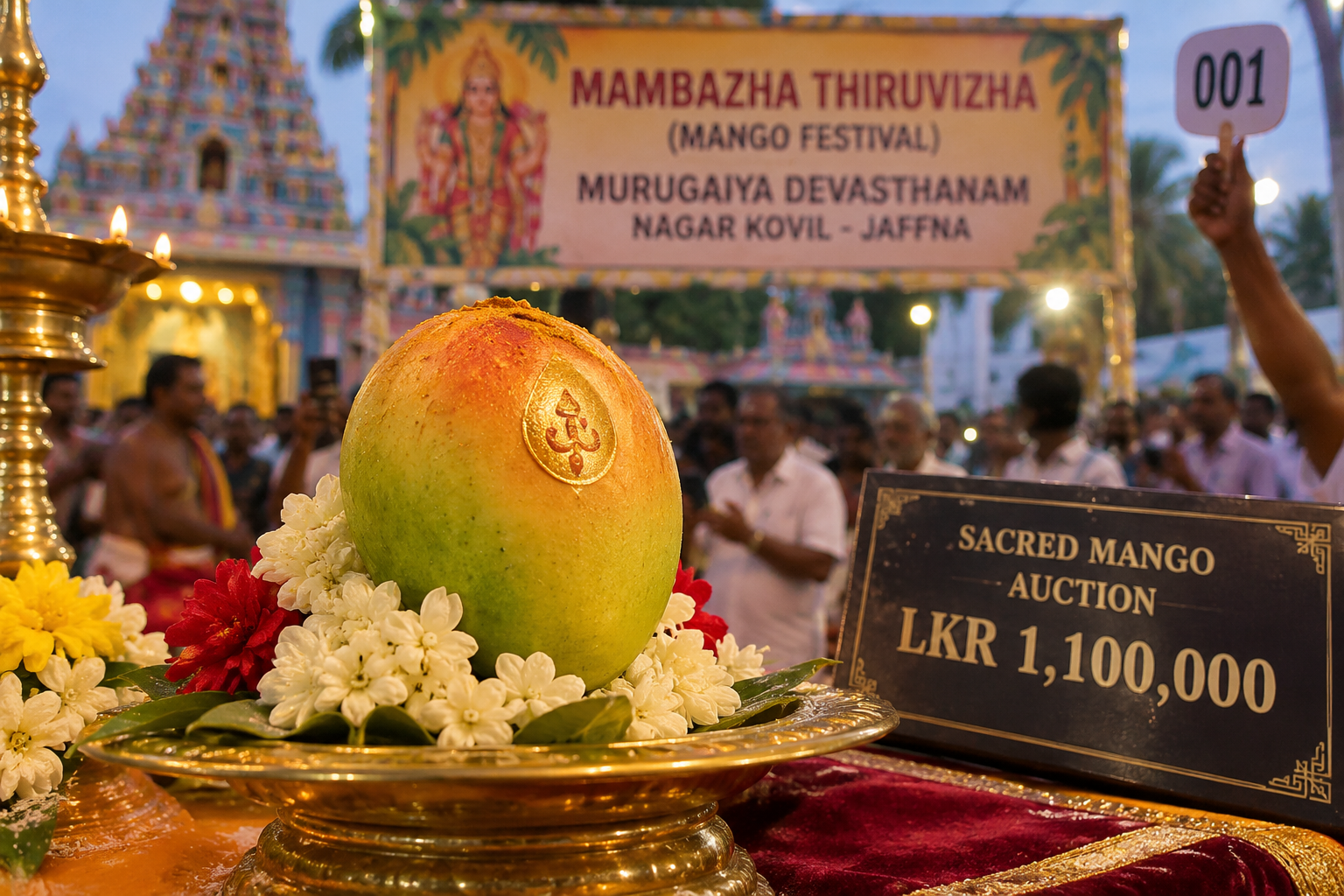
In the coastal village of Nagar Kovil in Jaffna, Sri Lanka, an ordinary fruit became an extraordinary symbol of devotion and community spirit. During the annual festival at the historic Murugaiya Devasthanam, a single sacred mango, offered as part of the temple’s traditional Mambazha Thiruvizha (Mango Festival), was put up for auction.
What began as a modest bidding tradition quickly transformed into a spirited and heartwarming display of faith, capturing the attention of both local devotees and members of the global Sri Lankan diaspora.

When the bidding concluded, the mango was sold for a staggering 1.1 million Sri Lankan rupees (LKR 1,100,000). The auction atmosphere was filled with joy, vibrant chants, and friendly competition as attendees rallied to outbid one another.
Bidding on sacred offerings in Hindu temple traditions is not merely about acquiring the physical item. It represents receiving divine blessings through prasad and is believed to bring goodwill, health, and prosperity to one’s family and home.
What makes this record-breaking bid particularly inspiring is where the funds are headed. Every cent raised from the 1.1 million-rupee auction will be dedicated directly to the development and maintenance of the Murugaiya Devasthanam, as well as its community welfare programmes.
In a region where local shrines serve as the cultural and spiritual heart of the community, such contributions help ensure that religious heritage, traditional arts, and local support systems remain vibrant for generations to come.
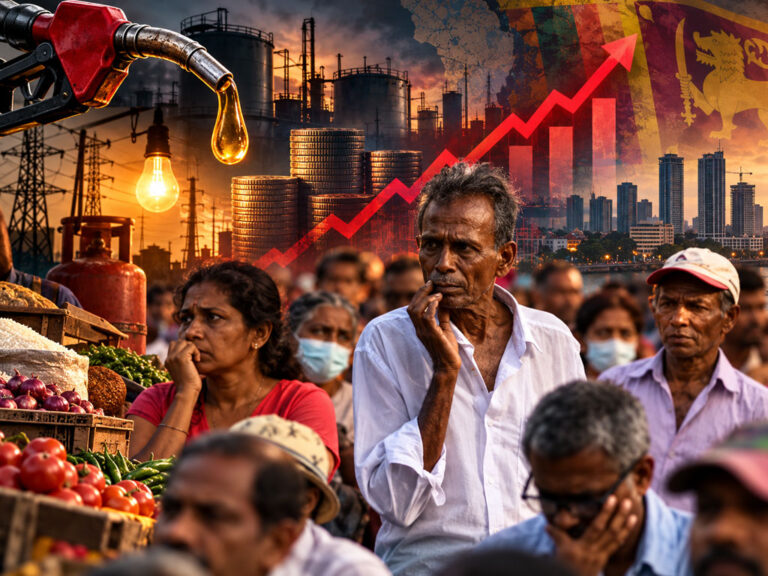
This remarkable event also highlights a growing tradition of generosity that has surpassed previous records. Just last year, a sacred mango at the same festival fetched 1 million rupees. Seeing the bid rise even higher this year demonstrates the enduring resilience and deep-rooted commitment of the community, both within Sri Lanka and abroad, to preserving and uplifting its native heritage despite economic challenges.
Ultimately, the story of the 1.1 million-rupee mango is not about the price tag attached to a piece of fruit, but about the priceless value of unity and shared faith.
It serves as a heartwarming reminder to the wider world of how small cultural traditions can inspire extraordinary generosity, bridge distant shores, and bring people together for the greater good of their hometown.