By Roy Denish.
Sri Lanka housing scam allegations involve more than 3,000 families and over Rs. 1,000 billion, as victims demand action from authorities.
A massive Sri Lanka housing scam has allegedly defrauded more than 3,000 families of an estimated Rs. 1,000 billion, leaving many victims facing severe financial hardship.
The real estate enterprise allegedly built public confidence through aggressive promotions on mainstream television and social media. Its campaigns featured attractive architectural images, recurring offers, and high-profile project launches attended by political figures.

Victims came from a wide range of professional backgrounds, including doctors, engineers, professors, and other academics. Many invested substantial portions of their life savings, with individual losses reaching amounts such as Rs. 5.2 million.
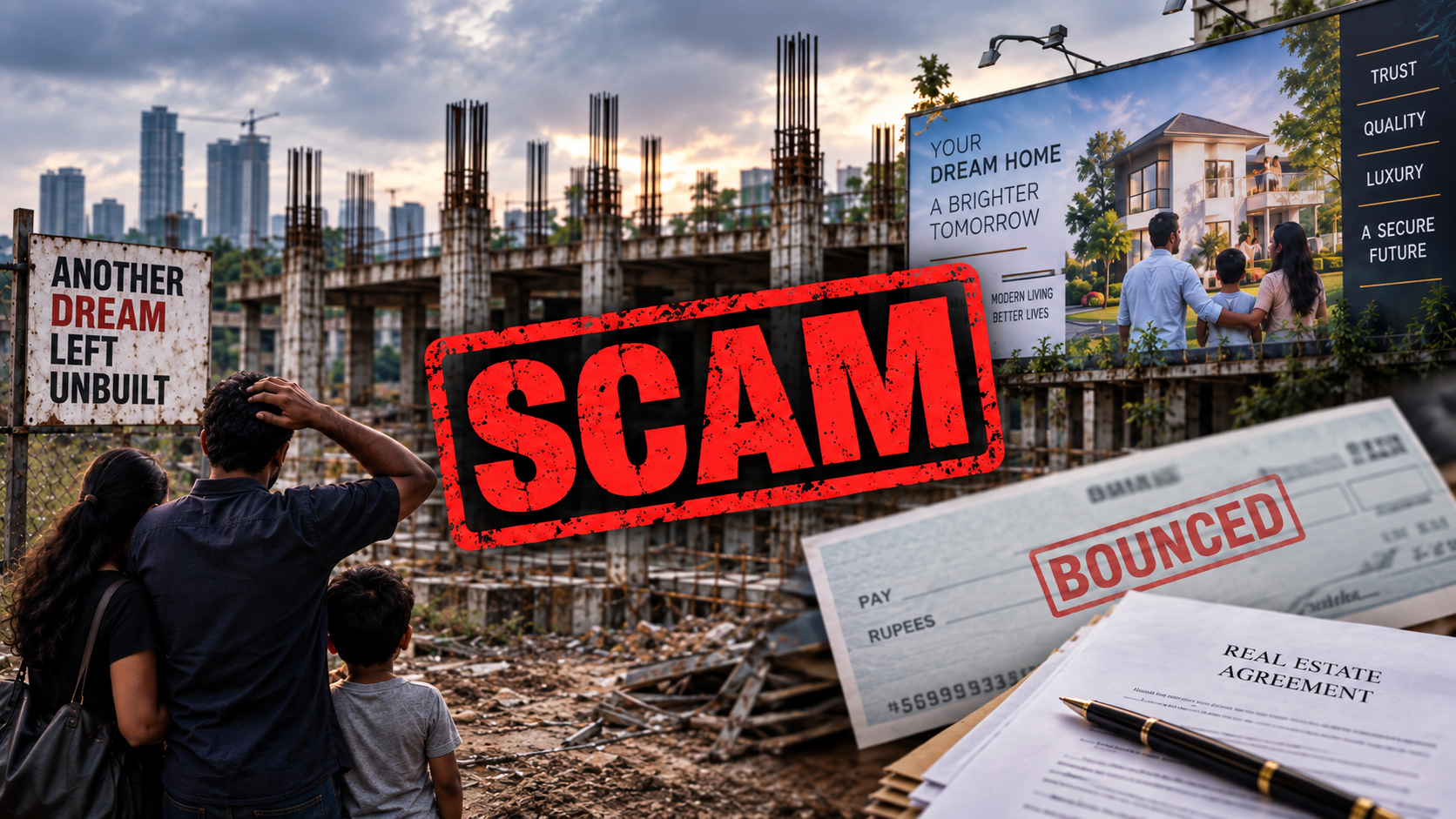
However, instead of delivering completed homes, the company allegedly abandoned several construction sites at the foundation stage. When customers demanded explanations or sought to cancel their contracts, the company reportedly issued cheques that later bounced.
Affected parties, including individuals identified as Sampath and Malabe Sooriya, claim the same real estate assets and housing designs were sold to multiple buyers at the same time. They also allege that advance payments collected from clients were diverted into unrelated commercial ventures.
Victims say they lodged formal complaints at the Mirihana Police Station and sent written appeals to the Presidential Secretariat, the Prime Minister’s Office, the Ministry of Public Security, and the Inspector General of Police. Despite those complaints, they claim authorities have taken no meaningful action or provided formal acknowledgement.
Complainants further allege that close personal links between company leaders, local police officials, and political figures have created what they describe as an invisible shield around the company. They say stalled investigations have left thousands of families burdened by bank debts and financial distress.
With formal avenues for justice currently inactive, affected groups are preparing public protests and say they will disclose the identities of parties they allege are involved.
Victims have also warned the public to verify construction companies independently, inspect project sites, and seek qualified legal advice before signing real estate agreements.