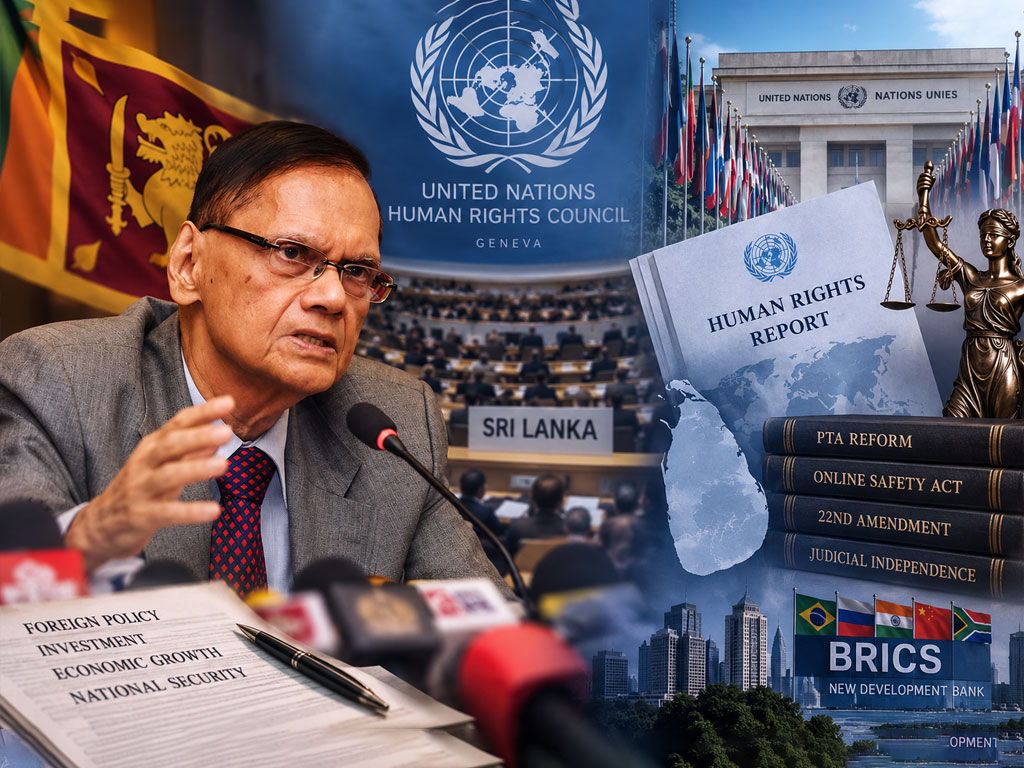
Sri Lanka Geneva pressure could intensify over human rights commitments and foreign policy decisions, Prof. G.L. Peiris warned in Colombo.
Sri Lanka Geneva pressure could have wider diplomatic and economic consequences if the country fails to address international commitments consistently, Professor G.L. Peiris warned on September 16.
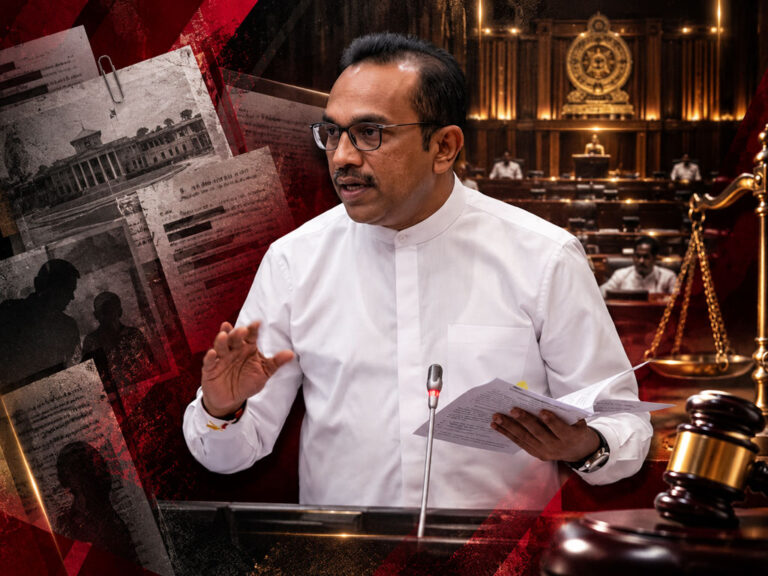
Speaking at a People’s United Opposition media briefing at its Malpara office in Colombo, Peiris focused on Sri Lanka’s foreign policy, the 63rd session of the United Nations Human Rights Council (UNHRC) and the proposed 22nd Amendment to the Constitution.
His comments came after the Office of the UN High Commissioner for Human Rights presented report A/HRC/63/18 on Sri Lanka. The report, published on September 3, covers human rights, accountability, reconciliation and institutional reform.
Peiris argued that Sri Lanka risks serious international consequences if commitments made to the international community remain unimplemented. The Government, however, told the UNHRC that reforms are continuing and called for a balanced and objective assessment of its progress.

Geneva Report and Unfulfilled Commitments
Referring to the UN report, Peiris highlighted the continuing controversy surrounding the Prevention of Terrorism Act of 1979.
He said the Government had promised legislation consistent with international standards to replace the PTA but had yet to complete that process.
The OHCHR report itself raised concerns about the continued use of the PTA and called for its repeal and replacement.
However, Sri Lanka’s Permanent Representative in Geneva told the Council on September 8 that the PTA would be repealed and replaced. He said the proposed legislation was being prepared before its presentation to Parliament.
Peiris also questioned progress on promised amendments to the Online Safety Act, an independent prosecution mechanism, and a truth and reconciliation process.
The Government told the UNHRC that stakeholder consultations on Online Safety Act amendments had concluded and amendments were being finalised. It also said a committee headed by a Supreme Court judge was studying proposals for an independent prosecutor’s office. Meanwhile, the existing Truth and Reconciliation Commission framework remains under review.
Foreign Policy Decisions Under Scrutiny
Peiris also questioned the consistency of Sri Lanka’s diplomatic decisions.
He referred to Sri Lanka’s abstention when the UN General Assembly voted to extend UN High Commissioner for Human Rights Volker Türk’s term.
Türk secured another four-year term with 144 votes in favour. Ten countries voted against, while Sri Lanka was among 13 countries that abstained.
Peiris questioned why Sri Lanka abstained after the Government had previously invited Türk to the country and facilitated his visit.
He argued that such decisions raised questions about the consistency of Sri Lanka’s foreign policy. This was Peiris’s political assessment rather than a finding by the United Nations.
Peiris also criticised Sri Lanka’s absence from the BRICS summit held in New Delhi. He argued that the country risked missing economic opportunities associated with institutions such as the New Development Bank.
The 18th BRICS Summit took place in New Delhi on September 12 and 13. Its declaration called for the NDB to expand its capacity, local-currency financing and membership.
Whether Sri Lanka could have secured particular financing opportunities through participation was not established in the material reviewed.
22nd Amendment and Investor Confidence
Peiris also connected Sri Lanka Geneva pressure with domestic debate over judicial independence and the proposed 22nd Amendment.
He argued that an independent judiciary is important not only constitutionally but economically because perceptions surrounding the rule of law can affect investor confidence.
The proposed amendment has faced legal challenges. The Samagi Jana Balawegaya, Bar Association representatives and Peiris were among those who petitioned the Supreme Court. Arguments before the Court included claims that changing judges’ retirement ages could affect judicial independence.
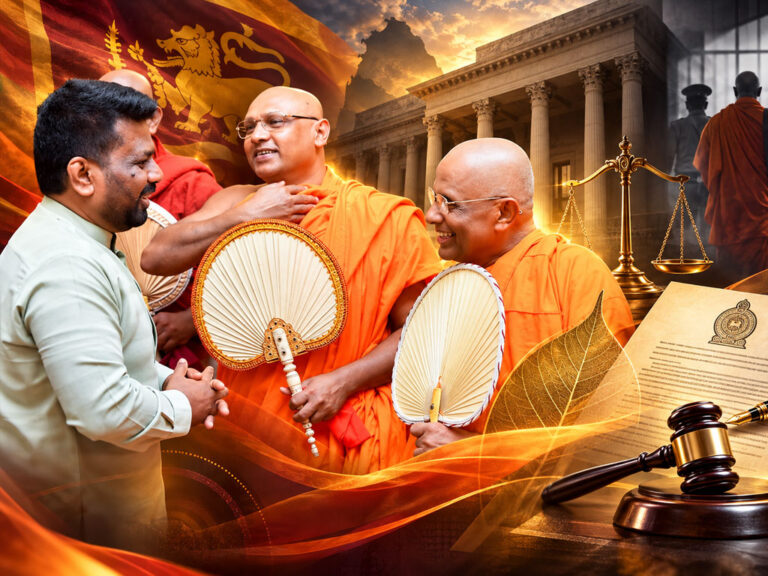
Peiris said religious leaders, lawyers’ organisations and international legal bodies, including LAWASIA, had expressed concerns about the proposal.
He warned that uncertainty surrounding judicial independence could undermine investor confidence and ultimately affect economic growth.
The Government has presented a different rationale. Its representative in Geneva said proposed judicial reforms, including changes concerning judges and retirement ages, were intended to reduce case backlogs, retain judicial expertise and improve access to justice.
Economic Problems and National Security
Other opposition representatives addressed domestic economic and national-security concerns during the briefing.
Sri Lanka Freedom Party General Secretary Duminda Dissanayake argued that Sri Lanka must engage with the international community rather than become isolated if it hopes to resolve economic and livelihood pressures.
He said the Government should give particular attention to problems facing agriculture and farming communities.
Former Governor Keerthi Tennakoon raised concerns over alleged medicine shortages in the health sector, energy problems and difficulties affecting construction.
United National Party Executive Committee member Dinuk Kolambage, meanwhile, called for greater transparency over bilateral agreements associated with the Indian Defence Minister’s visit.
He argued that Parliament should receive information about such agreements.
The opposition’s broader argument is that foreign policy, human rights commitments, judicial independence and economic confidence cannot be treated as separate issues.
However, several claims made at the briefing represent the speakers’ political assessments. The Government has disputed suggestions that reforms have stalled and told the UNHRC that it continues to pursue reconciliation, human rights, anti-corruption measures and legislative changes.
The developing Sri Lanka Geneva pressure therefore reflects competing assessments of the country’s progress. Peiris argues that inconsistent diplomacy and delayed commitments risk increasing international and economic pressure. The Government maintains that reforms are advancing and has asked international institutions to assess those developments objectively.
With Sri Lanka remaining under scrutiny at the 63rd UNHRC session, those competing positions are likely to remain central to the country’s diplomatic debate.