By Roy Denish.
Rumesh Tharanga’s javelins were damaged on his flight home, leaving the world champion facing a Rs. 2 million equipment loss.
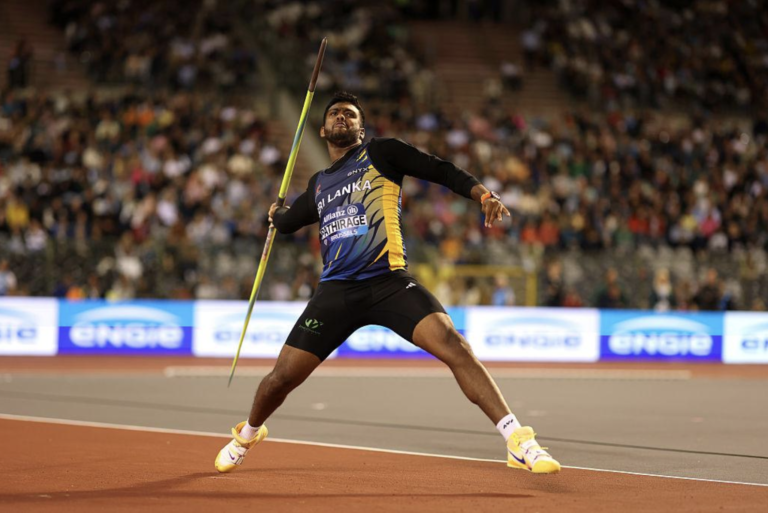
The golden arc of the javelin had just conquered Budapest, soaring 91.09 metres to secure history. For 23-year-old world champion Rumesh Tharanga, those specialised carbon-fibre spears were more than equipment—they were precise extensions of his body, calibrated through hundreds of gruelling throws in pursuit of an Olympic dream.
But beneath the dark, heavy skies of an international transit hub, a very different kind of journey was coming to a brutal end.
Aboard Turkish Airlines Flight TK730, operating under the international call sign THY730, the aircraft sliced through the upper atmosphere on its long-haul journey from Istanbul (IST) to Colombo (CMB). In the cargo hold below, the champion’s most prized possessions were exposed to the unforgiving realities of baggage handling, heavy container loads and the vulnerability of their rigid carbon-fibre frames.

The descent into Bandaranaike International Airport should have marked a triumphant homecoming. Instead, as dawn broke over Colombo at 5:10 a.m., the celebratory atmosphere evaporated the moment the oversized baggage belt creaked to life.
Out came the protective cases and with them, the devastation.
The Budapest gold spear, the Zurich winner and the Rome record-breaker—every high-precision instrument that had defined a remarkable season—was snapped, fractured or bent beyond recognition. Months of sweat, records and future Olympic aspirations lay splintered inside the ruined cases.
The psychological blow of seeing the tools of a lifetime’s work destroyed in transit overshadowed even their estimated Rs. 2 million value.
With a Property Irregularity Report hastily filed amid the exhaustion of the arrival hall, the champion stood beside the wreckage of his equipment—a stark reminder of how fragile a sporting career can become when its most essential tools are entrusted to the cargo hold of an international flight.