By Roy Denish.
Sri Lanka’s renewed corruption investigations are testing whether accountability and institutional reform can be applied consistently.
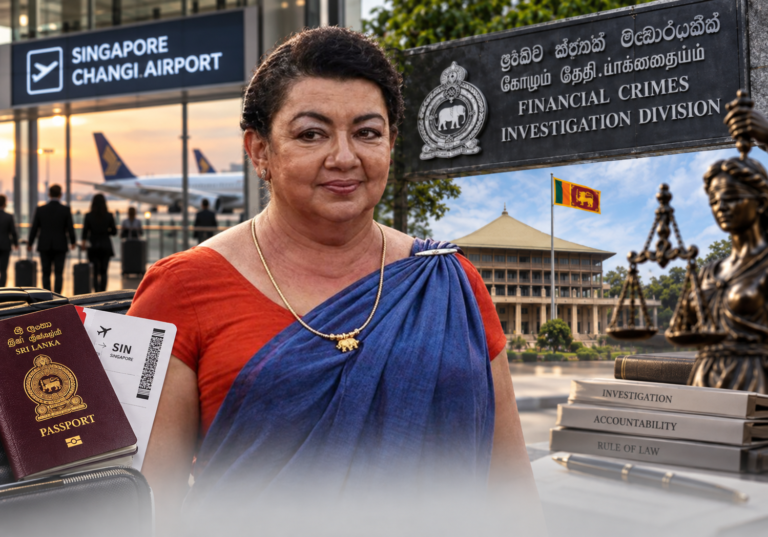
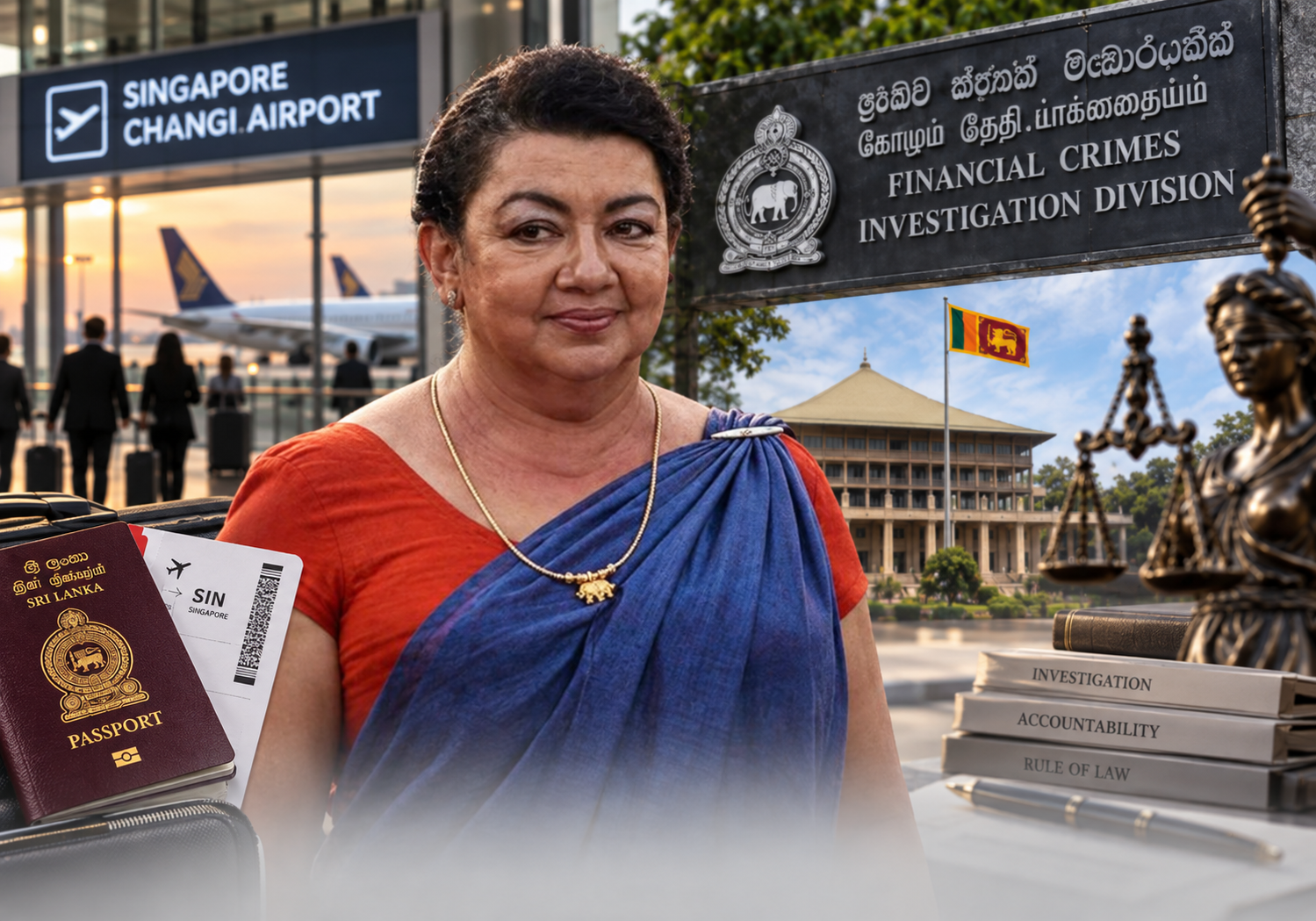
Recent developments surrounding the overseas travel of former First Lady Shiranthi Rajapaksa have once again thrust Sri Lanka’s political landscape into a familiar but critical debate.
Beyond immediate reports concerning hospital admissions, international travel, and alleged attempts by family members to influence political or legal developments, the episode has become part of a broader discussion about the administration of President Anura Kumara Dissanayake.
At stake is not merely the accountability of a single individual or family, but the broader credibility of Sri Lanka’s democratic institutions and the government’s stated commitment to addressing political impunity.

The Anatomy of Political Insulation
For decades, Sri Lankan politics has been shaped by accusations of informal protection among political elites.
Transitions of power have frequently been accompanied by allegations of behind-the-scenes compromises, political accommodations, and personal alliances capable of influencing the pace or direction of legal scrutiny.
Recent reports have suggested that attempts may once again be under way to use old political relationships, religious intermediaries, and indirect communications to influence the course of legal proceedings.
The current administration, however, has publicly maintained that corruption investigations should proceed without political interference and that legal accountability should apply equally regardless of political status or family background.
The government has repeatedly stated that such investigations are not intended as political retaliation, but as part of a wider effort to strengthen institutional accountability.
A Paradigm Shift in Governance
The debate is unfolding against the backdrop of broader changes in Sri Lanka’s political culture.
Traditional political parties have often been criticised for distancing themselves from ordinary citizens after elections and operating as insulated political elites.
The current administration has sought to present a different model, placing greater emphasis on public accountability, transparency, and direct communication with citizens.
President Dissanayake has frequently highlighted his background and political origins among ordinary citizens, while government representatives have attempted to maintain a visible presence in communities across the country.
Political activities in areas such as Weligama and Akuressa have also been presented as part of an effort to communicate policy positions directly to the electorate.
The Opposition’s Dilemma
At the same time, opposition parties and political figures, including Sajith Premadasa and Patali Champika Ranawaka, continue to challenge the government on issues ranging from constitutional reform and utility tariffs to economic management and governance.
Whether those criticisms gain wider political traction will depend largely on public perceptions of the government’s performance and the opposition’s ability to present credible alternatives.
Sri Lankan voters continue to face significant economic pressures and are likely to assess both the government and opposition on issues such as cost of living, public services, institutional reform, and economic stability.
Moving From Concessions to Permanent Reform
While short-term economic relief can ease immediate pressures on citizens, lasting reform requires structural and institutional change.
The broader challenge for the Dissanayake administration will be whether it can establish durable national policies in critical sectors such as healthcare, education, and transport.
Such frameworks would need to remain effective beyond individual governments and reduce the extent to which long-term national development depends on changing political priorities.
Conclusion
The continuing legal and political developments surrounding members of the Rajapaksa family form part of a wider debate about accountability, institutional reform, and the future direction of Sri Lankan governance.
The long-term significance of the current administration will depend on whether legal accountability is applied consistently and whether promised reforms are translated into durable institutions and policies.