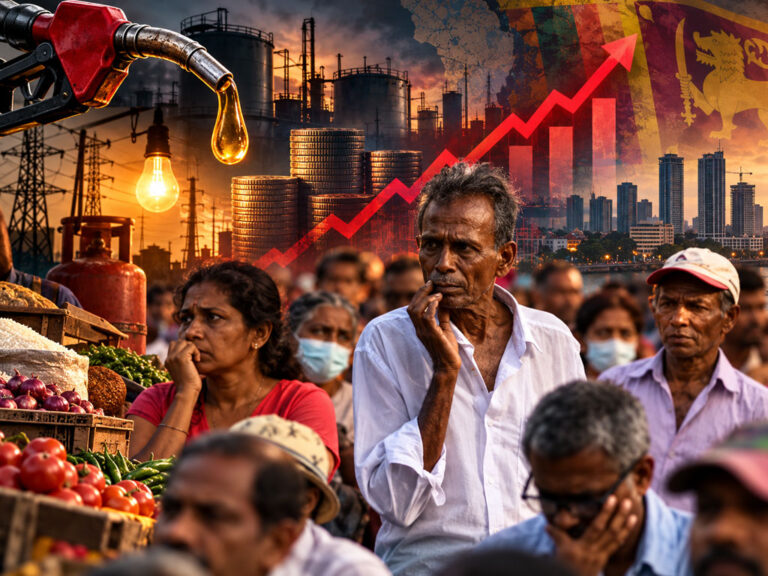
Sri Lanka youth politics faces a credibility challenge as Gen Z seeks greater relevance, accountability and meaningful participation in public life.
COLOMBO — Sri Lanka’s political landscape faces a generational challenge that is unlikely to be resolved simply by changing campaign slogans, party colours or election advertising.
Many younger Sri Lankans, particularly those associated with Generation Z, increasingly encounter politics through issues that directly affect their lives: employment, education, technology, economic security, corruption, climate, migration and personal freedom.
The central question is therefore broader than how political parties attract young voters. It is whether conventional politics can remain relevant to a generation whose expectations, information habits and forms of civic participation differ markedly from those of previous generations.

For many young citizens, political engagement no longer begins with rallies or lengthy speeches. Information increasingly reaches them through social media, short-form video, podcasts, online discussion and direct interaction.
That shift does not necessarily amount to political apathy.
Sri Lanka’s 2022 Aragalaya demonstrated that young people and students could become deeply involved when economic conditions and governance failures directly affected their lives. Reuters documented extensive student and youth involvement in the demonstrations, while the wider protest movement mobilized large numbers through both conventional organizing and social media.
More than four years later, the Aragalaya continues to form part of Sri Lanka’s political context. Reuters reported ahead of the 2024 presidential election that the protest movement’s calls for political and systemic change remained influential in national politics.
From Political Communication to Political Credibility
India provides one example of how institutions and political organisations are attempting to communicate with younger citizens, although its political environment differs substantially from Sri Lanka’s.
Digital platforms have become increasingly important in Indian political communication, while youth-led movements have also used social media to organize around issues such as employment and education. Recent Reuters reporting has documented the growth of digitally organized youth activism in India.
Institutional engagement extends beyond political campaigning.
India’s Election Commission operates the Systematic Voters’ Education and Electoral Participation programme, known as SVEEP, which is designed to improve voter education and participation. Its Electoral Literacy Clubs were established in schools and higher educational institutions to provide young and future voters with practical knowledge of electoral processes.
Campus ambassadors and educational partnerships have also been used to encourage voter registration, electoral awareness and participation among younger citizens.
For Sri Lanka, however, improved digital communication alone would not address the broader question identified in the supplied analysis: credibility.
Young citizens may disengage if participation appears limited to being approached during elections rather than being included in discussions about policy and public decision-making.
Issues Rather Than Personalities
One possible direction for greater youth participation is a political culture that gives more attention to policy questions affecting younger generations.
These include employment and entrepreneurship, affordable education, digital opportunities, housing, public transport, environmental protection, corruption prevention and avenues for young professionals to contribute to national policymaking.
Political organisations could also widen the ways in which younger citizens encounter policy discussions.
Campus forums, public-policy competitions, youth assemblies, online consultations and open candidate discussions are among the mechanisms that could allow young people to question political representatives, scrutinise proposals and contribute their own ideas.
Such mechanisms would not guarantee political engagement, nor would they necessarily favour any particular party or ideology. Their significance would lie in creating additional avenues for participation beyond conventional rallies and campaign structures.
Participation Beyond Elections
The objective need not be to manufacture political enthusiasm. A more fundamental question is whether younger citizens can see a credible connection between participation, accountability and public policy.
Sri Lanka’s younger generation does not necessarily require more political spectacle. The challenge is whether democratic institutions and political organisations can demonstrate that citizens have meaningful ways to scrutinise decisions and participate in policymaking.
That distinction matters because youth disengagement and youth activism can exist simultaneously.
The 2022 Aragalaya showed that Sri Lankan young people were capable of significant civic mobilisation outside conventional party structures. The longer-term question is whether that energy can find sustainable expression within democratic institutions as well.
Sri Lanka’s challenge, therefore, is not to determine which political movement should attract Gen Z, but whether its political system can provide credible, accessible and meaningful avenues through which younger citizens can participate.
Whether that happens will help shape the relationship between the country’s next generation and its democratic institutions.