By Roy Denish
Sri Lanka approves Rs. 4.26 billion for an Air Force UAV system, with plans to acquire four Israeli drones for maritime surveillance and security.
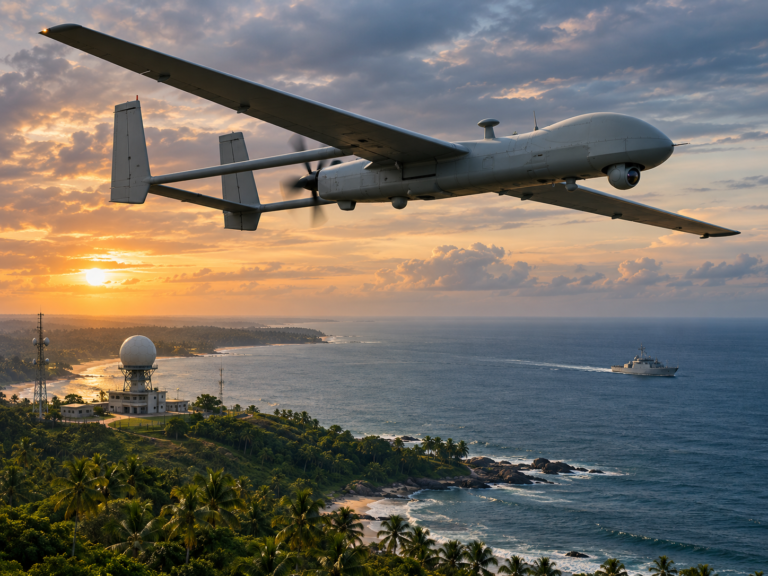
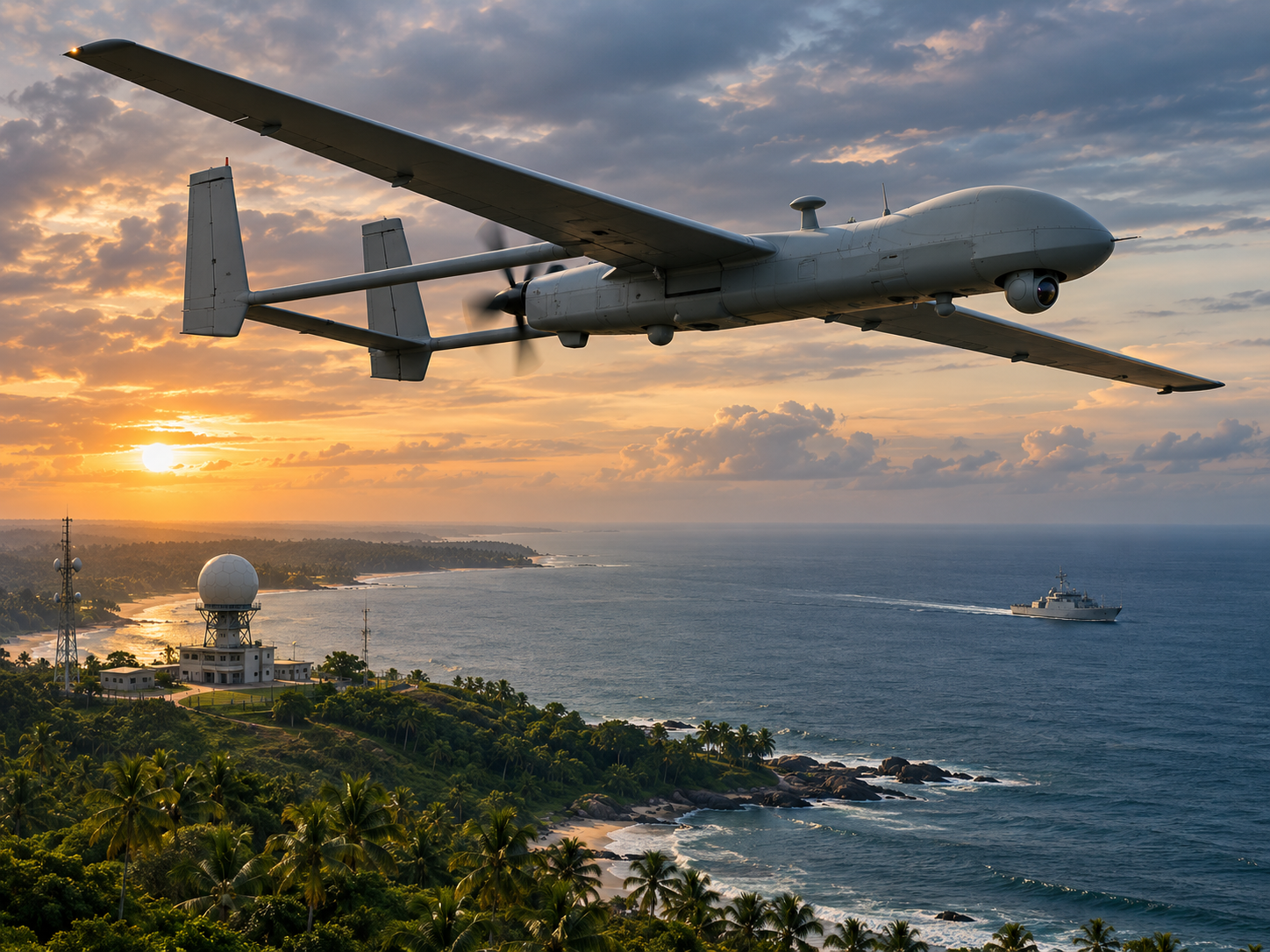
COLOMBO — Sri Lanka’s Parliament has approved Rs. 4.261 billion to establish an unmanned aerial vehicle (UAV) system for the Sri Lanka Air Force, with the government planning to acquire four advanced surveillance drones from Israel.
The supplementary estimate was approved on Thursday, November 5, following a parliamentary debate on the proposed allocation.

Deputy Minister of Defence Major General Aruna Jayasekara (Retd.) told Parliament that the procurement would proceed through a government-to-government arrangement involving BlueBird Aero Systems, an Israeli defence manufacturer in which Israel Aerospace Industries (IAI) holds an interest.
Maritime Surveillance and National Security
Defence officials have presented the proposed acquisition as a cost-effective means of strengthening Sri Lanka’s surveillance capabilities without relying exclusively on conventional manned aircraft.
The drones are intended to support operations across the country’s extensive maritime boundaries, including its exclusive economic zone.
Among their proposed functions are monitoring suspicious maritime activity, assisting in the search for missing fishermen and supporting disaster-response operations during floods and cyclones.
The proposed fleet reportedly includes ThunderB long-endurance UAVs, although the precise configuration and operational specifications should be confirmed when the final procurement agreement is published.
These aircraft are designed for extended surveillance missions, potentially allowing the Air Force to monitor large maritime areas for prolonged periods.
Funding Through Budget Reallocation
According to statements surrounding the parliamentary debate, the allocation will be financed by redirecting funds previously designated for Sri Lanka Air Force helicopter maintenance.
Officials have maintained that this arrangement would allow the procurement to proceed through existing budgetary provisions.
The agreement is expected to undergo legal review by the Attorney General’s Department before the proposed contract is formally concluded.
Sri Lanka’s Defence Relationship With Israel
The acquisition would extend an established defence relationship between Sri Lanka and Israel, which has previously included the operation and modernisation of Israeli-manufactured Kfir fighter aircraft.
Israel Aerospace Industries has been involved in programmes concerning the Sri Lanka Air Force’s Kfir fleet, aircraft that played an operational role during the country’s civil conflict.
The proposed drone acquisition also comes amid broader international debate over military technology exports, surveillance capabilities and the accountability of governments acquiring advanced defence equipment.
While the government has emphasised maritime security and operational efficiency, the project is likely to attract scrutiny over procurement transparency, expenditure priorities and the eventual deployment of the aircraft.
The final contractual terms, delivery schedule and operational configuration will be important in assessing the project’s cost and practical value.